
POLICE extortion remains a dark stain on Nigeria’s law enforcement system, eroding public trust and stifling economic activity. This insidious form of corruption, where officers exploit their authority to illicitly extract money or goods, is not an isolated occurrence but a deeply entrenched system. While this critique does not discount the dedication of many patriotic officers within the Nigeria Police Force, it underscores the urgent need for greater accountability and integrity in policing. According to the 2023 edition of Transparency International’s Global Corruption Barometer, the Nigerian Police Force (NPF) is consistently ranked as the most corrupt institution in the country. Nearly three-quarters (73 per cent) of Nigerians believe that “most” or “all” police officers are corrupt. This perception is not unfounded. Between 2009 and 2011 alone, informal “road taxes” were estimated to have generated a staggering $3.48 billion in costs ultimately borne by ordinary citizens. During a recent trip to Badagry, I witnessed this corruption firsthand. From the First Gate bus stop, our commercial vehicle encountered no fewer than five police checkpoints along a relatively short stretch of road. The driver, clearly familiar with the routine, had ₦200 notes stacked in preparation. At each of the first three checkpoints, he handed over a note without any inspection or questioning. At the final two stops, the price increased to ₦500.
When I asked why, the driver replied grimly: “They can delay everyone in the bus for no reason, stop me from working all day, or even impound my vehicle.” He went on to explain how his daily earnings are drained, first by motor park fees, then union dues, and finally by these unofficial police levies, before he even considers fuel or vehicle maintenance. These costs are inevitably passed on to commuters through inflated fares. “Nothing can be done,” he shrugged, echoing the helplessness felt by many. The brazenness of these operations points to a culture of impunity. It is inconceivable that senior police leadership, including the Inspector General of Police (IGP), is unaware of these widespread practices. Yet, the absence of decisive action has allowed this corruption to fester and become normalized. The popular saying, “police no dey catch police,” captures the public’s perception of unchecked misconduct. While there have been instances of officers being tried and dismissed for misconduct, these cases often come to light only because brave citizens risk their safety to document the abuse. This raises a critical question: why should ordinary Nigerians be forced to supplement the salaries of public servants through coercion? The consequences of police extortion are far-reaching. It increases transportation costs, discourages legitimate business, and undermines the social contract between citizens and the state. It perpetuates inequality and weakens the rule of law.
Addressing this systemic issue requires a multi-pronged approach and unwavering political will. The National Assembly must prioritise legislative oversight and enact laws that enforce accountability within the police force. Civil society organizations must amplify the voices of victims and push for structural reform. The media must continue to expose these abuses and maintain pressure on authorities. At the same time, there is a need to improve police welfare, enhance professionalism, and strengthen public engagement. The IGP and relevant authorities must demonstrate a genuine commitment to reform, not just for the sake of public trust, but for the stability and reputation of the nation.
•Mustapha writes in from Florida, United States

1SUBSCRIBE TO OUR NEWSLETTER NOW
Support MATAZ ARISING’ journalism of integrity and credibility.
Good journalism ensure the possibility of a good society, an accountable democracy, and a transparent government.
We ask you to consider making a modest support to this noble endeavour.
TEXT AD: To advertise here – Email ad@matazarising.com
LATEST POSTS
-
NYSC: Deployment to states’ll be guided by risk assessment — TINUBU

MaTaZ ArIsInGDallas, Texas By Johnbosco Agbakwuru ABUJA— PRESIDENT Bola Tinubu has said as part of the reform of the National Youth Service Corps, NYSC, corps members would now be deployed to security-challenged states, guided by risk assessment. He also reiterated that the scheme would be led by a civilian director-general and not military personnel as it…
-
Presidency exposes alleged fake Presidential Council

MaTaZ ArIsInGDallas, Texas …Says police charged Self-styled DG with forgery The Presidency on Wednesday dismissed renewed claims by Adeyemi Adeniyi Matthew that he was appointed to head a presidential agency, insisting he is an impostor who allegedly forged official documents to present himself as Director-General of a non-existent Presidential Foreign Intervention Promotion Council, also described as the…
-
Just in: Atiku appoints Kenneth Okonkwo as spokesperson
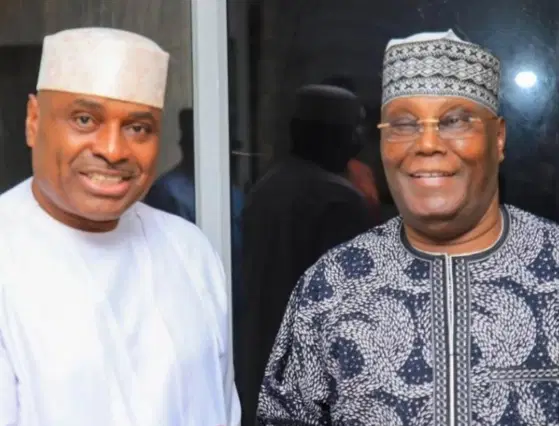
MaTaZ ArIsInGDallas, Texas Former Vice President and African Democratic Congress (ADC) presidential candidate for the 2027 election, Atiku Abubakar, has appointed actor-turned-politician and ADC chieftain Kenneth Okonkwo as his spokesperson. Okonkwo announced the appointment in a statement posted on his official X handle on Thursday, expressing appreciation to Atiku for the confidence reposed in him.…