


Basil Okoh
There’s no shortage of food in Nigeria. But there’s a daily rise in the price of food products. The galloping inflation in food prices is mixed into a 51% unemployment rate and an unstable government to produce a sour blend of hunger and unrest in the land. Hands are flailing, tension is taut and tempers are reaching boiling point.
Government is not showing informed knowledge and action in its responses to the raging hunger in the land. In fact, government lies to the people about grain reserves in silos spread across the country. There are no grains in any silos across Nigeria.
Insecurity and rising food prices in Nigeria require a multifaceted approach. At no cost to government, we propose the following fail-safe solutions.
The truth however is that there are no magic propositions to alleviate hunger in the short term. Solutions require planning for the long term and faithfully implementing these plans.
The Bola Tinubu government has not made any move towards solutions even on the level of policy and budgeting:
- Regain security control from bandits and marauders of the vast arable Savannah and the Sahel of Nigeria. Farming communities have lost control of their farmlands to bandits and no farming activities or investments can go on until these lands are regained and returned to the farmers.
- Increase Agricultural Productivity:
Invest in agricultural infrastructure, provide farmers with access to modern farming techniques, quality seeds, fertilizers, and irrigation systems to boost crop yields and reduce post-harvest losses. These are time worn propositions. The problem begins with the fact that there are no extension services across the breath of the country, from federal to states and local governments. So there are no institutional structures to faithfully supervise and implement government support and investments in agriculture. By experience, government investments in agriculture becomes fertile ground to corruptly enrich officials and contractors. The World Bank structured River Basins Development saga remains abiding examples of government failure in interventions in direct agricultural investments. - Diversify the Economy:
Nigeria heavily relies on oil revenue, diversifying the economy will reduce its vulnerability to fluctuations in oil prices and create more employment opportunities in other sectors like agriculture, manufacturing, and services. The problem is that through excessive borrowings with pledges to pay with crude oil, Nigeria is paid forward for oil still under the ground. For the next decade, 50% of the crude to be produced and sold by Nigeria has been paid for and the money embezzled through opaque projects. - Support Smallholder Farmers:
Provide financial assistance, training, and access to markets for smallholder farmers to improve their productivity and income. Again without a structured and effective extension system in place, the real Nigerian farmers cannot be identified, registered, planned for and supported. - Promote Food Security Policies: Implement policies that promote food security such as strategic grain reserves, subsidies for staple foods, and price stabilization mechanisms to cushion the impact of price fluctuations on consumers. The ravaging insecurity in the middle belt, the real food basket of Nigeria, has rendered farming a death wish undertaking. The farmers have all left the farms and the unorganized youth migrated to the South to become farm hands and urban drifters.
- Invest in Infrastructure:
Improve transportation networks, storage facilities, and market infrastructure to reduce food wastage and ensure efficient distribution of food products across the country. Nobody has had nobler intentions than the Nigeria government. But these intentions when translated into projects, have had their funds embezzled and the projects abandoned. Abandoned agricultural projects dot the skyline of Nigeria. - Address Unemployment: Implement job creation programs, vocational training, and entrepreneurship support to reduce unemployment rates and alleviate poverty.
- Social Safety Nets: Establish and strengthen social safety nets such as food assistance programs, cash transfers, and school feeding programs to support vulnerable populations during times of economic hardship.
- Combat Corruption: Address corruption in the food supply chain to ensure that resources are allocated efficiently and reach those in need without leakage or diversion.
To urgently address the rising price of food products in Nigeria, the government can implement measures such as subsidizing agricultural inputs, investing in infrastructure to improve transportation and storage facilities, promoting sustainable farming practices, regulating market activities to prevent hoarding and price manipulation, and supporting smallholder farmers through access to credit and technical assistance. Additionally, initiatives to diversify the economy and reduce dependency on imported food items can also help stabilize prices in the long term.
By implementing these measures, Nigeria can mitigate food insecurity, stabilize food prices, and promote economic development and social stability.
@basilokoh.


WhatsApp Community
SUBSCRIBE TO OUR NEWSLETTER NOW
Support MATAZ ARISING’ journalism of integrity and credibility.
Good journalism ensure the possibility of a good society, an accountable democracy, and a transparent government.
We ask you to consider making a modest support to this noble endeavour.
TEXT AD: To advertise here – Email ad@matazarising.com
-
NYSC: Deployment to states’ll be guided by risk assessment — TINUBU

MaTaZ ArIsInGDallas, Texas By Johnbosco Agbakwuru ABUJA— PRESIDENT Bola Tinubu has said as part of the reform of the National Youth Service Corps, NYSC, corps members would now be deployed to security-challenged states, guided by risk assessment. He also reiterated that the scheme would be led by a civilian director-general and not military personnel as it…
-
Presidency exposes alleged fake Presidential Council

MaTaZ ArIsInGDallas, Texas …Says police charged Self-styled DG with forgery The Presidency on Wednesday dismissed renewed claims by Adeyemi Adeniyi Matthew that he was appointed to head a presidential agency, insisting he is an impostor who allegedly forged official documents to present himself as Director-General of a non-existent Presidential Foreign Intervention Promotion Council, also described as the…
-
Just in: Atiku appoints Kenneth Okonkwo as spokesperson
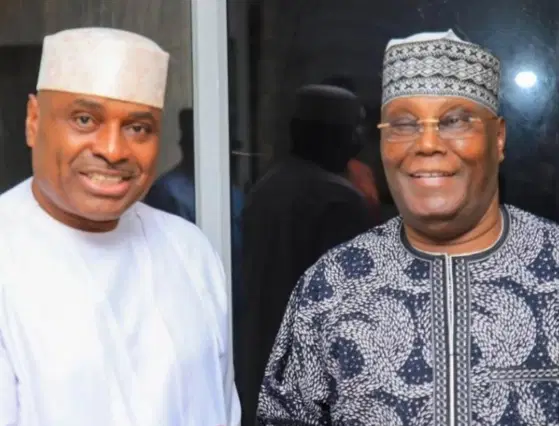
MaTaZ ArIsInGDallas, Texas Former Vice President and African Democratic Congress (ADC) presidential candidate for the 2027 election, Atiku Abubakar, has appointed actor-turned-politician and ADC chieftain Kenneth Okonkwo as his spokesperson. Okonkwo announced the appointment in a statement posted on his official X handle on Thursday, expressing appreciation to Atiku for the confidence reposed in him.…