

I think the mood of the Nation is that Nigeria needs to establish police services at the state level to address the massive growth of insecurity in the country. After decades of agitation, the Senate on Wednesday passed the bill seeking to establish state police in Nigeria. The legislation seeks to establish a state policing structure that would operate concurrently with the existing federal police system. Clause 17 of the bill, which deals with appointment, command, direction and tenure, provides that while the Federal Police Service shall be headed by the Inspector-General of Police, the State Police Service shall be headed by a Commissioner of Police appointed by the governor of the state, subject to confirmation by the state’s House of Assembly. Section 17(6) states that a state governor may give lawful written directives of a general policy nature to the Commissioner of Police of the state on matters relating to the maintenance of public safety and public order.
Given widespread concerns that State governors will use the State police to repress their political opponents, Section 17(7) further provides that the Commissioner of Police of a state shall not arrest, detain, investigate or deploy force against any person, political party or group for criticising the government except in accordance with the law. This provision is intended to prevent the misuse of state police against political opponents or critics, ensuring that any action taken against such individuals or groups complies with due process and existing laws.
With the Senate’s passage of the bill, it will now be transmitted to the House of Representatives for concurrence. If approved by the lower chamber, it will then be forwarded to the 36 State Houses of Assembly for ratification. For the constitutional amendment to take effect, it must be approved by at least two-thirds of the states, which translates to 24 state assemblies.
The Bill states that: “No existing state, local, community, vigilante, neighbourhood, traffic or other security outfits shall, by reason only of this Act, become a State Police Service or exercise police powers or bear firearms unless authorised in accordance with this Constitution and an Act of the National Assembly,” the section states. The provision effectively means that existing regional security outfits such as Amotekun, Ebube Agu and Hisbah cannot automatically become state police agencies and will not be permitted to exercise police powers or carry firearms under the proposed law.
Section 15(10) of the bill provides that the Federal Police Service may temporarily intervene in the internal security affairs of a state and assume specified operational responsibilities, including the temporary operational command of a State Police Service. Under Section 15(10)(a), federal intervention may occur where there is an actual or imminent breakdown of public order or public safety that the State Police Service is unable or unwilling to contain.
As a student of and believer in federalism, I fully support the principle that federal political systems should have police forces controlled by the federating units – states, and in the past, I have strongly campaigned for State Police. Today, I am very frightened of the idea because the evidence that it would be abused is massive in spite of the assurances provided above.
Nonetheless, widespread insecurity in the country has pushed many Nigerians into supporting the idea of a State Police based on the justification that states are closer to local dynamics of insecurity and might be more effective in combatting them. The reasoning is that members of the police, being local and therefore knowledgeable about the community, would be more effective in fighting crime, terrorism, civil unrest and insurgency. The key idea, therefore, is that they would know or be able to easily find out the bad boys and girls and deal with them. In my view, that is where the trouble begins; who will define the bad boys and girls?
State police would be established according to the wishes of governors even if the proposed law provides some constraints. For state governors, the bad boys are clear and they fall into two categories. The first category comprises politicians who want to contest state power with the governors or their chosen successors, for those in their second term. The second category consists of all persons who dare to criticise the governors or question their misdeeds. Over the years, many critics, including journalists and civil society activists, have been placed in arbitrary detention for daring to speak the truth about their governors. The governors cajole law enforcement offices to “deal” with their perceived enemies, without having a police force totally under their control. I am convinced that most (not all) governors would jail all their “enemies” if they have police forces they can control totally.
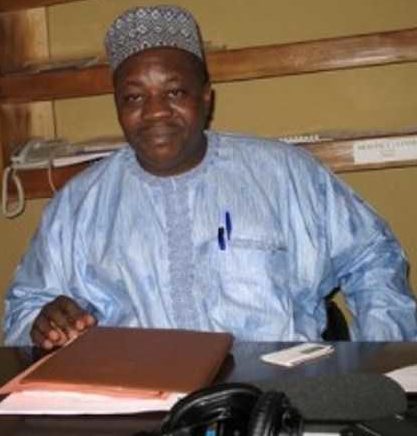
When in 2018 there was a summit to consider the establishment of State Police, there was a counter argument by the late Abubakar Tsav, a retired police commissioner, that the “establishment of state police will signal the beginning of the disintegration of the country,” as governors would use the institution “against their perceived political opponents.” State and federal police commands are also likely to work at cross-purposes, he added.
My additional reasons of concern are that we have very serious ethnic and religious divides in the country at this time and many governors believe that if they have their own police, they can deal with the other. For example, the pastoralists and farmers conflicts have been intensifying in many states and some governors have clear proclivities of seeking to expel or protect pastoralists in their states, opening the doors to a new dimension of identity conflicts that would deepen the crisis facing the Nigerian state today. As Commissioner Tsav argued in 2018: “Our politicians are not civilised enough and tolerant of opposing views and cannot preside over a competent and impartial police force.”
I have heard people argue that currently, the Nigerian Police Force are direct puppets of the president and they do exactly what they are told to do in dealing with the president’s enemies, so State Police could be a counter weight to presidential control of the Nigeria Police Force. I think it’s uncharitable to argue that the Nigeria Police are completely partisan in their actions. Federal institutions are, in general, much more capable of handling issues in an even-handed manner, relative to state-level institutions. The more effective separation of powers between the executive, legislature and judiciary at the federal level, in relation to the state level, means that there are more effective control measures. The National Assembly, for example, can call the Inspector General of Police to order in a way that no State House of Assembly can do with any institution obeying the state governor.
I know that the structure of the police is defective, as a significant slice of the police budget is consumed at the headquarters and very limited resources go to State Commands where most police operations actually take place. State Police Commands then become dependent on state governors, who give them money and in return get the Command to do their bidding. It is however easier to address this problem in comparison to a fully state police force.
The problem we have is that the police are not as effective as they should be and the way forward is to improve their efficacy. One of the core problems is that about 150,000 of the 350,000 of the nation’s police force are engaged in VIP protection, rather than routine policing. Every Police IG has promised to stop renting out police officers to those who can pay for their services but failed to do so. Successive presidential directives that police personnel attached to unauthorised persons and VIPs in the country be withdrawn and deployed to confront the security challenges in the nation have been disregarded. The police are ineffective because too many of them are not available to do core police work, as they spend their time in the service of a few privileged Nigerians. President Tinubu should start by addressing this challenge.

1SUBSCRIBE TO OUR NEWSLETTER NOW
Support MATAZ ARISING’ journalism of integrity and credibility.
Good journalism ensure the possibility of a good society, an accountable democracy, and a transparent government.
We ask you to consider making a modest support to this noble endeavour.
TEXT AD: To advertise here – Email ad@matazarising.com
LATEST POSTS
-
Nigeria’s Economy Under Tinubu: The First Phase Was Stabilisation, Now Comes the Second Phase
By Idowu Ephraim Faleye +2348132100608 MaTaZ ArIsInGDallas, Texas Nigeria has moved from trying to save its economy to the next difficult task of making the economy work for ordinary people. The major economic figures are improving. Government revenue has increased, and state governments are receiving much more money than they received before. Yet many Nigerians…
-
El-Rufai Has Spent Seven Months In Detention Without Conviction – Emir Sanusi
MaTaZ ArIsInGDallas, Texas Sanusi said Nigeria already has institutions and courts responsible for investigating and prosecuting corruption cases, but alleged that political considerations sometimes influence how such cases are handled. The Emir of Kano, Muhammadu Sanusi II, has raised concerns over the continued detention of former Kaduna State Governor, Nasir El-Rufai, saying he has spent…
-
New world record for longest dance marathon set by Nigerian dancer

MaTaZ ArIsInGDallas, Texas Benjamin Daniel, known as Ben Dancer, danced continuously for 168 hours. LAGOS, Nigeria — A Nigerian dancer has broken the world record for the longest individual dance marathon. Benjamin Daniel, known as Ben Dancer, danced continuously for 168 hours. The 33-year-old began the attempt last Tuesday. The previous record of 127 hours…