


…Says 2026 Tax Reform will put more money in Nigerians’ pockets
Chairman of the Presidential Committee on Fiscal Policy and Tax Reforms, Mr. Taiwo Oyedele, has described Nigeria’s personal income tax structure as unjust and unsustainable, revealing that about 96 per cent of personal income tax previously collected in the country came from low-income earners.
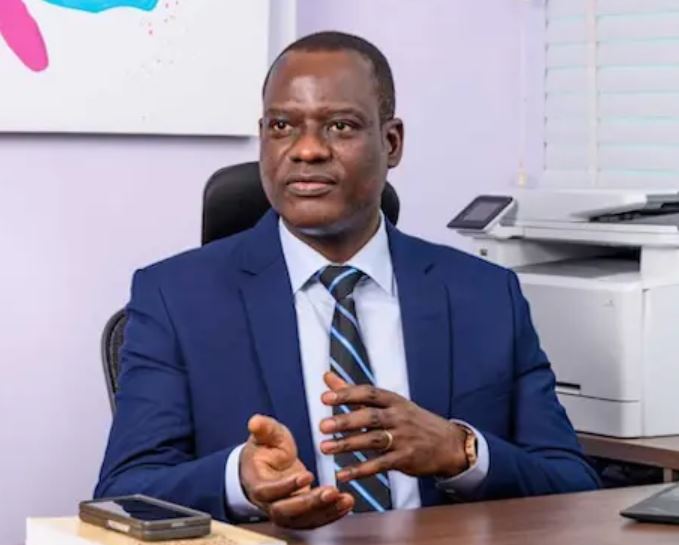
Oyedele also dismissed claims that the 2026 tax reform law would worsen the cost of living, insisting that the reform is designed to increase disposable income and reduce the prices of basic goods for Nigerians.
He spoke at the Cowry Quarterly Economic Discourse themed “Nigeria in 2026: Will Politics Trump Economic Reform?”, where he said the negative narrative surrounding the tax reform was largely driven by misinformation and misunderstanding of the law.
According to him, contrary to widespread fears, the 2026 tax reform is targeted at stopping the taxation of poverty, protecting low-income earners and ensuring that Nigerians with higher capacity to pay bear a fairer share of the tax burden.
“This 2026 tax reform law will increase disposable income and reduce the prices of basic consumption. The narrative out there is the complete opposite of what is actually contained in the law,” Oyedele said.
He explained that under the new framework, Nigerians earning the national minimum wage are fully exempt from personal income tax, while the threshold for taxable income has been significantly raised after allowable deductions and reliefs.
“The N800,000 people talk about is taxable income, not gross income. By the time you remove deductions and allowances, that translates to about N1 million to N1.2 million gross income. And even at that, anyone earning the minimum wage pays no tax at all,” he clarified.
Oyedele noted that the committee deliberately redesigned the tax system to correct long-standing distortions that placed a heavier burden on low-income earners while allowing wealthier individuals to remain largely untaxed.
He recalled that nationwide data previously presented to government showed that about 96 per cent of personal income tax in Nigeria came from low-income earners, a situation he described as inequitable and economically dangerous.
“We were taxing poverty. That is not how a functional economy works,” he said.
Drawing comparisons with South Africa, Oyedele noted that the country generated over ₦60 trillion equivalent from personal income tax last year, with about 60 per cent of the revenue paid by the top 1.5 per cent of earners.
“Here in Nigeria, we struggle to collect about ₦2 trillion from personal income tax despite having four times their population. You cannot reconcile those numbers,” he added.
Oyedele stressed that the tax reform law went through an extensive and inclusive process lasting nearly 18 months, involving over 800 stakeholders from across the country, including state governments, private sector players, students and civil society groups.
He added that although the law may not be perfect, it represents the most deliberate and comprehensive tax reform Nigeria has undertaken, noting that government would be reluctant to reverse it because of the depth of stakeholder engagement behind it.
On the broader economy, Oyedele expressed optimism about Nigeria’s outlook in 2026, saying the country has moved from economic decline and volatility to stability and is now entering a phase of growth and sustainability.
“In my view, 2026 is the year when macroeconomic improvements will begin to translate more rapidly into real benefits for households and individuals, and tax reform is one of the key drivers of that transition,” he said.
He warned that failure to allow a proper tax system to function would force government to either continue taxing the poor or resort to printing money, both of which would worsen inequality and inflation.
Oyedele therefore urged Nigerians to look beyond the “noise” surrounding the tax reform, warning that persistent misinformation could undermine its benefits and slow economic recovery.
“If government was collecting more tax from you before and the new law reduces that burden, why should you fight it? Even with accountability concerns, you are better off. This reform is about fairness, growth and improving the lived experience of ordinary Nigerians,” he said.

1SUBSCRIBE TO OUR NEWSLETTER NOW
Support MATAZ ARISING’ journalism of integrity and credibility.
Good journalism ensure the possibility of a good society, an accountable democracy, and a transparent government.
We ask you to consider making a modest support to this noble endeavour.
TEXT AD: To advertise here – Email ad@matazarising.com
LATEST POSTS
-
Tinubu allowed free, fair election that gave Adeleke Osun victory – Wike

MaTaZ ArIsInGDallas, Texas ABUJA — Minister of the Federal Capital Territory, FCT, Nyesom Wike, has said Governor Ademola Adeleke won the August 15 Osun State governorship election because President Bola Tinubu allowed the poll to be free and fair. Wike, who spoke on Tuesday during an inspection tour of flood-affected areas in the FCT, dismissed…
-
2027: Tinubu, Obi, Atiku, others sign peace accord, vow issue-based campaigns
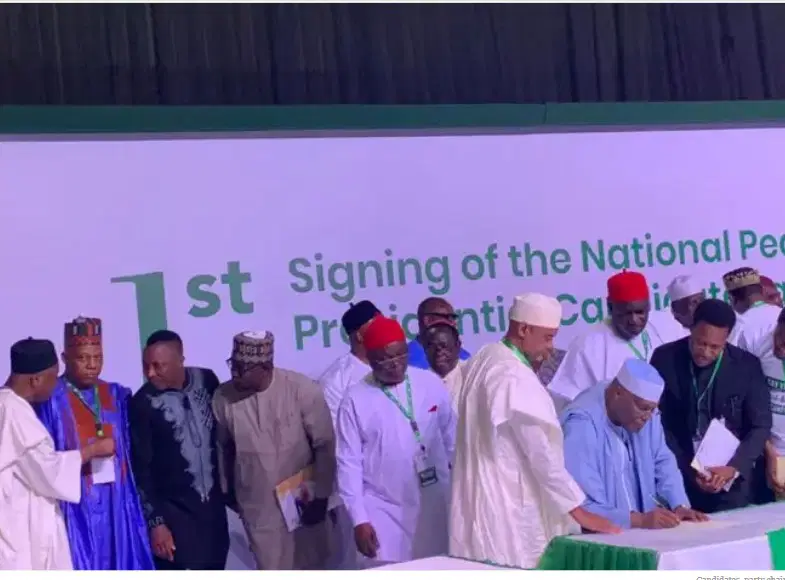
MaTaZ ArIsInGDallas, Texas …Obi tells voters to reject violators at polls…Peace Committee warns against hate speech, violence, fake news …INEC: 2027 elections are “competitive job interviews” Presidential candidates and leaders of political parties ahead of the 2027 general elections have signed a National Peace Accord, pledging to conduct issue-based campaigns and reject violence, hate speech,…
-
FAAC: FG, states, LGs share N3.007trn July revenue
MaTaZ ArIsInGDallas, Texas The Federation Account Allocation Committee (FAAC) has approved the disbursement of a total of ₦3.007 trillion to the Federal Government, the 36 state governments and the 774 local government councils as revenue for July 2026. At a meeting held in Owerri, Imo State, FAAC said the Federal Government received a total of…