Nigerians are going without food as high transport costs raise food prices and squeeze households’ incomes.

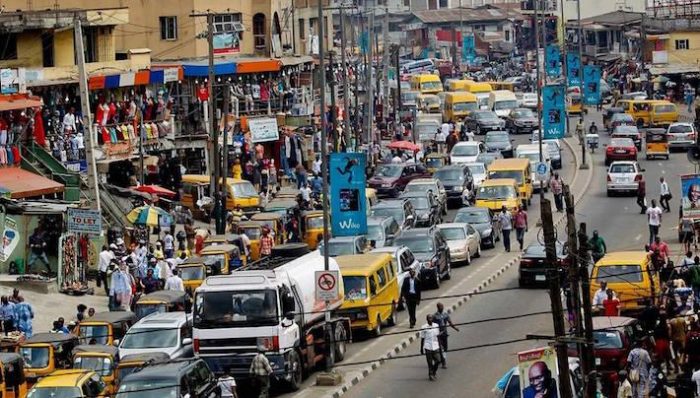
With petrol prices jumping nearly five times in 22 months, transport costs have risen by 20 to 100 percent over the period, raising the cost of logistics for food traders who pass it onto the consumers.
As a result, several families go without food as they cannot always afford to have three square meals in 24 hours.
According to SBM Intelligence, the cost of transportation in Nigeria has seen a significant surge over the last seven years. Bus transport fares for interstate travel rose by 403.5 percent over the period, SBM Intelligence said. Airfares rose by 280.7 percent on the average, with water transport fares seeing a 148.8 percent rise in the same period.
“The impact on low-income Nigerians is particularly severe. Small businesses and traders reliant on transportation for goods distribution face increased operational costs, leading to higher consumer prices,” SBM Intelligence said.
In an interview with BusinessDay, Adebisi Olaoye, a businesswoman and food vendor in the popular Ketu market in Lagos State, lamented how she struggled to meet the needs of her customers and family members.
“As a food vendor with four children, I barely provide three square meals for my family, notwithstanding the cost of meeting the needs of my customers,” Olaoye said, in a rather frustrating tone.
The entrepreneur noted that the cost of preparing different dishes at her one-room-long canteen has doubled since the beginning of 2024 due to the high prices of rice and beans.
“Preparing a pot of stew or vegetable soup per day costs over N40,000 to serve a little above 100 customers because of the weakening purchasing power,” she said.
Olaoye added that most of her food items like rice, yams, groundnut oil, and cassava flour are usually transported from different states into Lagos, noting that fuel price hike, which has more than doubled the transportation fares, have forced her to seek alternatives.
Petrol price hovers between N800 to N900 per litre. It is set to hit N930/litre as the naira-for-crude talks continue between petrol refiners and the federal government.
The increase, necessitated by petrol market liberalisation, has worsened the living conditions of Nigerians and exacerbated poverty. According to the NBS, 133 million Nigerians are multi-dimensionally poor.
“As the eldest daughter of my family who does all the cooking, to cook a decent pot of soup for the six of us costs at least N15,000 with proper planning and management,” said Akintewe Funmilayo, a Lagos-based youth.
Funmilayo highlighted how she tried to balance cooking at home with buying food at a canteen.
“Food vendors keep saying that getting the food items to their location is making everything very expensive now. I went to a local restaurant recently and one spoon of rice was sold for N400, with a spoon of beans going for N400. I couldn’t cancel the order because it was already dished.”
Data from the NBS puts food inflation at 23.51 percent. It was a significant drop from 39.84 percent in December 2024, but that’s because of the rebased consumer price index (CPI) in January 2025. Yet, it is considerably high.
“Within a year, the price of staple foods for many cash-trapped Nigerians more than doubled,” SBM Intelligence analysis noted.
Speaking on the affordability of healthy diets, Samson G. Simon, chief economist at ARKK Economics and Data Limited, said those who are gainfully employed still struggle to afford healthy diets per day due to shrinking disposable income.
“The Nigerian Financial Services Market Report revealed that only 2.4 percent of Nigerians earn above N200, 000 per month, and 3.7 percent earn between N150,000 and N200,000.
“About 8.3 percent earn between N100,00 to N150,000, with 19.3 percent earning N50,000 to N100,000. About 21.2 percent earn N35,000 to N50,000; 27.8 percent earn N35,000, while 17.1 percent are unemployed Nigerians,” he said.
The report also revealed that three out of 10 workers in Nigeria spend over 20 percent of their salary on transportation.

SUBSCRIBE TO OUR NEWSLETTER NOW
Support MATAZ ARISING’ journalism of integrity and credibility.
Good journalism ensure the possibility of a good society, an accountable democracy, and a transparent government.
We ask you to consider making a modest support to this noble endeavour.
TEXT AD: To advertise here – Email ad@matazarising.com
LATEST POSTS
-
NLC gives FG ultimatum to cut petrol price, renegotiate minimum wage

MaTaZ ArIsInGDallas, Texas by Christian Appolos Nigeria Labour Congress (NLC) has given the Federal Government a two-week ultimatum to reduce the price of petrol and commence renegotiation of the national minimum wage, warning that it would be compelled to take further action if the demands are not met. The ultimatum, which takes effect from Friday,…
-
Nigeria must shift from consumption to production — Peter Obi

MaTaZ ArIsInGDallas, Texas Presidential candidate of the Nigeria Democratic Congress (NDC), Peter Obi, has called for deliberate policies to transform Nigeria from a consumption-driven economy into a productive economy capable of creating jobs, increasing exports and competing in the global market. Obi made the call after attending the inauguration of the newly elected President of…
-
MaTaZ ArIsInGDallas, Texas …says exchange rate will reach N3,000 to one dollar The Minister of Finance and the Coordinating Minister of Economy, Prof. Taiwo Oyedele has revealed that returning fuel subsidy would cost Nigeria government revenue of more than N16 trillion per year. By Tyavzua Saanyol Speaking on Thursday at a press briefing in Abuja,…