By Idowu Ephraim Faleye +2348132100608
The presidential campaign season for the office of President of Nigeria will bring the familiar noise to our streets and airwaves. Aspirants will tell Nigerians why the country is broken and why they alone possess the solution. But serious leadership requires more than angry slogans and a picture of total failure. Anyone seeking to take over government must demonstrate that he understands the Nigeria he wants to inherit, its current condition, the changes that have taken place and the problems that remain unresolved.
Taking over government does not require agreeing with everything President Bola Ahmed Tinubu has done. A presidential aspirant is free to criticise, modify or reverse any policy where evidence shows that it has failed or produced unacceptable consequences. Political disagreement is legitimate and necessary in a democracy. But disagreement should not become an excuse for denying observable changes. The real test is not whether a candidate supports Tinubu; it is whether the candidate understands the country he is seeking to govern.
The first responsibility of a credible successor is therefore accurate diagnosis. Consider someone taking over an ongoing project because the previous manager has been accused of inefficiency. A serious new manager does not arrive and declare everything before him a failure. He examines the objectives, resources, achievements, failures and constraints. He identifies what the previous manager got right, what he got wrong, why he got it wrong and what needs to be done differently. The same standard should apply to anyone seeking to take over the management of Nigeria.
Before presenting a new development programme, an aspirant should be able to say: “This is the condition in which I am taking over. These are the problems I inherited. These are the reforms already undertaken. These are the things that have improved. These are the things that have not improved. These are the unintended consequences. And this is what I will do differently.” That is not an endorsement of the incumbent. It is simply the minimum requirement for responsible diagnosis.
There are already things that any serious contender should be able to identify and discuss honestly. Under Tinubu, the FCT has seen a large programme of road, bridge and district infrastructure projects under Nyesom Wike, including roads connecting districts and satellite communities. Federal infrastructure is also expanding, with major inter-regional corridors under construction or rehabilitation, including the Lagos-Calabar Coastal Highway, Sokoto-Badagry corridor, Abuja-Kaduna-Zaria-Kano road and the Akwanga-Jos-Bauchi-Gombe-Biu-Maiduguri corridor. The administration has also unified the foreign-exchange market, introduced major tax reforms, pursued local-government financial autonomy, strengthened the passport application and tracking system, and continued airport modernisation and upgrades.
The IMF has acknowledged that reforms over the past three years have improved Nigeria’s macroeconomic outcomes and resilience, even while stressing that poverty, food insecurity and hardship remain serious. These are not claims that everything is now perfect. They are issues that a serious successor must examine and account for. Are the contenders proposing to reverse all these things? If not, why are they not acknowledging them first and telling Nigerians what they intend to retain, what they intend to improve, what they intend to discontinue and what new measures they will introduce? If they intend to continue the roads, retain the unified foreign-exchange framework, build on the tax reforms, preserve local-government autonomy, continue infrastructure and airport modernisation, and consolidate macroeconomic stability, then they should say so. If they believe these interventions are inadequate, they should explain precisely what they will do differently.
This is where development planning begins: with diagnosis. A wrong diagnosis produces a wrong prescription. If an aspirant deliberately presents Nigeria as exactly the same country it was in 2023, he risks designing solutions around conditions that may have changed while overlooking problems that have emerged since then. The question is therefore not simply whether Tinubu’s policies are right or wrong in the abstract. The harder question is what condition those policies have produced, what they have failed to solve, what unintended consequences they have created and what reality the next government will actually inherit.
Everybody knows Nigeria has serious problems. Nigerians know the hardship they experience every day. But “Nigeria is suffering” is not a development strategy. The harder questions are: What was wrong when you arrived at the starting line? What has changed since then? Which reforms should be retained? Which should be modified? Which should be abandoned? What problems remain unresolved? And, most importantly, how will you convert whatever gains have been made in macroeconomic stabilisation into jobs, food security, productive agriculture, industrial growth, lower production costs and higher household incomes?
This is why the ongoing-project analogy matters. A person taking over an existing project is expected to demonstrate what the previous manager did, what he did correctly, what he did wrongly, why those weaknesses occurred and what the new manager will do differently. He is not expected to destroy everything simply because he wants to establish his own identity. He is expected to preserve what works, correct what does not work and introduce what is missing. Governance is also a continuous process. Nigeria does not begin again every time a new president takes the oath of office.
Anyone seeking to replace Tinubu should therefore be able to present a clear chain of reasoning: Inherited Condition → Reforms Undertaken → Results Achieved → Problems Remaining → New Intervention → Expected Outcome. The inherited condition establishes the starting point. The reforms explain what has already been attempted. The results show what has changed. The remaining problems identify the unfinished work. The new intervention explains what the candidate intends to do differently. The expected outcome tells Nigerians what measurable improvement they should expect.
Without that chain, a manifesto can easily become a collection of promises rather than a genuine development strategy.
A candidate does not have to praise the incumbent to be taken seriously. But when independent institutions such as the IMF and World Bank identify changes in Nigeria’s macroeconomic position while also warning about continuing poverty, food insecurity and weak household welfare, a serious political leader should be able to acknowledge both sides of the picture. The honest position can be that some reforms have produced important improvements while their benefits have not yet reached ordinary Nigerians quickly or deeply enough. That is a far more useful political argument than pretending that nothing has changed.
True opposition is not blind denial. A credible contender can say that a reform was necessary but poorly implemented; that another produced positive results but imposed unacceptable costs; that another should be retained but redesigned; and that another should be abandoned altogether. That is how an alternative government demonstrates that it understands policy rather than merely understands political criticism.
The most important fact for the next election is that a successor will not inherit the Nigeria of 2023. He will inherit Nigeria as it exists at the moment he assumes office. Some old problems may have improved. Others may have worsened. Some may have changed character. New opportunities and new constraints will have emerged. Therefore, the next president’s development programme must be based on the Nigeria he actually inherits, not the Nigeria he needs to describe in order to discredit his predecessor.
The purpose of a transition should therefore be more than replacing one person at the Villa with another. The real question is what happens to Nigeria’s development process after the handover. If a reform has created a useful foundation, the next government should know how to build on it. If it has produced serious unintended consequences, the next government should know how to correct them. If a problem remains unresolved, the candidate should explain how he intends to solve it.
Ultimately, the credibility of a presidential aspirant should be measured by the quality of his diagnosis. How accurately does he understand the country he wants to inherit? How honestly does he assess what has already been done? Can he distinguish between what worked and what failed? Can he identify the gaps? Can he explain what he will retain, what he will change and what he will introduce? And can he connect those interventions to measurable outcomes?
A manifesto without a proper diagnosis is only a collection of promises. Genuine development planning begins with understanding where the country is, recognising how it got there, preserving what works, correcting what fails and establishing a credible path to where it needs to go. Before anyone asks Nigerians to hand over the country, Nigerians should ask the person seeking to take over: Do you actually understand the Nigeria you are asking us to entrust to you?
Idowu Ephraim Faleye is a freelance political writer based in Ado-Ekiti, Nigeria +2348132100608
#Nigeria #Election2027 #PresidentialLeadership #Economy #Governance #PersonalOpinion

1SUBSCRIBE TO OUR NEWSLETTER NOW
Support MATAZ ARISING’ journalism of integrity and credibility.
Good journalism ensure the possibility of a good society, an accountable democracy, and a transparent government.
We ask you to consider making a modest support to this noble endeavour.
TEXT AD: To advertise here – Email ad@matazarising.com
LATEST POSTS
-
WANTS TO LEAD NIGERIA? TELL US YOUR DIAGNOSIS OF THE COUNTRY
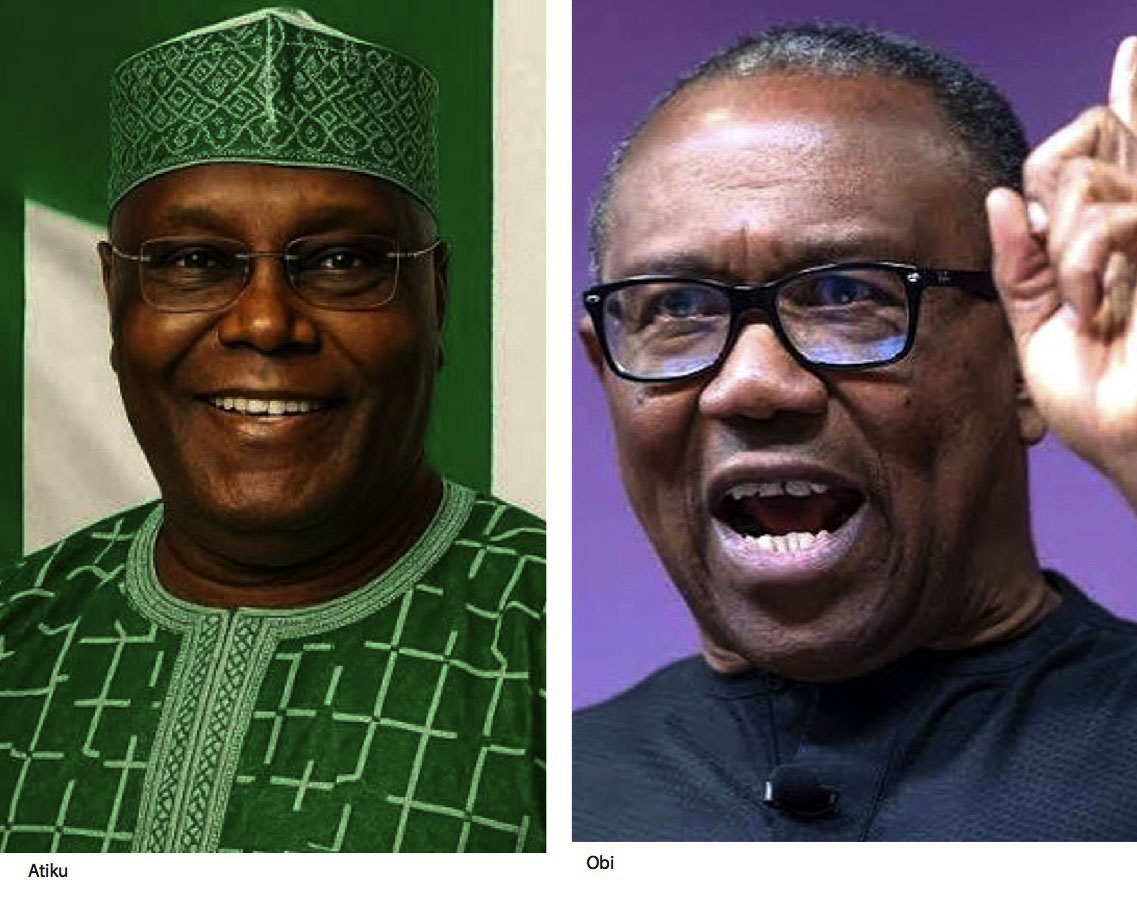
By Idowu Ephraim Faleye +2348132100608 MaTaZ ArIsInGDallas, Texas The presidential campaign season for the office of President of Nigeria will bring the familiar noise to our streets and airwaves. Aspirants will tell Nigerians why the country is broken and why they alone possess the solution. But serious leadership requires more than angry slogans and a…
-
Nigeria may crash chaotically under Atiku – Babachir Lawal; says he’d rather back Tinubu

MaTaZ ArIsInGDallas, Texas Former Secretary to the Government of the Federation, Babachir Lawal, has said he would rather support President Bola Tinubu than former Vice President Atiku Abubakar, arguing that an Atiku presidency could lead to a “chaotic” crash. Lawal made the remarks during an interview on the Naija Unfiltered Podcast, while explaining his opposition…
-
How subsidy removal funded $500m Lagos airport rebuild — Keyamo
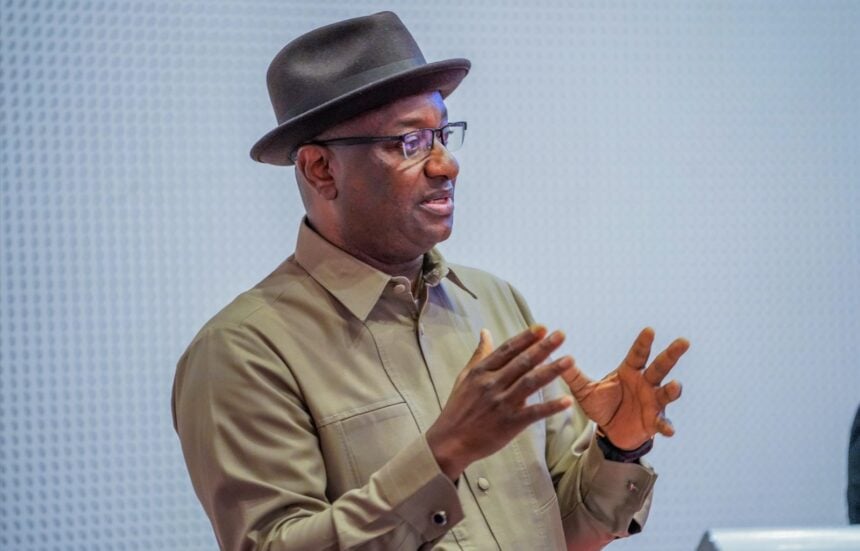
MaTaZ ArIsInGDallas, Texas The removal of the fuel subsidy has enabled the Federal Government to raise about $500m for the reconstruction of the Lagos airport and other aviation infrastructure, the Minister of Aviation and Aerospace Development, Festus Keyamo, has said. Keyamo disclosed this on Monday in Lagos while speaking at the 67th anniversary of Aero…