
By Idowu Ephraim Faleye
June 12 of every year is Democracy Day in Nigeria. Around this same period last year, I wrote the article titled “Unsung Heroes of June 12: They Fought, We Forgot.” Unknown to me, it would be the last article I could write for many months. I was struck by a mysterious illness that brought me to the brink of despair. My hands could no longer hold a pen steadily. Day by day, my strength faded. Standing, sitting comfortably, thinking clearly, sleeping peacefully, or even walking from my bed to the toilet became difficult tasks.
Words are insufficient to express my gratitude to God Almighty for His mercy and preservation. I am equally indebted to His Excellency, Gov. BAO; Her Excellency, Prof. Modupe Adelabu; CPS Yinka Oyebode; MHR Hon. Biodun Omoleye; Gbenga Ayodele from Canada; members of Gofamint Church, Region 10, Ekiti State; and others whose financial assistance brought relief when it was most needed.
I remain especially grateful to my beloved wife, Faith, who stood by me like Mount Gibraltar; Mr. and Mrs. Kunle Dada of the FCT; Peter Ogundele of Ikorodu; and Mr. Toyin Akilo (PS:P&E), who went far beyond friendship and brotherhood to personally ferry me from Lagos to the Ekiti State Teaching Hospital, ensuring that I received timely medical attention. Their compassion, sacrifice, and selflessness will forever occupy a special place in my heart.
As the nation prepares once again to mark the anniversary of June 12, the memories of Nigeria’s long and painful march to democracy rise to the surface. The stories of courage, sacrifice, and defiance of tyranny will echo across television stations, newspaper pages, and political platforms. Names like Chief MKO Abiola, the winner of the annulled 1993 presidential election, and his brave wife Kudirat Abiola, will be remembered with deserved reverence. The country will also recall General Shehu Musa Yar’Adua, who died in detention, and Pa Alfred Rewane, who was murdered in his home. These names have become familiar symbols of the democracy we enjoy today. Their sacrifices are well known and deeply etched into national memory.
However, as we honour these fallen giants, we must ask a sobering question: what about those whose names are barely mentioned? What about those who risked everything—some their careers, others their lives, and others their future—yet remain largely forgotten? What about the unsung heroes of the June 12 struggle?
One such man is Colonel Abubakar Dangiwa Umar (Rtd.), a man of rare courage who stood on the side of truth when silence was the safer option. He was not a politician or a civilian activist, but a serving military officer who spoke out against the annulment of the June 12, 1993 presidential election, widely regarded as the freest and fairest in Nigeria’s history. That historic moment, capable of reshaping the nation, was instead stolen in broad daylight by the very institution meant to defend the people’s will.
Colonel Umar did not keep quiet. As Military Governor of Kaduna State and a respected voice within the military, he openly challenged the decision of the Supreme Military Council and called for the restoration of Abiola’s mandate. In doing so, he confronted not only General Ibrahim Babangida, who orchestrated the annulment, but also General Sani Abacha, who later deepened the repression of pro-democracy voices. He understood the risks—dismissal, detention, even death—but chose conscience over comfort. His military career was cut short, but his courage remains undeniable. He is one of the unsung heroes of June 12.
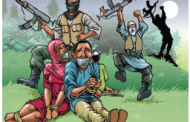
There is another group whose story is even more haunting. Their names are rarely mentioned during national commemorations, yet their actions were among the most daring of the struggle. They were not seasoned activists but four young men of the Association for the Advancement of Democracy in Nigeria (AADN). On October 25, 1993, months after the annulment, they hijacked a Nigerian Airways Airbus A310 in a desperate attempt to draw global attention to Nigeria’s democratic crisis.
The group was led by Benson Odugbo Eluma, alongside Richard Ogunderu, Kabir Adenuga, and Kenechukwu Nwosu. Their plan was audacious, even reckless, but driven by deep frustration. They boarded a Lagos–Abuja flight carrying over 150 passengers, including government officials. Mid-flight, they took control of the aircraft, diverted it to Niamey, Niger Republic, renamed it “Free Nigeria,” and distributed pamphlets demanding the restoration of MKO Abiola’s mandate and a return to civilian rule.
They were arrested, tried, and sentenced to long prison terms in a foreign land. In those cold prison cells, their youthful dreams were buried. Their families suffered. Their futures were altered forever. When they eventually regained freedom, they returned to a nation that had moved on—one that barely remembered their names, let alone their sacrifice. Only Richard Ogunderu has publicly spoken about the incident; the others faded into silence, with no recognition or rehabilitation.
The hijacking was widely condemned, and rightly so, as no democratic society can justify endangering civilian lives. Yet beneath the controversy lies a deeper truth: it was a desperate cry from a people whose voices had been completely shut out. Whether or not one agrees with their method, their courage cannot be denied. They remain, in their own tragic way, part of the June 12 story—unsung, but not without significance.
Sadly, silence surrounds these names. Each year, Nigeria celebrates democracy’s martyrs with ceremonies and speeches. We remember the well-known figures, and rightly so. But Colonel Dangiwa Umar? The AADN boys? Not a whisper. Not a mention. This is not merely an oversight; it is an injustice.
The tragedy of selective remembrance extends beyond politicians and activists. It also includes courageous journalists, writers, and pro-democracy campaigners who fought tyranny with nothing but their pens and convictions. Figures such as Babafemi Ojudu, Bolanle Bolawole, Moshood Fayemiwo, Gbolahan Olalemi, and Chris Anyanwu stood firmly for democracy during Nigeria’s darkest years, yet many have not received adequate national recognition.
Beyond them are lesser-known heroes who endured harassment, exile, and persecution for speaking truth to power. Men and women like Olaitan Oyerinde, Basil Chianson, Dominic Ogampa, Comrade Abdulrasheed Wale Salami, Chima Ubani, Bamidele Aturu, and many others whose names have faded from public memory paid heavy personal prices for the freedoms we now enjoy. Some lost opportunities, some lost years, and some lost their lives. Yet their stories remain buried beneath time.
If we truly value the democracy we now enjoy, we must remember all who contributed—not just the celebrated few, but also those who acted alone, suffered in silence, and returned to obscurity after giving everything.
This is why the time has come for Nigeria, under President Bola Tinubu—a man who himself was a key figure in the June 12 struggle and a target of military repression—to set the record straight. He carries a moral responsibility to ensure that no hero of June 12 is left behind. Their stories must be told. Their sacrifices must be honoured.
More importantly, action must follow memory. Colonel Abubakar Dangiwa Umar deserves national recognition for his moral courage against military dictatorship. The AADN boys deserve rehabilitation and official acknowledgment as part of the democratic struggle—patriots who, though desperate, stood against tyranny. Their names must be restored to the national record, not erased by discomfort or controversy.
We cannot allow history to forget them. We cannot continue to honour some while ignoring others. The story of June 12 is incomplete without them. Their sacrifice was real. Their pain was deep. Their courage was undeniable. If their names are allowed to fade, we teach future generations that only certain kinds of heroism matter.
As June 12 approaches, let us remember not only the celebrated faces of history but also the forgotten ones whose courage helped secure the democracy we now enjoy. Let us speak their names. Let us tell their stories. Let us honour them.
And to the families of these unsung heroes, to those still carrying silent scars of sacrifice, and to those whose dreams were interrupted by the struggle for justice, we say: you are not forgotten. Your story matters. Your struggle was not in vain. One day, this nation will remember you—not with silence, but with honour. And on that day, your courage will shine as brightly as any name in Nigeria’s democratic history.
Idowu Ephraim Faleye is a freelance political writer based in Ado-Ekiti

1SUBSCRIBE TO OUR NEWSLETTER NOW
Support MATAZ ARISING’ journalism of integrity and credibility.
Good journalism ensure the possibility of a good society, an accountable democracy, and a transparent government.
We ask you to consider making a modest support to this noble endeavour.
TEXT AD: To advertise here – Email ad@matazarising.com
LATEST POSTS
-
Living Lavishly Ever After

By Wole Olaoye MaTaZ ArIsInGDallas, Texas Public office in Nigeria is, largely, a route to living lavishly ever after. You are overcompensated while in office and further spoilt in retirement after your four- or eight-year tenure. Meanwhile, civil servants who helped to run the government for 35 years retire into poverty as their meagre entitlements…
-
Nigerian students to get free data to access educational platforms – FG

MaTaZ ArIsInGDallas, Texas …moves to regulate internet access for under-16s The Federal Government on Thursday unveiled a major digital education intervention that will allow millions of Nigerian students to access approved educational platforms without paying for internet data, in a move aimed at dismantling one of the biggest barriers to technology-driven learning in the country.…
-
I’m not Obidient, not Kwankwasiyya, I’m NDC - Seriake Dickson

National Leader of the Nigeria Democratic Congress (NDC), Senator Seriake Dickson, has said he does not belong to either the Obidient or Kwankwasiyya political support groups, insisting that his allegiance is to the NDC. Dickson made the clarification during an interview on Arise TV’s Prime Time on Wednesday, while speaking on the relationship between the party and…