


The recent Supreme Court ruling restoring the leadership of David Mark as National Chairman of the African Democratic Congress (ADC) may appear like a decisive victory for the opposition party, but a closer look shows the crisis is far from resolved.
While the apex court set aside the order of the Court of Appeal that had directed parties to maintain the status quo ante bellum, it stopped short of delivering a final verdict on the underlying leadership dispute.
The Supreme Court, in a unanimous decision by a five-member panel led by Justice Mohammed Lawal Garba, ruled that the Court of Appeal acted beyond its jurisdiction by issuing orders after dismissing the appeal before it.
However, the court only allowed part of Mark’s appeal and directed all parties to return to the trial court for continuation of hearing. This means the substantive issue—who legitimately leads the ADC—remains unresolved.
In effect, the restoration of the Mark-led executive is temporary, pending the final determination of the case at the lower court.
Despite the apparent legal victory, the existence of multiple factions within the party continues to pose a threat to its stability. The ongoing litigation creates uncertainty around decisions taken by the current leadership, especially if the trial court eventually rules otherwise.
This lingering legal tussle weakens the party’s internal cohesion at a critical political moment.
INEC deadline Pressure
More pressing is the ticking clock. The Independent National Electoral Commission (INEC) has set May 10 as the deadline for political parties to submit their membership registers ahead of the 2027 general elections.
With barely days to meet this requirement, the ADC faces a logistical and legal challenge. Any dispute over the legitimacy of the party’s leadership could complicate the submission process or even raise questions about the authenticity of the register presented.
If factions fail to align quickly, there is a risk of parallel submissions or internal disputes over which list represents the authentic membership of the party. Such confusion could attract regulatory scrutiny or even sanctions from INEC.
Although the Supreme Court ruling strengthens the position of the Mark-led leadership for now, it is, at best, an interim relief rather than a conclusive win.
Until the trial court delivers a final judgment and the party resolves its internal divisions, the ADC remains in a precarious position—caught between legal uncertainty and electoral deadlines.
In practical terms, the party may have won a battle, but the larger war over its leadership and organisational stability is still ongoing.

1SUBSCRIBE TO OUR NEWSLETTER NOW
Support MATAZ ARISING’ journalism of integrity and credibility.
Good journalism ensure the possibility of a good society, an accountable democracy, and a transparent government.
We ask you to consider making a modest support to this noble endeavour.
TEXT AD: To advertise here – Email ad@matazarising.com
LATEST POSTS
-
Lagos moves to phase danfo into franchise bus system

MaTaZ ArIsInGDallas, Texas The Lagos State Government, the Nigeria Union of Road Transport Workers (NURTW), and the Road Transport Employers Association of Nigeria (RTEAN) have signed a Memorandum of Understanding (MoU) to transition danfo operators into a regulated public transport system under the state’s Bus Industry Transition Programme (BITP). The development was disclosed in a…
-
‘I’m embarrassed by timing of EFCC action on Osun govt account – Tinubu

MaTaZ ArIsInGDallas, Texas President Bola Tinubu has said he finds the timing of the Economic and Financial Crimes Commission, EFCC’s action on Osun state bank account embarrassing. According to President Tinubu, he was yet to be fully apprised of the facts that informed EFCC’s action, but “I feel compelled to intervene”. In a statement on…
-
State Police: We’ve studied India, America, Pakistan’s models – IGP Disu
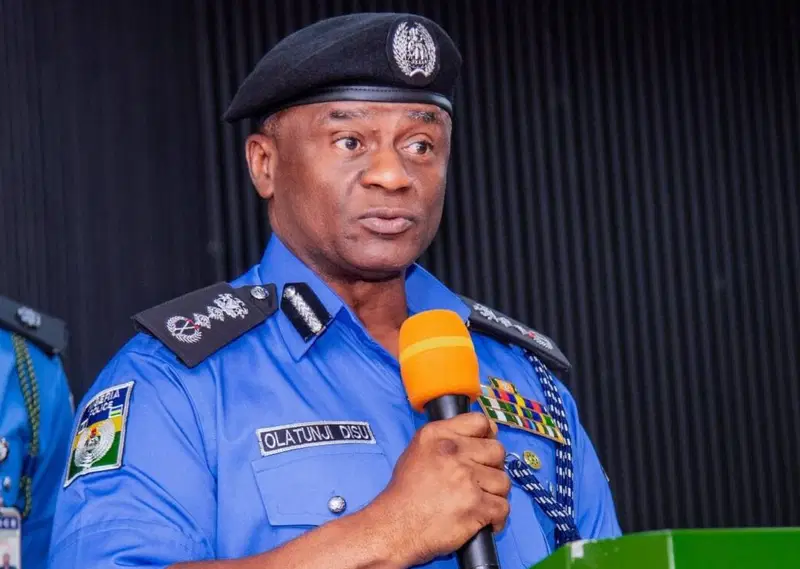
MaTaZ ArIsInGDallas, Texas The Inspector-General of Police, IGP, Olatunji Disu, has disclosed that the committee that developed the framework for the proposed state police system studied India, the United States of America and Pakistan’s models before submitting its recommendations. Also, IGP Disu urged police personnel to take an active role in shaping the national conversation…