By Adebamiwa Olugbenga Michael
The reported statement credited to George Onuakalusi “Yorubas are minorities in my constituency but I would consider them in next empowerment” deserves serious criticism, especially because it touches the dangerous intersection of ethnicity, political power, and identity in Lagos.

Whether intended casually or politically, such a statement is deeply insensitive in a state that is historically, culturally, and ancestrally Yoruba. Lagos may be Nigeria’s most cosmopolitan city, but it remains part of Yorubaland. Millions of non-Yorubas have prospered there because the indigenous Yoruba population and political structure historically allowed openness, accommodation, and economic inclusion on a scale rarely seen elsewhere in Nigeria.
That is precisely why many people would find it troubling for a politician of Igbo extraction representing a constituency in Lagos to publicly speak of Yorubas as though they are outsiders to be “considered” later in empowerment distribution. Even if demographic realities in parts of Oshodi-Isolo may show a mixed population, the language still comes across as politically provocative and ethnically arrogant.
The bigger issue is not whether Yorubas are numerically dominant in a particular ward or polling unit. The issue is the mindset behind the statement. Public empowerment is not supposed to be distributed as ethnic patronage. Constituency projects are funded by Nigerian taxpayers, not tribal unions. Once elected, a representative owes equal responsibility to every constituent regardless of ethnicity.
Ironically, many Yorubas have consistently defended Lagos as a pan-Nigerian economic space where every ethnic group should have opportunities to thrive. That openness is one major reason why politicians from outside the Southwest can successfully build political careers and businesses in Lagos. Statements that appear to weaponize demographic advantage against the indigenous ethnic nationality therefore risk damaging the fragile trust that holds such coexistence together.
This is also politically dangerous because Nigeria is already battling rising ethnic polarization. Since the 2023 elections, tensions between Yoruba and Igbo political narratives in Lagos have become more visible and emotionally charged. In that atmosphere, leaders are expected to calm tensions, not reinforce them with comments that may be interpreted as ethnic triumphalism or exclusion.
If a Yoruba politician made a similar statement against Igbos in a southeastern state, there would likely be widespread outrage across the country. The principle must therefore remain consistent. Ethnic favoritism is wrong regardless of who practices it.
Leaders must understand that representation in a multiethnic society requires emotional intelligence, restraint, and respect for historical sensitivities. Lagos belongs to all Nigerians constitutionally, but its indigenous identity must also be respected culturally and politically. Ignoring that balance is both reckless and unnecessary.
The controversy is a reminder that Nigeria cannot build national unity through ethnic entitlement politics. A public office holder should never speak in a manner that makes any ethnic group, especially the indigenous people of the state he represents appear like reluctant beneficiaries in their own homeland.
That is why the statement deserves condemnation, clarification, and a more responsible approach going forward.
Adebamiwa Olugbenga Michael is a Lagos-based journalist, political economy and policy analyst, and publisher of TheInsightLensProject.com, delivering data-driven open-source intelligence insights on Nigeria, Africa, and global affairs.

1SUBSCRIBE TO OUR NEWSLETTER NOW
Support MATAZ ARISING’ journalism of integrity and credibility.
Good journalism ensure the possibility of a good society, an accountable democracy, and a transparent government.
We ask you to consider making a modest support to this noble endeavour.
TEXT AD: To advertise here – Email ad@matazarising.com
LATEST POSTS
-
What Makes an Effective President? Reflecting on President Tinubu’s Leadership

MaTaZ ArIsInGDallas, Texas By Idowu Ephraim Faleye Every election season, Nigerians passionately debate who deserves to lead the country. We argue over certificates, age, wealth, popularity, ethnicity, political party, and campaign promises, yet we often overlook the one quality that may matter most: No president can personally run the economy, defend the nation, build roads,…
-
How passenger’s ‘refusal’ triggered viral airport confrontation — Officials
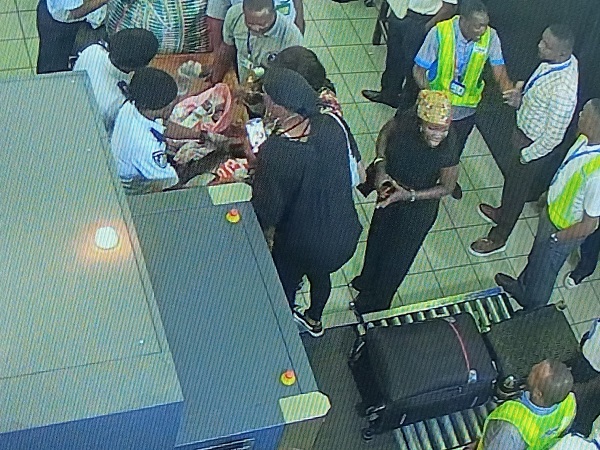
MaTaZ ArIsInGDallas, Texas Airport officials have provided their account of the viral confrontation involving Progress Oberiko at Osubi Airport, Okpe Local Government Area of Delta State, following the passenger’s allegations of harassment and attempted extortion, which sparked widespread public reaction and prompted the Federal Airports Authority of Nigeria (FAAN) to order an investigation. Oberiko, travelling on…
-
How Buhari’s Govt Fuelled Banditry and Kidnapping — Ex-DSS Director Reveals
MaTaZ ArIsInGDallas, Texas Former Director of the Department of State Services (DSS), Dennis Amachree, has blamed the administration of late former President Muhammadu Buhari for the worsening insecurity that gripped Nigeria during his years in office. Presidential election coverage Amachree made the claims in his newly released book, “DSS@40: My Journey Behind the Shield,” where…