


* How First Lady’s effort failed to save him
* Non withdrawal of officers on VIP duty
* Anambra State N100m bribe
*Poor image of the Force under him
When news broke that President Bola Tinubu had accepted the resignation of Kayode Egbetokun as Inspector-General of Police, the official explanation was brief and measured: family reasons. But across Abuja’s security corridors and within the ranks of the Nigeria Police Force, few believed the story ended there.

Within hours of the announcement, Olatunji Disu was named Acting IGP, and the presidency moved swiftly to frame the transition as routine. Yet, interviews with serving and retired police officers, presidency insiders, security analysts and lawyers suggest that Egbetokun’s departure was the climax of months of friction over policy, power, money and loyalty.
Sources disclosed that at the heart of the storm were three explosive issues, including the withdrawal of police from VIP protection duties, a high-stakes battle over state policing, and festering corruption allegations, including claims that as much as N50 million exchanged hands annually for the deployment of six armed officers to a single private individual. There was also the N100 million transferred to his son’s account by Anambra November election.
VIP Officers’ Withdrawal Order
In November 2025, President Tinubu issued an Executive Order directing that more than 11,000 police officers attached to politicians, business moguls and other high-profile individuals be withdrawn and redeployed to communities battling banditry and kidnapping. The order struck at an economic system long considered untouchable.
According to a senior official familiar with discussions at the Presidential Villa, the directive was “non-negotiable.” The president insisted that while Nigeria’s business class required protection, the police should not be overstretched performing private guard duties when rural communities were under siege. They asked to seek such protection from the Nigerian Security and Civil Defense Corp, NSCDC.
But implementation proved contentious. A presidency source told Business Hallmark that Egbetokun did not merely delay execution of the order, but actively pushed back. “He argued that economic actors needed police protection,” the source said. “The President’s position was that protection can still be provided, but not necessarily by police officers.”
The alternative proposed was the Nigeria Security and Civil Defence Corps (NSCDC), which Tinubu reportedly described as equally trained and capable of handling armed protection. Yet within police circles, the directive was seen as a financial earthquake.
A highly placed source in the security establishment alleged that the VIP deployment scheme generated hundreds of billions of naira annually through payments made for police escorts.
Greed and Corruption
“They collect about N100,000 monthly per officer from the client,” the source claimed. “The officer may receive half of that. The rest goes up the chain.”
One prominent VIP, who spoke on condition of anonymity, confided that he paid N50 million yearly for six armed police escorts, and an additional N100,000 monthly to each officer.
While the police have never officially confirmed such arrangements, the allegation underscores the scale of informal monetisation attached to VIP deployments. When the president’s withdrawal directive came, insiders said it disrupted what had become an entrenched revenue stream.
“There was resistance,” one source admitted. “Some officers reportedly changed uniforms and continued the same duties under different guise.” Although the police leadership publicly insisted compliance was underway, insiders maintain the pace and sincerity of implementation angered the presidency.
State Police Fault Line
If the VIP Officers’ withdrawal directive strained relations, the debate over state police deepened the divide. State policing has become a signature reform agenda of the Tinubu administration, framed as a structural solution to Nigeria’s worsening insecurity. Yet, Egbetokun had publicly taken a different view.
At a national dialogue on state policing in April 2024, organised by the House of Representatives in collaboration with the Policy and Legal Advocacy Centre, the then IGP, represented by an Assistant Inspector-General, caused an uproar by arguing that Nigeria was not ready for decentralized policing.
Instead of creating state-controlled police forces, he proposed merging the Nigeria Security and Civil Defence Corps and the Federal Road Safety Corps into departments under the Nigeria Police Force.
He warned that governors could weaponize state police for political ends and that the move might inflame ethnic tensions. “It is the submission of the leadership of the Nigeria Police Force that Nigeria is not yet mature for state-controlled police,” he said at the time.
The remarks were interpreted in some quarters as a direct contradiction of the President’s publicly stated ambition.
A source close to the presidency said the optics were damaging. “How do you openly oppose a policy your Commander-in-Chief is pushing?” the source asked. “You don’t have to agree privately, but you cannot publicly undermine it.”
The tension resurfaced months later during an interfaith gathering at the Presidential Banquet Hall in Abuja, where Tinubu reportedly assured governors and religious leaders that the creation of state police would not be postponed.
Security analysts say the disagreement went beyond policy differences.
Lekan Ojo, a security expert, argued in an interview with an online medium that the debate exposed deeper frustrations about the capacity of the federal police structure. “For over 15 years, the police have largely ceded frontline counter-insurgency operations to the military,” Ojo observed in a interview. “If the current structure isn’t delivering, resistance to reform naturally becomes controversial.”
Within the force, some officers privately supported Egbetokun’s caution, citing fears that governors could abuse state-controlled commands during elections. But others believed the IGP’s stance placed him at odds with the political tide.
Corruption Allegations and the N100m Controversy
Compounding policy tensions were corruption allegations that lingered over Egbetokun’s tenure. One of the most publicised controversies involved N100 million reportedly transferred into the bank account of his son, Victor Egbetokun, allegedly from the Anambra State Government’s security vote account.
The Nigeria Police Force swiftly denied wrongdoing. On Channels Television’s Politics Today, Force Public Relations Officer, Benjamin Hundeyin, said the transaction was a banking error that was immediately reversed.
“He saw the N100 million in his account and instructed his bank to reverse it immediately,” Hundeyin explained. “He printed his statement and showed evidence that the money was returned.”
The spokesperson added that Victor Egbetokun petitioned the Economic and Financial Crimes Commission to investigate the allegation.
Despite the official clarification, scepticism persisted. Critics questioned how such a large transfer could occur accidentally and why the source of the funds was linked to a state security account.
Although no formal charges were brought, the controversy fed public perception of opacity within the police hierarchy. In addition to the Anambra episode, there were longstanding allegations that VIP protection slots were effectively commodified, claims the police leadership has consistently denied.
A senior lawyer, Clement Iloh, also argued in an interview that Egbetokun’s exit should be seen in the broader context of accountability. “Replacing the IGP is a step in the right direction,” he said, adding that the amendment to the Police Act granting a fixed four-year tenure regardless of age or service years should be revisited.
He questioned whether any individual deserved exceptional tenure protection. “What was so special?” he asked pointedly.
The Shadow of Insecurity
Egbetokun’s critics also point to rising insecurity during his tenure. Although he was appointed in June 2023 with promises of reform, kidnappings and bandit attacks continued across the North East and North Central regions. Security observers note that at one point, the president reportedly directed him to relocate temporarily to Benue State following deadly Christmas attacks.
While the police insisted operational deployments were underway, some analysts argue that the force’s public visibility diminished as the military took on expanded roles. “The police should be the lead internal security agency,” Ojo said. “But in practice, the army has dominated the narrative.”
Supporters of the former IGP counter that structural underfunding, inadequate manpower and poor equipment limited what any police chief could achieve. Egbetokun himself repeatedly cited these challenges, calling for increased recruitment – at least 30,000 officers annually – and improved budgetary allocations.
He warned that many police barracks built during the colonial era remained unrenovated despite population growth. Yet, in the unforgiving arena of political accountability, explanations rarely outweigh perceptions.
Loyalty, Rivalry, and the U.S Connection
One of the less discussed but critical dimensions of Egbetokun’s removal revolves around loyalty and internal rivalries within the police hierarchy, and a direct link to Tinubu’s Lagos political network.
Egbetokun and his successor, Olatunji Disu, share a long history with Tinubu, dating back to his governorship of Lagos State (1999–2007). Egbetokun served as Chief Security Officer (CSO), while Disu was his Aide-De-Camp (ADC). Both owed career advancement to the former governor’s mentorship.
Yet, sources within the presidency suggest that Egbetokun allegedly misused his position to marginalize Disu.
“He (Egbetokun) wanted Disu to retire quietly at age 60 in April 2026, essentially removing a rival without any overt action,” said a senior presidency official, speaking on condition of anonymity. “The President does not tolerate power being used vindictively against colleagues. Disu and Egbetokun came up together, but one chose to block the other’s path.”
The alleged behaviour reportedly contributed to Tinubu’s decision to demand Egbetokun’s resignation. “Tinubu helped him reach the pinnacle of his career,” the official added. “He became Commissioner of Police, Deputy Inspector General, and eventually IGP largely through political leverage. To then, use that position to work against peers was unacceptable.”
International Press Institute Blacklist
Adding another layer to the controversy, Egbetokun faced criticism from the press. The International Press Institute (IPI) Nigeria included his name in its “Book of Infamy” for failing to prevent police harassment of journalists. Under his tenure, about 24 journalists were reportedly subjected to arbitrary arrests, detentions, and summons without due process. The IPI cited the absence of visible corrective action as a central reason for blacklisting him.
A presidency insider told Business Hallmark that the embarrassment caused by the blacklist was “another factor” influencing the decision to remove him. “When your leadership becomes synonymous with attacks on the free press, it undermines the credibility of the entire police force and government,” the source said.
The Disu Era:
Following Egbetokun’s exit, Olatunji Disu assumed office as Acting IGP. The Nigeria Police Council is expected to convene soon to confirm his substantive appointment.
Disu, 59, has an extensive policing background, joining the force in 1992. He holds a bachelor’s degree in English Education from Lagos State University and master’s degrees in Public Administration and in Criminology, Security and Legal Psychology. His ascension represents continuity in experience while signalling alignment with Tinubu’s policy objectives.
Security analysts predict that Disu will prioritize implementation of the VIP withdrawal directive, push for structural reforms, and maintain support for state policing.
“He is seen as politically neutral within the Lagos network, and he has a history of professional loyalty,” said a senior police source. “Expect swifter execution of presidential directives.”
The choice of Disu over officers, who were senior to him, was like treading a familiar route, and was in keeping with a well known tradition in the police force of selecting the new boss from among the rank of assistant inspector general of police. It happened during the administration of Muhammadu Buhari and other previous administrations.
Incidentally, Disu was promoted to the rank of AIG in March 2025, while Egbetokun himself was appointed by the President on June 19, 2023.
Egbetokun’s continued stay in office sparked widespread controversy in 2024 after he officially reached the mandatory retirement age of 60 on September 4.
Profile of New IGP
However, his stay in office was extended following the amendment to the Police Act making the position a four year tenure irrespective of age or service..
Before his current appointment, Disu had served as Assistant Inspector-General of Police in charge of the Force Criminal Investigation Department Annex, Alagbon, Lagos, a position he assumed in February 2026.
Before that, he was at the helms at the Special Protection Unit at the Force Headquarters, Abuja, from March 2025 to February 2026.
He also served as Commissioner of Police, Federal Capital Territory Police Command from October 2024 to March 2025, and at the Rivers State Police Command from November 2023 to October 2024.
Earlier, he led the Intelligence Response Team as Deputy Commissioner of Police, and also served as DCP, Admin Operations, at Force Headquarters.
Between 2015 and 2021, Disu was the Commander of the Rapid Response Squad, Lagos.
A Dysfunctional Tradition
Disu is not the first officer to be picked and appointed IG from among the rank of officers who were not the most senior at the time of the IG appointment. Egbetokun himself was appointed above seniors like DIG Frank Mba who first attained the position of Deputy Inspector General of police ahead of Egbetokun, but incidentally by length of service, Egbetokun was his senior, having joined the police in 1990 while Mba joined in 1993.
But many had preferred Mba who is seen as intelligent, cerebral and popular in and outside the force.
Damage Control
Meanwhile, the appointment of Disu would have triggered the resignation of 29 senior officers in line with established police tradition, but for the intervention of President Tinubu.
A source within the Police Service Commission said the new development could have led to the exit of between 20 and 29 senior officers, who are Disu’s seniors were it not for presidential damage control
“Going by recent practice, Disu’s seniors might have to submit their resignation letters. We might have those who may wish to stay behind and salute their juniors. The fact is that among the DIGs, we have people whose colleagues are still ACPs. Somebody like DIG Frank Mba, though those he joined the force with as cadets are still DCPs and the likes.
“Apart from the nine DIGs, the AIGs who are senior to him are not many. Between 15 and 20 may resign,” the source noted.
A source told Business Hallmark that “Resignation of senior officers is not as entrenched in the police culture like in the military. It has happened in the past that some seniors did not resign, and it has also happened that they resigned.
“The DIGs, who are senior to the acting IG head key departments, such as Finance and Administration, DIG Yahaya Abubakar; Operations, Bzigu Kwazhi; Logistics and Supply, Adebola Hamzat; Force Criminal Investigation Department, Sadiq Abubakar; Training and Development, Frank Mba; Research and Planning, Basil Idegwu; Information and Communication Technology, and the Force Intelligence Bureau, Mohammed Gumel,” a police source told this medium.
However, last week reports surfaced that President Tinubu had intervened to save the job of officers, who are Disu’s seniors that would have been retired.
Sources said the President intervened to halt the planned retirements, citing the need for continuity and experience within the Force.
An internal list circulating within the Nigeria Police Force had reportedly identified at least eight DIGs for retirement in order to maintain command structure and prevent what is often referred to as “status reversal.”Debt management consulting
Continuity and Controversy
A Presidency source disclosed that the directive to suspend the retirements was informed by the view that Acting IGP Disu would require the support and institutional knowledge of senior officers to stabilise the Force.
Disu’s appointment has also drawn attention because it comes barely two months before his scheduled retirement. Born on April 13, 1966, in Lagos State, Disu, with police serial number AP 41729, was promoted to Assistant Inspector-General on March 6, 2025, and is due to retire on April 13, 2026, upon attaining the mandatory retirement age of 60.
The controversy over forced retirements has deep legal roots. When Egbetokun was appointed in June 2023, the PSC compulsorily retired then-DIG Moses Ambakina Jitoboh, despite his being 54 years old and having several years left before reaching the statutory retirement threshold.
The PSC had justified its decision on the basis of a long-standing police tradition that mandates the retirement of senior officers when a junior officer is promoted above them to prevent disruptions in command hierarchy.
Multiple sources told Business Hallmark that Egbetokun was sacked over his reported opposition and strong hostility to the President’s directive to withdraw police officers from Very Important Personalities protection duties.
According to sources familiar with the events that played out between last Monday evening and Tuesday, the former IG was also forced to resign over his reported resistance to state policing and vindictive conducts towards colleagues.
He was said to have made a spirited pleas for more time, asking to be allowed to complete his four-year tenure, which was expected to run until October 2027 under a 2024 amendment to the Police Act granting IGs a fixed term regardless of age or years of service.
“One of the issues is the withdrawal of police from VIPs. He didn’t execute it as quickly as the President wanted. He did it halfheartedly. He actually argued against it with the President during the security meeting, saying that the economic actors, the business people need to be protected,” a source said.
Tinubu also asked the National Security Adviser, Nuhu Ribadu, and the Department of State Services to issue further guidance and ensure the directive is effected.
According to the source, the VIP deployment scheme generated over N300bn annually for the police through a system in which businesses and individuals pay a fee for each officer deployed to them.
“The truth of the matter is, from what we know, what goes into police from money that these people pay for protection is over N300bn annually.
“They collect N100,000 per month from one officer. So, they will give the officer maybe N50,000. So, the rest goes through the chain. It trickles down.
“The President’s order was very disruptive. So, the police establishment was not happy because he removed a big income source from them. They resisted it. Some of them started wearing mufti. So, it means that they found a way to compromise it and the President got to learn about it,” the source said.
Both men served under Tinubu when he was governor of Lagos State between 1999 and 2007.
Egbetokun was the Chief Security Officer while Disu as Aide-De-Camp, and both owed their career advancement to the President’s political support.
Attempt to Save Him
It was learnt that last ditch effort by the First Lady, Senator Olufemi Tinubu, to save Egbetukun came late after his fate had been sealed as the allegations against him were considered grave bordering on corruption and insubordination. It was intriguing that his sack and announcement for constitutional amendment to permit state police came the same day.
According to sources, Egbetukun’s opposition to state police was a capital offense especially given the fact the it is one of the main conditions being demanded in the new U.S congressional law by Riley Moore.
Again, all the state governors had since April 2025 approved the law but it was stalled at the police headquarters which was expected to provide the operational and technical inputs for its legal drafting as an executive amendment.
All the governors, NSA, and the Senators, who we’re briefed that evening during the Ifta breaking of fast supported the sack.

1SUBSCRIBE TO OUR NEWSLETTER NOW
Support MATAZ ARISING’ journalism of integrity and credibility.
Good journalism ensure the possibility of a good society, an accountable democracy, and a transparent government.
We ask you to consider making a modest support to this noble endeavour.
TEXT AD: To advertise here – Email ad@matazarising.com
LATEST POSTS
-
Two surveillance aircraft arrive in Ibadan to enhance statewide security

MaTaZ ArIsInGDallas, Texas The two surveillance aircraft acquired by the Oyo State Government to strengthen intelligence gathering and aerial security operations have arrived in Ibadan. The Commissioner for Information, Dotun Oyelade, announced the development in a statement on Tuesday, saying the arrival of the aircraft fulfilled the government’s earlier assurance that they would be delivered before the…
-
Tinubu Fires Back At Critics, Says Economy Rescued, Terrorists Will Be Defeated As Catholic Bishops Push For Credible 2027 Polls
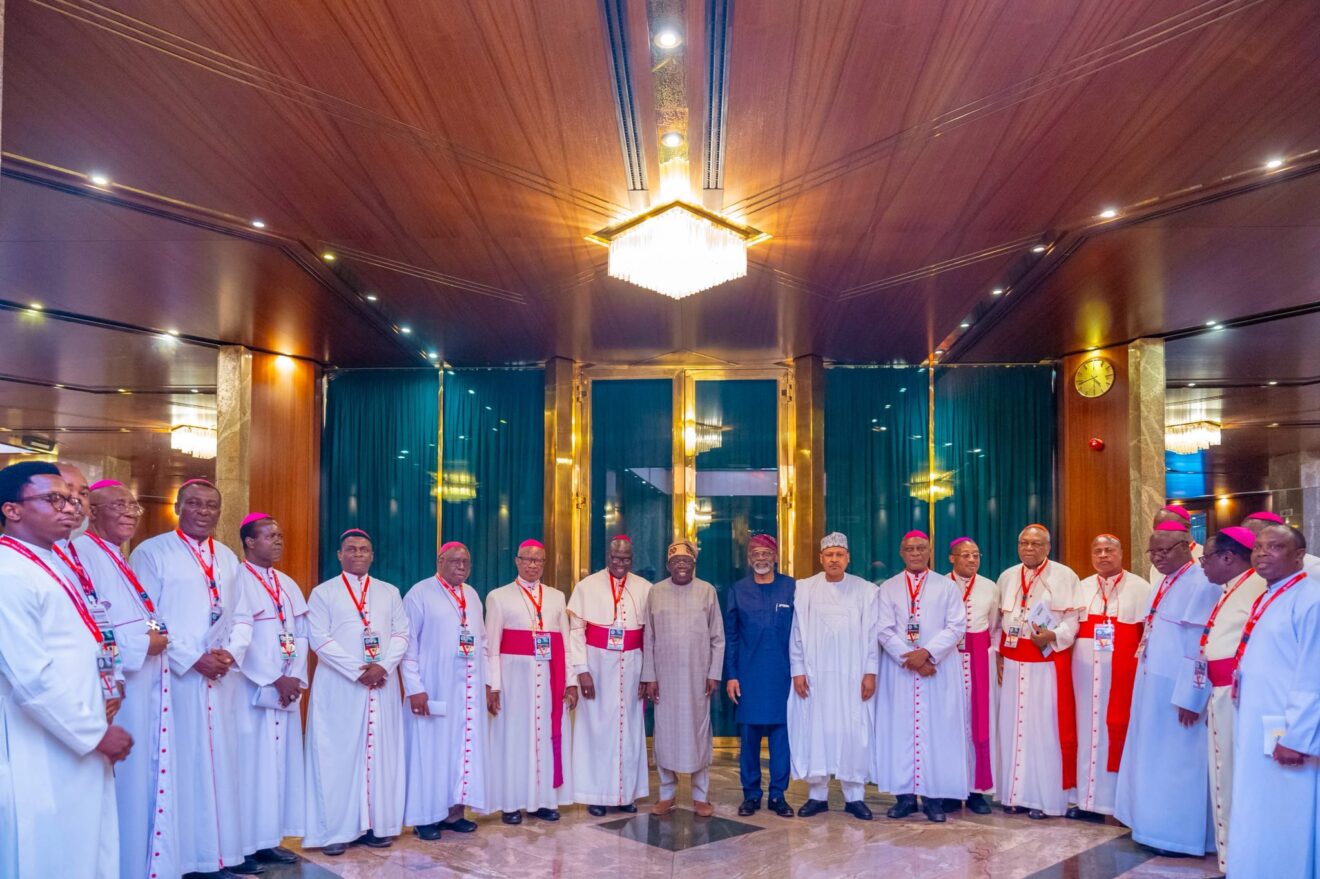
MaTaZ ArIsInGDallas, Texas President Bola Tinubu, on Tuesday, strongly defended his administration’s handling of Nigeria’s economy and security, declaring that the country has been rescued from the brink of bankruptcy while assuring Nigerians that terrorism, banditry and kidnapping will ultimately be defeated. Nigeria oil market The President also dismissed concerns over the integrity of the…
-
El-Rufai’s Doctor Confesses to Authoring Medical Report Disowned by Hospital

MaTaZ ArIsInGDallas, Texas The medical doctor at the centre of the controversy surrounding a medical report submitted in support of former Kaduna State Governor Nasir El-Rufai’s bail application has admitted preparing the document but denied taking part in any plan to forge or falsify records. Dr. Bello Abubakar, a Chief Consultant Clinical and Radiation Oncologist at the…


