By Idowu Ephraim Faleye +2348132100608
Opposition is important in a democracy because it checks the government, demands answers and offers other ideas. But there is a line. When opposition turns into fake evidence and efforts to destroy public trust in institutions, it stops helping democracy and starts to harm it.
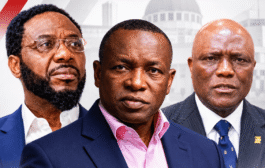
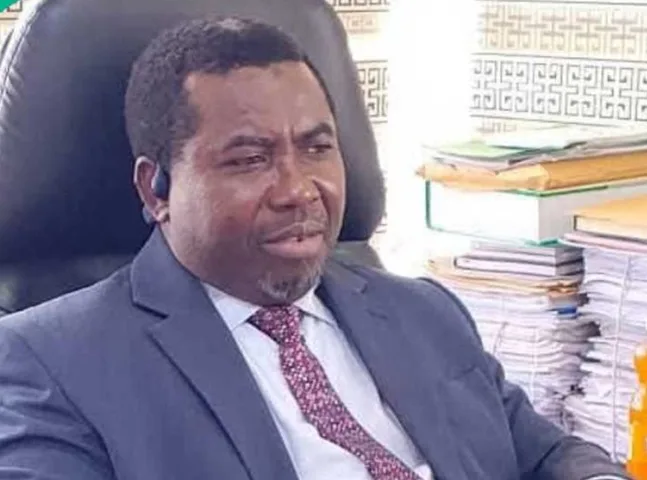
The current controversy around Professor Joash Amupitan, Chairman of the Independent National Electoral Commission (INEC), is a good example of this danger. Nigeria’s 2027 general election is getting closer, and people have raised questions about whether INEC is truly independent, and whether its election plans can be trusted. More recently, claims of AI-generated photographs and irregular entries in the early voters’ register have added fuel to the fire. As a result, some people now call for his resignation under the slogan “Amupitan Must Go.”
Of course, there is nothing wrong with questioning INEC. An election referee must be above suspicion. However, there is a difference between fair criticism and treating an institution as guilty before anyone has checked the facts.
To understand the issue properly, we should first look at how the Chairman got the job. Section 154(1) of the 1999 Constitution says the President appoints the INEC Chairman, and the Senate must confirm the choice. Section 154(3) adds that the President must consult the Council of State. In this case, the Council of State approved his nomination on October 9, 2025. The Senate then confirmed him on October 16, and he was sworn in on October 23, 2025.
This process makes his appointment legal. Still, it does not place him beyond questioning. At the same time, the fact that President Tinubu nominated him is not a proof that he won’t be fair. If it were so, every INEC Chairman appointed before now would have been opened to suspicion.
This brings us to a bigger problem, which is the effort to discredit institutions. Criticising an institution for its failures is healthy, because it leads to accountability. Discrediting it by repeating negative stories again and again until people stop trusting an institution, even when no wrongdoing has been proven is different.
One tool for doing this is propaganda, which means using or repeating information on purpose to shape public opinion for a political goal. It does not always need a made-up story. A real event can be shown without its context and repeated until people accept one reading as fact. For example, a simple error in a database can be sold as proof of planned rigging. In the same way, an allegation that nobody has proven can be repeated until people treat it as settled.
Closely linked to propaganda is calumny, which means making false and harmful claims about a person in order to ruin their name. In this case, linking the INEC Chairman to the President’s political interests without enough proof raises a question. Is this fair scrutiny, or is it an attack on his character? Public officials must answer hard questions. But suspicion is not proof, and doubting someone’s honesty again and again without evidence hurts that person as well as the institution they lead.
An even more troubling issue is the intentional use of technology to infiltrate the official INEC database, whether by a lone hacker or hired hackers on a mission to create or modify official voter records in order to discredit an electoral institution. Artificial intelligence can now make fake photos, videos, voices and documents that look real and can easily fool people. This kind of dishonest trick, aimed at getting a democratic institution discredit, is called chicanery.
The claims about AI-generated photos and duplicate entries in the early voters’ register show why this matters. These reports deserve serious investigation. INEC must explain how these items got into its records, and show how it is fixing them. However, we must be careful about what we conclude. Finding suspicious photos does not tell us who put them there. It does not tell us whether the system was hacked, or whether someone planted the photos to damage the Chairman. Only independent forensic checks, which are expert technical investigations, can answer these questions.
Furthermore, if someone did place fake material in the register on purpose and then used its discovery to blame INEC’s leadership, that would be a serious plot to create a false scandal. Yet this claim also needs proof. It cannot simply be assumed.
The campaign for the Chairman’s resignation raises another question. Peaceful protest is a constitutional right, and Nigerians can demand accountability from public officials. But there is a difference between saying “INEC must fix these errors” and saying “the Chairman must resign because errors were found.” A failure in administration does not automatically mean the Chairman did wrong. On the other hand, he cannot escape blame if evidence shows that he approved, allowed or ignored serious wrongdoing. The right path is investigation, evidence and accountability, not a conclusion decided in advance.
The effects of constant attacks on election bodies can be deep. People may lose trust in INEC, doubts about election plans may grow, and politicians may dispute results before looking at any evidence. In addition, public attention may move away from real election reforms and onto personal fights.
This is where government communication becomes important. When bad stories spread and nobody answers in time, a gap opens, and rumours rush in to fill it. However, the answer is not to fight propaganda with more propaganda or to attack back. Instead, INEC must explain how it works, publish its findings and fix its errors.
The media and political parties also have a duty. Serious claims need evidence, digital content should be checked before it is shared, and claims must be kept separate from proven facts. Opposition parties should question INEC without misleading the public.
In the end, Nigeria’s democracy faces two dangers. One is a real failure inside institutions. The other is deliberate attempts to weaken them through lies and manipulation. The first needs openness, accountability and reform, while the second needs honest political talk and debate based on evidence.
An election is not credible just because INEC says so. Its credibility must be shown through open procedures, accurate records, fair management and results that can be checked. Yet an institution is also not guilty just because politicians keep saying it is. The right to criticise an election chairman is not the right to present unproven claims as facts. Democracy needs a strong opposition, but it also needs institutions that people can trust.
Political rivals may fight for power. Even so, protecting the institutions that make democracy work should be a shared goal for all Nigerians.
Idowu Ephraim Faleye is a freelance political writer based in Nigeria. +2348132100608

1SUBSCRIBE TO OUR NEWSLETTER NOW
Support MATAZ ARISING’ journalism of integrity and credibility.
Good journalism ensure the possibility of a good society, an accountable democracy, and a transparent government.
We ask you to consider making a modest support to this noble endeavour.
TEXT AD: To advertise here – Email ad@matazarising.com
LATEST POSTS
-
Protecting Nigeria’s Electoral Umpire: When Attacks on Institutions Threaten Democracy
MaTaZ ArIsInGDallas, Texas By Idowu Ephraim Faleye +2348132100608 Opposition is important in a democracy because it checks the government, demands answers and offers other ideas. But there is a line. When opposition turns into fake evidence and efforts to destroy public trust in institutions, it stops helping democracy and starts to harm it. The current…
-
‘We will find a way to win’ insists Pochettino after rocky Man Utd start

MaTaZ ArIsInGDallas, Texas New Manchester United manager Mauricio Pochettino insisted his team would find a way to win games after a tricky start to life at the helm of the Red Devils. United were held to a chaotic 2-2 Champions League draw at Sporting Lisbon on Wednesday, after a 4-0 thrashing by rivals Liverpool in…
-
2027: How RECs, INEC officials will handle election violence

MaTaZ ArIsInGDallas, Texas Muideen Olaniyi •Voter register now over 100 million after audit, says INEC chairman •To expose officials who facilitate malpractices Chairman of the Independent National Electoral Commission (INEC), Prof. Joash Amupitan, said on Wednesday that to handle electoral violence during the 2027 election, Resident Electoral Commissioners (RECs) must work with the Police, the…