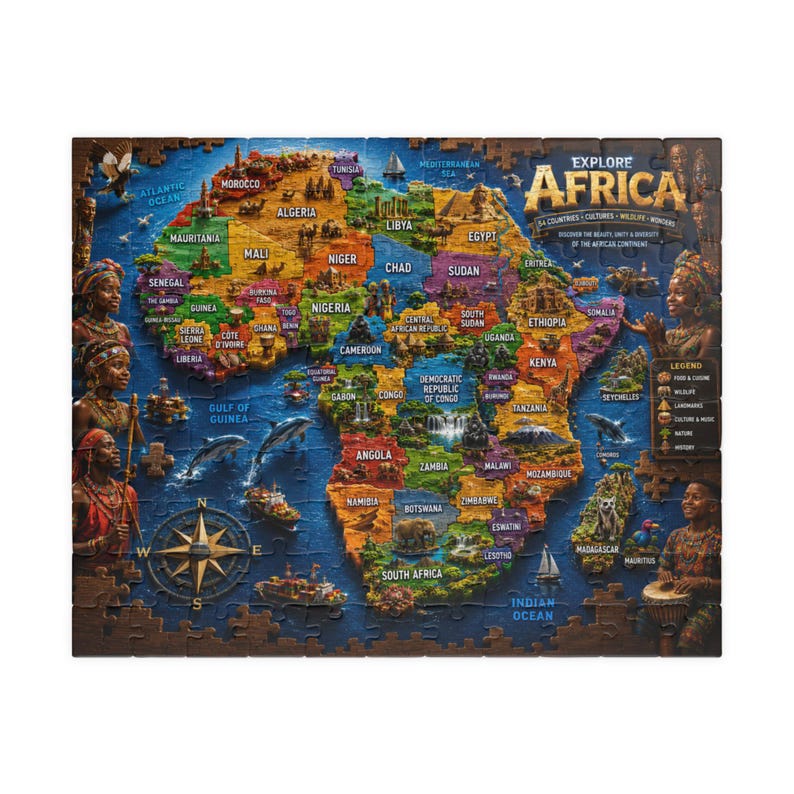
SOMETHING is fundamentally wrong with a continent that holds some of the world’s most valuable natural resources yet struggles to secure a meaningful place in the decisions that determine how those resources are used, who controls their value and who ultimately benefits from them. Africa has the minerals needed to power the global energy transition, vast agricultural land capable of supporting food production, a strategic geographical position, and one of the youngest populations in the world. Yet when major economic and political decisions are taken, African countries often find themselves responding to the interests of others rather than defining the terms of engagement. This contradiction lies at the heart of Africa’s strategic dilemma. The continent has considerable resources and enormous potential, but neither has given it matching influence over the global economic and political decisions that affect its future. The situation calls for a more serious examination of Africa’s place in the world.
The world is changing, and competition for economic, technological, and political influence is intensifying. Major powers are protecting their strategic interests, securing supply chains, strengthening technological capabilities and positioning themselves to benefit from emerging opportunities. Africa cannot meet this moment with the same fragmented thinking that has weakened its influence for decades. Discussions at the inaugural Amandla Parapọ̀ 2026, organised by the Amandla Institute for Policy and Leadership Advancement (AIPLA) in Ilishan-Remo, Ogun State, brought this issue back into focus. The conference offered an important platform for examining Africa’s position in a world where resources, technology, security and economic influence are increasingly intertwined. The conference declaration made a particularly important observation: “No single African State, no matter how large its demographic size or mineral endowment, can negotiate effectively with great-power blocs in isolation.” The statement captures one of the continent’s most persistent weaknesses in its dealings with the rest of the world.
For too long, continental cooperation has been treated as an aspiration rather than pursued as an economic and political necessity. Countries continue to negotiate separately, protect narrow national interests and struggle to implement agreements that could strengthen the continent’s collective bargaining power. As a result, individual African countries often enter major international negotiations from weaker positions. The African Continental Free Trade Area (AfCFTA) offers an important opportunity to change this pattern. Its promise, however, will remain limited if governments fail to address trade barriers, inadequate infrastructure, weak industrial capacity and inconsistent policies. Regional integration is not simply about signing agreements. It requires an environment in which African businesses can produce, trade, invest and compete across borders.
Africa’s mineral wealth illustrates the challenge clearly. The continent is increasingly important to the industries driving the energy transition and the technological revolution. Yet possessing these resources is not the same as controlling the value they generate. Owning natural resources does not automatically mean owning the industries built around them. When minerals are extracted locally but processed elsewhere, much of the industrial value, technical expertise and higher-value economic activity is created outside the continent. Africa risks remaining a supplier of raw materials while other economies build the industries, technologies and manufacturing capabilities that earn greater returns from those same resources. This is one of the economic contradictions African leaders must confront. The Amandla declaration rightly called for a shift from raw-material extraction to domestic value addition. Achieving it requires more than political declarations. It demands reliable electricity, transport infrastructure, skilled workers, research institutions, access to finance and consistent industrial policies. Governments must also recognise that the private sector cannot be expected to drive industrialisation without an enabling environment. African businesses, including those in the informal economy, contribute significantly to livelihoods and economic activity. Yet many continue to struggle with inadequate access to finance, infrastructure, technology and institutional support.
The state must therefore do more than announce policies that look attractive on paper. It must build credible institutions, provide the necessary infrastructure and create conditions in which businesses can grow, compete and contribute meaningfully to national development. Industrialisation requires a sustained partnership between government, investors, entrepreneurs and research institutions. Africa’s development challenge goes beyond the economy. It is equally a challenge of leadership and institutions. The continent has produced several ambitious frameworks, from Agenda 2063 to various regional development programmes. Yet the existence of policy documents does not by itself improve living conditions or ensure that development reaches ordinary citizens. Food insecurity, inadequate healthcare, unemployment, poor education and persistent insecurity continue to affect millions of Africans. These realities raise serious questions about the capacity of governments to turn policy commitments into practical results. Development should be judged by the extent to which policies improve people’s lives, not by the number of strategies announced.
The declaration’s emphasis on leadership and institutional renewal therefore deserves serious attention. Policy formulation matters, but policies are only as effective as the leadership, institutions and political commitment behind their implementation. Africa cannot make meaningful progress when political survival takes precedence over institution-building and national ambitions repeatedly undermine collective interests.
Nigeria, South Africa, Algeria, Egypt, Ethiopia and Kenya, among other influential African countries, have important roles to play in rebuilding continental cooperation. Their influence should translate into practical leadership, consistent engagement and a willingness to make difficult decisions in the collective interest. Narrow national considerations must not continue to weaken Africa’s common position.
The African Union must likewise become more effective at turning its resolutions into practical outcomes. Its relevance cannot be measured by the number of meetings held or declarations issued, but by the difference its institutions make to the lives of ordinary Africans. Continental cooperation must deliver tangible results if citizens are to recognise its value.
Africa’s young population presents another important test of its leadership. A continent where approximately 60 per cent of the population is below the age of 35 cannot afford to treat young people as an afterthought in governance, economic planning and decisions about the future. Its demographic strength should be regarded as a strategic asset.
Young Africans are already contributing to technology, entrepreneurship, creative industries, agriculture and civic engagement. Across the continent, many are developing solutions to problems that established institutions have struggled to address. Their energy, creativity and grasp of emerging technologies offer opportunities that African governments and institutions should be ready to harness.
Yet meaningful access to policy formulation and decision-making remains limited. The Amandla declaration acknowledged the widening generational divide and called for stronger mentorship between older and younger generations. It also proposed a Youth Charter to promote practical collaboration and strengthen the participation of young people in shaping Africa’s future.
That recommendation must not become another document that gives young people visibility without influence. Young Africans should have a meaningful role in decisions affecting education, employment, technology, security and economic opportunity. Their participation must extend beyond conferences, consultations and ceremonial appointments to actual policy development and implementation.
Experience matters, and so does the ability to understand a rapidly changing world. Africa needs the institutional memory, experience and wisdom of older generations working alongside the innovation, energy and technological knowledge of younger people. Institutions must create room for this exchange rather than allow generational differences to become obstacles to progress.
Artificial intelligence presents another major test of Africa’s preparedness. AI is already changing how economies operate, how businesses compete and how governments approach security and public administration. Countries that invest in technological research, digital infrastructure and relevant skills will hold a considerable advantage in the years ahead.
Africa cannot continue to depend almost entirely on technologies developed elsewhere while neglecting its own research capacity. Reliance on external technology could deepen existing economic inequalities and leave African countries vulnerable in areas that will increasingly determine productivity, national security and international competitiveness.
The declaration’s position that AI should be treated as a national security priority is timely. African governments must invest in education, research and development, digital infrastructure and regional cooperation. They must also negotiate partnerships that deliver genuine technology transfer, strengthen local capabilities and avoid deepening long-term dependence on external technological systems.
Africa’s participation in the technological revolution must go beyond adopting products and services developed elsewhere. The continent needs the capacity to develop, regulate and apply technology in ways that serve its own priorities. Decisions about education, research, infrastructure and investment will shape its position in the global economy for generations.
The Amandla Parapọ̀ 2026 declaration sets out a broad range of recommendations on leadership, governance, security, technology, economic development and continental cooperation. Its significance will ultimately depend on the willingness of African institutions and governments to carry these recommendations forward.
What happens after the conference will matter far more than the declarations made during its sessions. Will governments incorporate the recommendations into national policies? Will the African Union and regional institutions show the political will to deepen integration? Will young people gain meaningful access to decision-making, and will African businesses receive the support they need to become stronger drivers of industrial growth?
These questions will determine whether the conference makes a lasting contribution or becomes another entry in Africa’s long history of policy gatherings. The continent does not lack ideas. What remains inadequate is the consistency, institutional commitment and political determination required to turn those ideas into measurable results.
Africa must recognise that sovereignty is not simply a political slogan. It requires economic strength, technological competence, credible institutions and the ability to negotiate from a position of collective confidence. Political independence alone cannot guarantee strategic sovereignty if the continent remains dependent on others for the resources, technology and decisions that shape its development.
The changing global order presents Africa with an opportunity, but opportunities do not convert themselves into influence. The continent must organise its resources, strengthen its institutions and develop the capacity to defend its interests. This requires a clear sense of direction and a shared commitment that goes beyond individual national agendas.
If African leaders fail to act collectively, other powers will continue to shape the continent’s economic future according to their own strategic priorities. The consequences will reach beyond the extraction of natural resources to technology, trade, investment, security and the terms on which Africa participates in the global economy.
Africa must stop waiting to be invited into conversations about its future. It must develop the capacity to participate, negotiate and influence the decisions that matter. The continent has the resources, the people and the potential. What it needs is the leadership and collective resolve to turn these advantages into strategic power.
The world will not pause while Africa puts its house in order. The responsibility to do so rests squarely with African leadership.
•Olowu, a marketing communications expert and public affairs analyst, writes in from Lagos.

1SUBSCRIBE TO OUR NEWSLETTER NOW
Support MATAZ ARISING’ journalism of integrity and credibility.
Good journalism ensure the possibility of a good society, an accountable democracy, and a transparent government.
We ask you to consider making a modest support to this noble endeavour.
TEXT AD: To advertise here – Email ad@matazarising.com
LATEST POSTS
-
Igbo presidency must be eight full years — Oshiomhole
Oshiomole
-
Court restrains Jimmy Odukoya from acting as Fountain of Life senior pastor

MaTaZ ArIsInGDallas, Texas By Okiki Adeduyite The Lagos State High Court has restrained Jimmy Odukoya from holding himself out as the senior pastor and spiritual head of the Fountain of Life Church, following a dispute over his position in the church. Justice O. O. Adewunmi-Oshin issued the order on Wednesday, November 18, 2026, in a suit…
-
The Sociology of Nigerian’s Protest: Genuine Protests vs. Masterminded Political Mobilisation
MaTaZ ArIsInGDallas, Texas By Idowu Ephraim Faleye +2348132100608 In Nigeria, when crowds suddenly gather for protests, shouting slogans, or when individuals hurl stones at a presidential motorcade, images of protesters and videos of confrontations are often presented as evidence of widespread public dissent against the government. But an important question deserves closer examination: does every…