By Idowu Ephraim Faleye +2348132100608
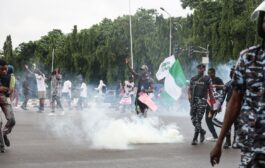
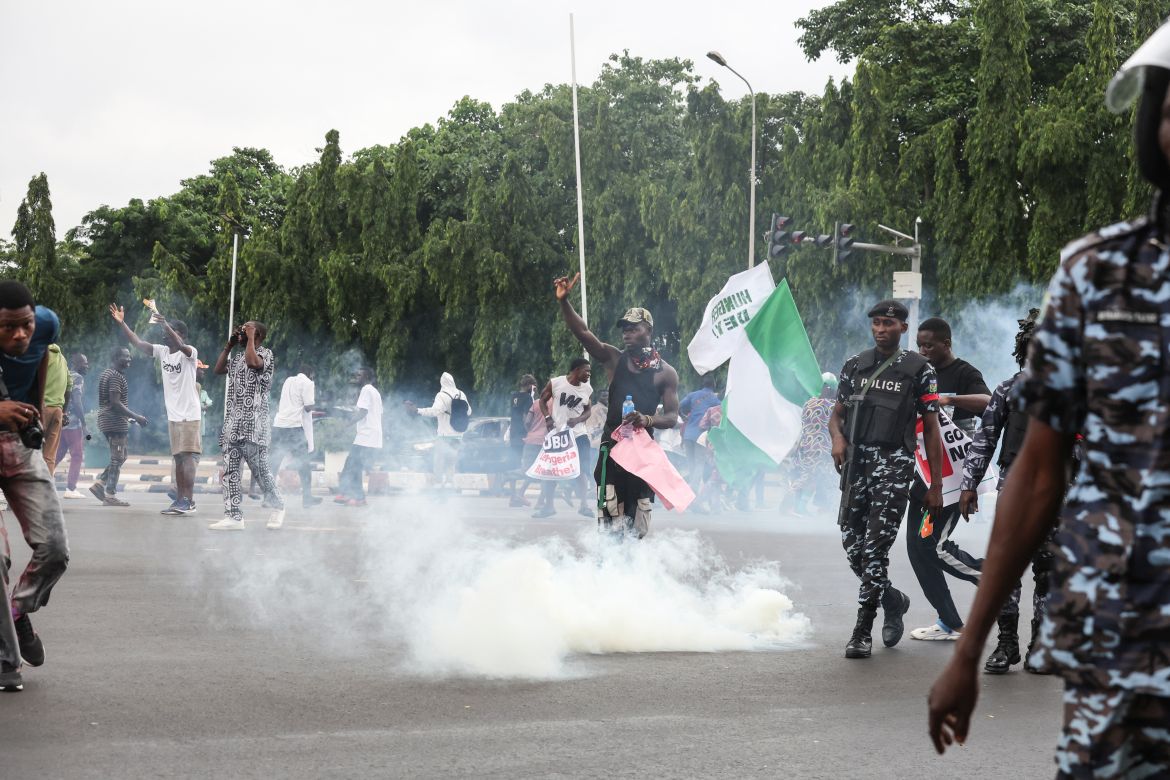
In Nigeria, when crowds suddenly gather for protests, shouting slogans, or when individuals hurl stones at a presidential motorcade, images of protesters and videos of confrontations are often presented as evidence of widespread public dissent against the government. But an important question deserves closer examination: does every demonstration represent the genuine anger of the Nigerian masses, or are some demonstrations organised, funded and manipulated by political interests pursuing selfish goals?
This is the central question in understanding the sociology of civil protest in Nigeria. It requires us to look beyond dramatic images of protests and examine the economic, social and political factors that determine how people mobilise for street demonstrations.
Consider the daily realities of low-income earners in Nigeria. A market woman rises before dawn to sell her wares, ensuring she can meet her daily contribution. A commercial motorcycle rider spends hours on the road to earn enough to feed his family. An artisan or daily-paid labourer works from morning until evening because the day’s income determines whether the family eats. These people rarely have sufficient savings to survive extra days without earnings.
For them, missing a day of work means losing money needed for food, school fees, household expenses, debt repayment or contributions to their ajo and esusu groups. Beyond the economic cost, participating in street demonstrations carries the risk of police confrontation, arrest, injury or even death—risks that can affect their survival.
Consequently, economic hardship does not automatically translate into street protests. Ironically, the same hardship that generates public dissatisfaction can also prevent ordinary people from participating in demonstrations. Their immediate struggle for survival often takes priority over political confrontation. Anger may exist, but the need to earn a living keeps many away from the streets.
How, then, do large crowds of economically vulnerable people sometimes appear at political demonstrations? One explanation is financial mobilisation: transport fares, food, accommodation and small stipends that can reduce the economic burden of participation. Such incentives do not automatically imply that everyone is acting against their convictions. However, financial assistance can determine who participates, how many people attend and how long they remain at a demonstration.
Money alone, however, cannot sustain large-scale mobilisation. There must also be individuals or networks responsible for recruitment, coordination, transportation and direction. Financial incentives lower the cost of participation, while organisers bring people together at a particular location and time. The combination can transform scattered dissatisfaction into a visible public demonstration.
The 2020 EndSARS protests present a significant contrast. Many young Nigerians participated out of genuine outrage over police brutality. Nevertheless, financial support in the form of voluntary donations from various individuals with diverse interests bolstered the protests. The important lesson is not that the demonstrations were manufactured, but that genuine public grievances and organised financial support can coexist. Understanding any protest therefore requires examining its grievances, mobilisation networks, funding and underlying interests.
Labour unions offer an instructive distinction. When the Nigeria Labour Congress (NLC) or the Trade Union Congress (TUC) calls workers out, the mobilisation usually follows an established organisational structure. There are identifiable leaders, institutional structures and clearly articulated demands concerning wages, pensions, unpaid salaries and working conditions.
Although workers may sacrifice their earnings during industrial action, their participation is often driven by collective interests and organised labour structures. This differs from sudden street demonstrations where leadership, funding and coordination are required. Such differences make it necessary to examine the organisational foundations of different forms of protest rather than treating them as identical expressions of public dissatisfaction.
Student protests provide another example of mobilisation through established structures. In tertiary institutions, students’ unions and other recognised student representative bodies often organise demonstrations to address issues affecting the general welfare of students. These may include increases in tuition and other fees, poor accommodation, inadequate facilities, delayed academic calendars, poor welfare services and unfavourable institutional policies. Such protests are usually driven by collective grievances and facilitated by existing student leadership structures, elected representatives and organised networks across campuses.
Although external interests may sometimes influence student activism, the existence of an organised structure does not, in itself, make a protest politically motivated or financially induced. The defining feature is that mobilisation is channelled through an identifiable representative body with specific demands directed at addressing common concerns. This distinguishes institutional student activism from demonstrations assembled primarily through temporary financial incentives or partisan political networks.
Religious networks can also influence mobilisation. In some northern cities, groups of almajiri and other street-connected youths (Almajiri Alumni) have appeared at political demonstrations. Their participation is usually influenced by religious leaders. However, these young individuals should not be assumed to possess independent opinions or motivations. They often engage under the hidden influence of an Imam or Sheikh, through religious indoctrination, or even hypnosis, while others may be drawn by food or financial incentives. What warrants attention is the degree to which organised networks shape their involvement.
The broader point is that economic dissatisfaction alone does not produce sustained street mobilisation. Several factors generally converge to make demonstrations possible. Political actors understand this dynamic. Opposition parties and their supporters can exploit existing public frustration by providing the organisation, transportation, banners and financial incentives necessary to mobilise crowds. In such circumstances, genuine economic grievances can become instruments for advancing specific selfish political objectives.
The APC Presidential Campaign Council has recently maintained that opposition groups are arming young people, organising disruptions at political rallies and mobilising individuals to throw stones at presidential motorcades. The allegation suggest the possibility of vested interests exploiting economic hardship as a tool for organizing political confrontation. When economically vulnerable young people suddenly confront a heavily protected presidential convoy, the risks are considerable. Security operatives are present, and the possibility of arrest, serious injury or death cannot be ignored. Why would someone whose daily earnings sustain an entire household willingly expose himself or herself to such danger?
There may be several explanations. Some participants may be motivated by ethnic, religious or partisan solidarity. Some might believe they enjoy political protection, while others may deem financial incentives adequate compensation for the risks entailed. Without investigating who recruited the participants, who financed the mobilisation and what interests stood to benefit, it would be difficult to establish the actual motivations behind such confrontations. Assuming that every participant represents spontaneous public anger would be misleading. The reality may involve a combination of genuine grievances, political affiliation and organised inducements.
This brings us to an important distinction: public dissatisfaction must not be confused with its political exploitation. Nigeria’s economic challenges are real. Citizens have legitimate reasons to question government policies, demand accountability and protest their living conditions. However, the existence of genuine hardship does not prevent political actors from exploiting it for partisan purposes. A political organisation does not necessarily have to create economic hardship to benefit from it. It only needs to organise around existing grievances and channel public frustration towards a particular political objective.
Consequently, a monetized crowd may pretend to represent the collective position of Nigerians while actually reflecting the interests of a narrower political group. The proper way to assess any protest is therefore not simply by counting the number of people on the streets. We must examine the organisation behind it, its sources of funding, the socioeconomic backgrounds of participants, their geographical origins and the clarity of their demands.
Who mobilised the protesters? Who provided transportation and food? Are the participants responding to identifiable public grievances, advancing a specific political agenda, or primarily pursuing a partisan objective? These questions require investigation rather than instant celebration or dismissal. We must cease regarding every protest as a manifestation of democracy. Genuine grievances and organised political interests can exist within the same protest.
Nigeria’s democracy needs citizens who can critically examine the political circumstances surrounding demonstrations. When opposition parties claim to speak for the people through street mobilisation, their claims should be subjected to scrutiny. Political interests can assemble temporary demonstrations; financial incentives can make participation economically attractive; religious and community networks can facilitate mobilisation; and genuine hardship can provide the emotional motivation.
These factors can operate independently or combine to produce different forms of protest. Our responsibility is to understand their respective contributions rather than reduce every demonstration to a simplistic political narrative. The distinction matters because democracy suffers when genuine public grievances are exploited for partisan purposes. Understanding the sociology of civil protest requires looking beyond the crowd to examine the organisation, money, motivation and interests behind its appearance. Only then can we distinguish between demonstrations that genuinely express broad public dissatisfaction and those primarily organised to advance the political strategies of competing interests.
Idowu Ephraim Faleye is a freelance political writer based in Nigeria. +2348132100608

1SUBSCRIBE TO OUR NEWSLETTER NOW
Support MATAZ ARISING’ journalism of integrity and credibility.
Good journalism ensure the possibility of a good society, an accountable democracy, and a transparent government.
We ask you to consider making a modest support to this noble endeavour.
TEXT AD: To advertise here – Email ad@matazarising.com
LATEST POSTS
-
Igbo presidency must be eight full years — Oshiomhole
Oshiomole
-
Court restrains Jimmy Odukoya from acting as Fountain of Life senior pastor
MaTaZ ArIsInGDallas, Texas By Okiki Adeduyite The Lagos State High Court has restrained Jimmy Odukoya from holding himself out as the senior pastor and spiritual head of the Fountain of Life Church, following a dispute over his position in the church. Justice O. O. Adewunmi-Oshin issued the order on Wednesday, November 18, 2026, in a suit…
-
The Sociology of Nigerian’s Protest: Genuine Protests vs. Masterminded Political Mobilisation
MaTaZ ArIsInGDallas, Texas By Idowu Ephraim Faleye +2348132100608 In Nigeria, when crowds suddenly gather for protests, shouting slogans, or when individuals hurl stones at a presidential motorcade, images of protesters and videos of confrontations are often presented as evidence of widespread public dissent against the government. But an important question deserves closer examination: does every…