The Tribunal noted that Mr Malami failed to appear before it to give evidence, adding that he acted against Nigeria’s interest and was “motivated by other incentive(s)”.
by Oladeinde OlawoyinandOmotoyosi Idowu
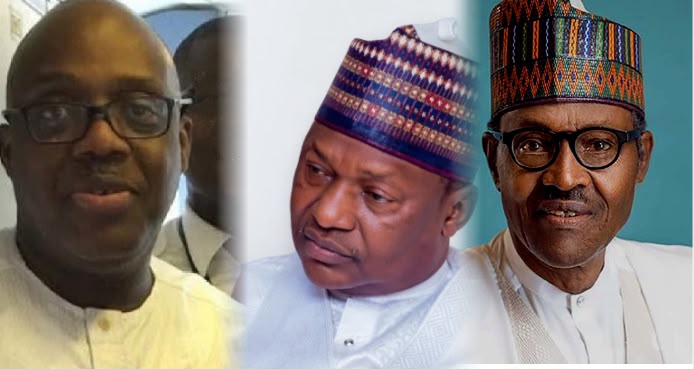
The International Chamber of Commerce Tribunal has revealed how former Attorney-General of the Federation, Abubakar Malami, attempted to deceive former President Muhammadu Buhari and engaged in corrupt deals with Leno Adesanya, the promoter of Sunrise Power and Transmission Company Ltd (Sunrise), in the controversial Mambilla Power project deal.
In the Final Award rendered by the ICC on Thursday, the Tribunal rejected the claims in the arbitration instituted by Sunrise against Nigeria.
The company had made a claim against the Federal Republic of Nigeria, demanding $680 million as a settlement sum and interest in respect of another arbitration in which it is claiming over $2.7 billion in compensation and interest.
The claim relates to disputes over the development of the 3,960 MW Mambila Hydroelectric Power Project in Taraba State, dating back to 2003.
The tribunal, in its verdict on Thursday, directed Sunrise and its promoter to refund Nigeria’s legal fees of $11.8 million.
It also rejected Sunrise’s claim for an order that Nigeria should pay the company $400 million in satisfaction of the settlement sum of $200 million and the default sum of $200 million.
Malami and Adesanya’s relationship
The tribunal also considered testimony from Mr Adesanya alleging that former Mr Malami solicited a bribe during negotiations after the $200 million settlement had already been signed.
The tribunal noted that a corrupt deal was reached between the Sunrise founder and Mr Malami, concluding that the arrangement tainted a settlement agreement under which Nigeria was potentially liable for up to $400 million.
The issue arose from a Settlement Agreement signed on 2 January 2020, under which Nigeria was to pay $200 million. Just nine weeks later, an Addendum dated 25 March 2020 introduced a further $200 million financial-default sanction, effectively doubling the potential amount payable to $400 million.
The tribunal said the timing of the increase raised serious concerns, particularly in light of evidence presented by Mr Adesanya about an alleged bribe solicitation involving Mr Malami and former Minister of Power, Saleh Mamman.
Mr Adesanya, who was a key witness for Sunrise, testified that during a conversation with Mr Malami and Mr Mamman, he heard them say that Nigeria would not pay the $200 million at once, but would initially pay half and release the remaining amount after he had done “what is needed.”
According to the tribunal, Mr Adesanya also testified that he had obtained audio and video recordings of the alleged solicitation.
The tribunal said Mr Adesanya’s recordings could have been significant evidence if he had agreed to pay part of the settlement proceeds to the officials. It added that the recordings could have helped establish the nature of the arrangement.
The recordings, however, were withheld from the tribunal by Sunrise and Mr Adesanya, according to the tribunal.
Buhari’s Rejection
The Tribunal found that Mr Malami failed, on some occasions, to convince the late Mr Buahri to approve the renegotiated agreement.
In a handwritten note dated 20 April 2020, the Tribunal noted that Mr Buhari withheld his approval on the basis that “FG hasn’t got USD 200m to pay (Sunrise).”
The Tribunal stated that Mr Malami “failed to provide President Buhari with the correct information,” even as the late President repeatedly rejected the settlement agreements.
On 18 January 2021, for instance, the Tribunal established that the late President’s Chief of Staff sent a letter to Mr Malami, with Mr Buhari’s handwritten rejection reading “not approved.”
Despite the ex-president’s refusal, the tribunal found that Mr Malami persisted in his attempts to convince Mr Buhari by repeatedly making the case for the settlement in favour of Sunrise.
The Tribunal found that Messrs Malami and Adesanya coordinated on different occasions and had direct contact with each other via WhatsApp, even in cases where they were opposing parties.
The tribunal concluded that the evidence was sufficient to establish a corrupt deal between Mr Adesanya and Mr Malami.
“In conclusion, with respect to the corruption allegations in relation to the Settlement Agreement and the Addendum thereto, the Tribunal therefore considers that a corrupt deal was reached between Mr Adesanya on the one hand, and Mr Malami on the other hand, rendering the Settlement Agreement and the Addendum thereto a product of corruption,” the ICC verdict showed.
The Tribunal noted that Mr Malami failed to appear before it to give evidence, adding that he acted against Nigeria’s interest and was “motivated by other incentive(s)”.
Agreements
The tribunal had separately determined that the Settlement Agreement and Addendum were not binding on Nigeria because they had not received the required presidential approval.
The tribunal therefore held that, even apart from the lack of presidential approval, the agreements were unenforceable because they were products of corruption and violated Nigerian public policy.
That finding also meant the tribunal did not need to determine whether the $200 million default provision contained in the Addendum was itself an unenforceable penalty, as Nigeria had argued.
As a result, the tribunal rejected Sunrise’s claim that Nigeria had breached its contractual obligations under the Settlement Agreement and Addendum.
It also rejected Sunrise’s request for an order compelling Nigeria to pay $400 million, comprising the original $200 million settlement sum and the additional $200 million default sum, as well as Sunrise’s claim for interest.
The tribunal’s ruling, therefore, left Sunrise unable to enforce the $400 million settlement against Nigeria, both because the agreements lacked the required presidential approval and because the tribunal found them to be the product of corruption and contrary to Nigerian public policy.
“In view of its finding that the Settlement Agreement and the Addendum thereto are not binding on Nigeria and are unenforceable, the Tribunal rejects: Sunrise’s claim for a declaration that Nigeria has breached its contractual obligations under the Settlement Agreement and the Addendum,” the tribunal stated.

1SUBSCRIBE TO OUR NEWSLETTER NOW
Support MATAZ ARISING’ journalism of integrity and credibility.
Good journalism ensure the possibility of a good society, an accountable democracy, and a transparent government.
We ask you to consider making a modest support to this noble endeavour.
TEXT AD: To advertise here – Email ad@matazarising.com
LATEST POSTS
-
Tinubu’s Age and Experience: Assets for Effective Governance
MaTaZ ArIsInGDallas, Texas By Idowu Ephraim Faleye+2348132100608 There is something increasingly interesting about Nigeria’s current political debate. Much of the conversation about President Bola Ahmed Tinubu’s leadership has shifted towards his age. Some opposition voices, particularly among supporters of Peter Obi, have made his age a major argument against his presidency. The suggestion is that…
-
Every Time, Money Na Water, How Much Does He Have? – Umahi Hits Cubana Chief Priest
MaTaZ ArIsInGDallas, Texas Minister of Works, David Umahi, has taken a swipe at popular Nigerian socialite and businessman, Pascal Chibuike Okechukwu, better known as Cubana Chief Priest. Umahi criticised what he described as a growing culture of noise-making and excessive show-off, questioning why some people constantly boast about how much money they have instead of…
-
Why Buhari Didn’t Back Amaechi For APC Ticket, Says Ex-Aide
MaTaZ ArIsInGDallas, Texas byJonathan Nda-Isaiah A former Special Assistant on New Media to late President Muhammadu Buhari, Bashir Ahmad, has explained why the former president did not openly support Rotimi Amaechi’s ambition to emerge as the All Progressives Congress (APC) presidential candidate in the 2023 general election. Ahmad said Buhari believed in allowing the party’s…