By Idowu Ephraim Faleye
+2348132100608
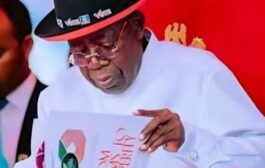
There is something increasingly interesting about Nigeria’s current political debate. Much of the conversation about President Bola Ahmed Tinubu’s leadership has shifted towards his age. Some opposition voices, particularly among supporters of Peter Obi, have made his age a major argument against his presidency. The suggestion is that Nigeria needs a younger president with greater physical energy to withstand the demands of the office.
But is that really what Nigeria needs most at this moment? Is the country’s problem primarily the age of its president, or the ability to understand its complex political environment, manage competing interests and make difficult decisions that can move the nation forward?
Leadership is much more than physical appearance. It requires judgement, strategic thinking, institutional understanding, negotiation skills and the ability to manage people and competing interests. Governing a country as complex as Nigeria requires something deeper: experience accumulated through years of exposure to political, economic and administrative challenges.
President Tinubu is certainly not a young man. But his age does not automatically make him incapable of providing effective leadership. Rather, the more important consideration should be the political capital he has accumulated over several decades. There is a difference between growing old and growing in experience. Age measures the number of years a person has lived; experience reflects the knowledge, lessons, successes, mistakes and understanding gathered during those years.
History offers interesting examples of world leaders whose lives challenge the assumption that advanced age necessarily limits human capacity. Jimmy Carter lived to 100, George H.W. Bush to 94, Gerald Ford and Ronald Reagan to 93, and John Adams to 90. Their presidential records were different, with notable achievements as well as failures and controversies. However, their lives demonstrate that advanced age does not automatically end an individual’s capacity to contribute meaningfully to society.
Consider Jimmy Carter. Although his presidency, from 1977 to 1981, faced serious economic difficulties, his contributions to humanity continued long after leaving office. Through the Carter Center, he promoted democracy, conflict resolution and disease prevention. He received the Nobel Peace Prize in 2002 for his contributions to peace and human development.
George H.W. Bush brought considerable diplomatic and political experience to the American presidency. Before becoming president, he had served as a congressman, ambassador to the United Nations, Director of the CIA and Vice President. His administration managed the international response to Iraq’s invasion of Kuwait and presided over the final phase of the Cold War and the collapse of the Soviet Union. His understanding of international relations was particularly valuable during that period.
Gerald Ford assumed the presidency following Richard Nixon’s resignation during the Watergate scandal. He inherited a country facing a serious crisis of confidence in government. His administration helped stabilise the American constitutional system. Ronald Reagan, who became president at 69, also demonstrated the importance of political experience. Having served as Governor of California, he brought years of public leadership to the presidency. His administration pursued major economic changes and played an important role in the diplomatic developments that helped reduce Cold War tensions.
John Adams, the second American president, lived to 90, despite being born in 1735, when modern medicine and today’s healthcare facilities did not exist. He was a leading figure in the American independence movement, served as Vice President and contributed to the early development of the American republic.
These examples are not intended to suggest that longevity automatically produces successful leadership. Rather, they demonstrate that age alone is an inadequate measure of an individual’s capacity. Their records also remind us that experience, when properly applied, can become an important leadership asset.
This brings us to Tinubu’s political journey. His experience did not begin when he became president in May 2023. It stretches across several decades of professional, political and public engagement. Before entering politics, he worked as an accountant and rose to a senior management position at Mobil Oil Nigeria. In 1992, he was elected to the Nigerian Senate. Following the annulment of the June 12, 1993 presidential election, he became involved in the pro-democracy struggle through the National Democratic Coalition (NADECO).
His election as Governor of Lagos State in 1999 provided another important opportunity to acquire practical governing experience. During his eight years in office, his administration pursued changes in revenue generation, transportation, urban development and public administration. Although Lagos’s subsequent development has involved the contributions of successive administrations, Tinubu’s period in Lagos government gave him direct exposure to the complexities of managing a major Nigerian state.
His political experience did not end with his departure from office in 2007. He remained active in national politics and became one of the central figures in the coalition-building efforts that produced the All Progressives Congress in 2013. Bringing together different political parties, regional interests and influential personalities into one platform required considerable negotiation, political calculation and strategic understanding. The eventual victory of the APC in 2015 ended the PDP’s 16-year hold on the presidency.
Whether one supports or opposes Tinubu politically, that achievement represents a significant demonstration of political organisation and coalition-building experience. Such experience cannot be acquired overnight or measured by physical appearance.
This is the political capital Tinubu brings to the presidency: an understanding of political institutions, relationships across different regions, knowledge of government operations and familiarity with the difficult task of managing competing interests.
Nigeria is not an easy country to govern. Its challenges include insecurity, economic instability, ethnic and religious divisions, weak institutions and competing regional interests. Addressing these problems requires more than enthusiasm or physical energy. It demands political maturity, negotiation, strategic judgement and an understanding of how institutions work.
This is why the argument that Nigeria necessarily needs a younger president deserves closer examination. Does youthful appearance automatically translate into administrative competence? Is physical energy more important than sound judgement? Can a younger leader’s enthusiasm replace the experience required to manage complex political negotiations, national institutions and international relationships?
These questions do not diminish the importance of younger Nigerians in leadership. The country needs their creativity, energy and fresh perspectives. But generational renewal should not mean dismissing the contributions of experienced leaders. Effective governance, especially in a country like Nigeria, requires a combination of accumulated knowledge and political wisdom.
Certainly, Tinubu’s political history demonstrates that he has accumulated considerable political experience over the years. His decades in politics have given him a deep understanding of the country’s political environment, institutional structures and competing interests. The real value of this experience, however, lies in his ability to translate it into better decisions and effective governance.
Similarly, the opposition has every right to question his policies, decisions and governing capacity. That is an essential responsibility in a democracy. But reducing the debate to his age does little to address the substantive challenges confronting the country. If there are genuine concerns about his ability to discharge the responsibilities of the presidency, such concerns should be supported by credible evidence rather than assumptions based on chronological age.
President Tinubu has accumulated decades of political experience that should be considered an important asset. Those years have provided him with extensive exposure to the enormous responsibilities of national leadership. The question should not simply be how old President Tinubu is, but what he can accomplish with the experience he has accumulated. Nigeria does not necessarily need its youngest president; it needs a president whose experience, wisdom and judgement can be translated into effective governance and national progress.
Idowu Ephraim Faleye is a freelance political writer based in Nigeria.
+2348132100608

1SUBSCRIBE TO OUR NEWSLETTER NOW
Support MATAZ ARISING’ journalism of integrity and credibility.
Good journalism ensure the possibility of a good society, an accountable democracy, and a transparent government.
We ask you to consider making a modest support to this noble endeavour.
TEXT AD: To advertise here – Email ad@matazarising.com
LATEST POSTS
-
Tinubu’s Age and Experience: Assets for Effective Governance
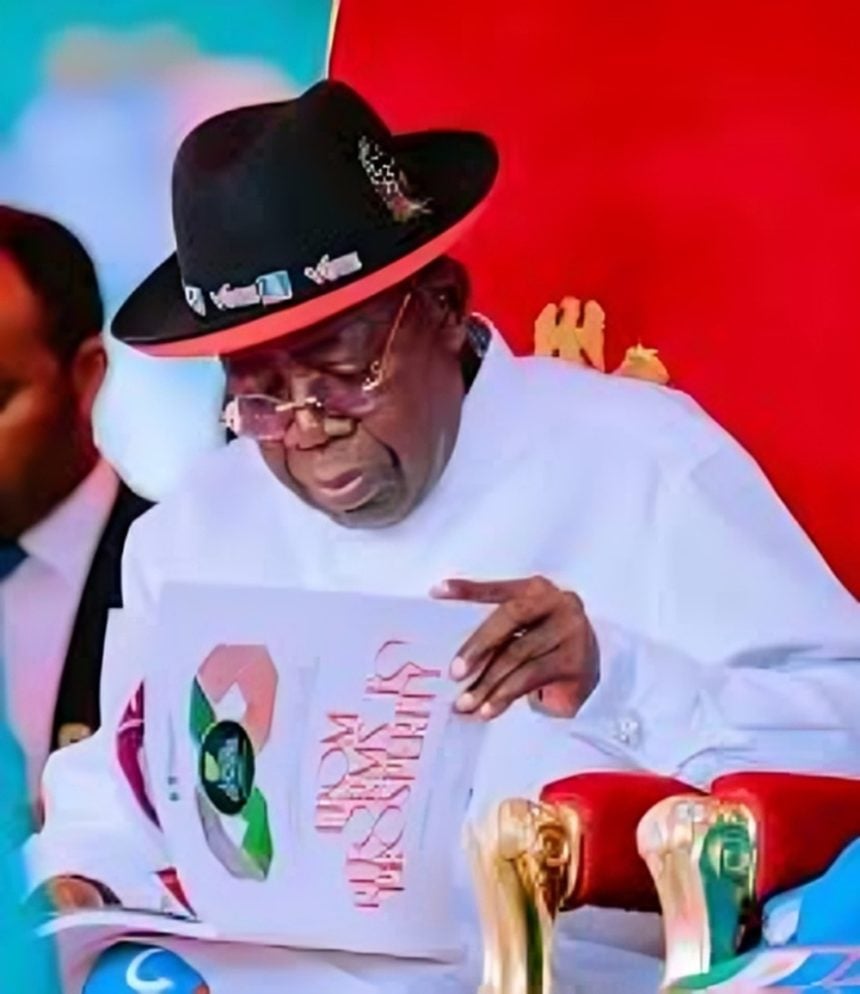
MaTaZ ArIsInGDallas, Texas By Idowu Ephraim Faleye+2348132100608 There is something increasingly interesting about Nigeria’s current political debate. Much of the conversation about President Bola Ahmed Tinubu’s leadership has shifted towards his age. Some opposition voices, particularly among supporters of Peter Obi, have made his age a major argument against his presidency. The suggestion is that…
-
Every Time, Money Na Water, How Much Does He Have? – Umahi Hits Cubana Chief Priest
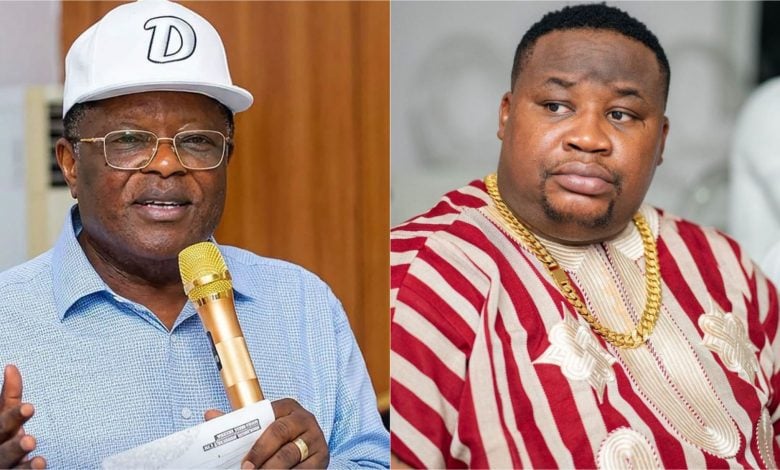
MaTaZ ArIsInGDallas, Texas Minister of Works, David Umahi, has taken a swipe at popular Nigerian socialite and businessman, Pascal Chibuike Okechukwu, better known as Cubana Chief Priest. Umahi criticised what he described as a growing culture of noise-making and excessive show-off, questioning why some people constantly boast about how much money they have instead of…
-
Why Buhari Didn’t Back Amaechi For APC Ticket, Says Ex-Aide
MaTaZ ArIsInGDallas, Texas byJonathan Nda-Isaiah A former Special Assistant on New Media to late President Muhammadu Buhari, Bashir Ahmad, has explained why the former president did not openly support Rotimi Amaechi’s ambition to emerge as the All Progressives Congress (APC) presidential candidate in the 2023 general election. Ahmad said Buhari believed in allowing the party’s…