
By Ayò Òjó
Nigeria’s greatest economic challenge is not a lack of natural resources but the persistent poverty affecting millions of its citizens. Despite being one of Africa’s largest economy by GDP and one of the continent’s leading oil producers, a significant proportion of Nigerians continue to struggle with unemployment, underemployment, high inflation, insecurity and inadequate access to quality education, healthcare and basic infrastructure. The widening gap between the rich and the poor threatens social cohesion and limits the nation’s long-term economic potential.
Over the years, successive Federal and State Governments have introduced a wide range of poverty reduction initiatives, including social investment programmes, conditional cash transfers, agricultural support schemes, youth empowerment projects, enterprise grants and infrastructure development. While these interventions have provided temporary relief for many households, they have largely failed to deliver sustainable poverty reduction because of policy inconsistency, weak institutions, corruption, inadequate monitoring, limited access to finance and an overdependence on government-led interventions instead of private sector-driven economic growth.
President Bola Tinubu’s administration has embarked on far-reaching economic reforms, including the removal of fuel subsidies, exchange rate liberalisation and efforts to improve public finances. Although these measures are intended to strengthen the economy over the long term and have been viewed by many economists as addressing longstanding structural distortions, they have also increased living costs in the short term. As a result, for many low-income Nigerians, the full benefits of these reforms have yet to be felt across the real economy through higher productivity, job creation and improved household incomes.
The experiences of China, Vietnam, South Korea and Singapore demonstrate that poverty can be reduced dramatically through deliberate long-term planning and disciplined implementation. These countries invested heavily in education, skills development, infrastructure, industrialisation, export-led manufacturing, agricultural productivity and good governance. More importantly, they created an environment in which businesses could thrive, attract domestic and foreign investment, generate millions of productive jobs and steadily improve household incomes over several decades.
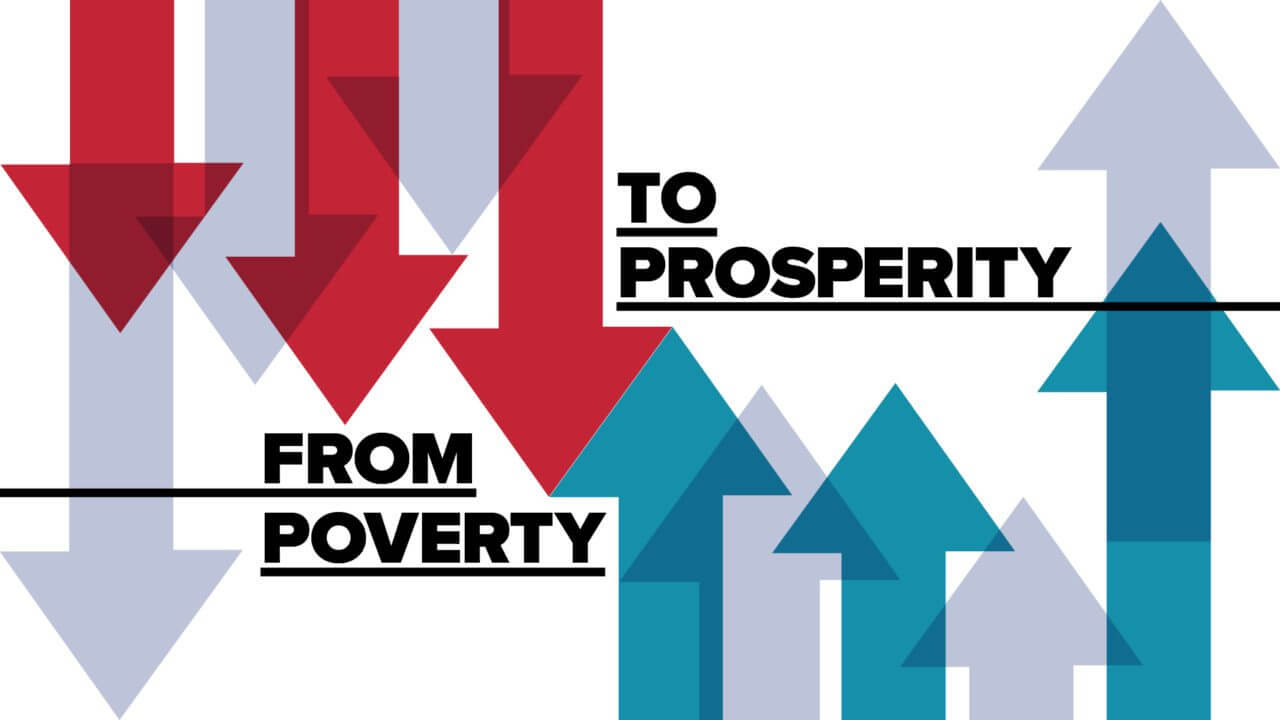
Nigeria must now shift from managing poverty to creating prosperity. Sustainable poverty reduction will come from building a productive economy that rewards enterprise, innovation and hard work. Governments should prioritise stable economic policies, affordable electricity, efficient transport networks, modern agriculture, digital infrastructure, quality education, universal healthcare and access to affordable finance for small businesses. Strong institutions, the rule of law and zero tolerance for corruption must underpin these reforms. By empowering the private sector to create jobs and equipping citizens with the skills to participate in a competitive economy, Nigeria can lift millions out of poverty permanently and build a more prosperous, inclusive and resilient nation for future generations.

1SUBSCRIBE TO OUR NEWSLETTER NOW
Support MATAZ ARISING’ journalism of integrity and credibility.
Good journalism ensure the possibility of a good society, an accountable democracy, and a transparent government.
We ask you to consider making a modest support to this noble endeavour.
TEXT AD: To advertise here – Email ad@matazarising.com
LATEST POSTS
-
Nigeria Moves Closer to State Police as Bill Reaches 36 States

MaTaZ ArIsInGDallas, Texas Nigeria may soon have state police alongside the federal police. (The National Assembly. Photo by Daily Trust) Nigeria’s National Assembly transmitted the State Police Bill to the 36 state assemblies on Wednesday for consideration and approval. The bill, which marks a major shift in Nigeria’s security structure, needs backing from at least…
-
How Nigerian drug cartels are exploiting new wave of elderly mules

MaTaZ ArIsInGDallas, Texas The growing arrest of Nigerians aged 60 and above for drug-related offences is raising concerns over the changing face of illicit drug trafficking in the country. In this report, MOYOSORE SALAMI examines why elderly Nigerians are attracted to drug trade and what could be done to curb the trend. Nigeria is facing…
-
Ortom and his 23 cars’ ‘bonus’, by Dele Sobowale
MaTaZ ArIsInGDallas, Texas Dele Sobowale “As I talk to you, after I left office, vehicles that were given to me legitimately by government, this government went and seized them in a manner that was not befitting” – Former Governor Samuel Ortom of Benue State Last week, former Governor Donald Duke of Cross River declared that…