Among Nigeria’s presidents to date, President Tinubu stands out as the most urbane, cosmopolitan, and well-traveled. Having lived and studied abroad before his election to office, one might expect him to have grasped the most elementary role of a president in a democracy: to serve as the principal public servant, answerable to the people – his true masters.
While the position empowers him to delegate various duties to aides and unelected political appointees tasked with responsibilities spanning multiple sectors, such as the economy, healthcare, education, agriculture, defense, sports, and culture, there is one crucial responsibility he cannot delegate: the task of communicating with the people, addressing their concerns, and answering their questions.
Somehow, it appears that President Tinubu has failed to fully comprehend this essential lesson in democratic governance. Rather than engaging directly with the people, it’s obvious he prefers to outsource or delegate public communication to paid voices in print, electronic, and digital media, as well as a coterie of talking heads serving as media political appointees.
At last count, President Tinubu has no fewer than thirteen political appointees, all dedicated to media and publicity, with seemingly overlapping roles, such as what appear to be Special Adviser for, Special Adviser on, and another Special Adviser of all devoted to media and publicity, as well as ten Senior Special Assistants who also fall into similar for, on, and of media and publicity categories.
During this time of economic crisis, these duplications reflect a bloated staff and wastage of resources by the administration, further raising doubts about its ability to prioritize investment over spending.
And yet, despite this extensive team of image-makers, President Tinubu’s approval rating has not been skyrocketing as one might expect. In fact, judging by the public sentiment across the country, particularly among non-partisans, it is evident that the multitude of media and publicity officials has not translated into greater support or satisfaction with his administration. The reason is simple: No amount of media can convince a hungry person that he is not hungry, nor can one window-dress diminished purchasing power.
This communication through surrogates seems like a carryover from the time when he was not in government and preferred to hide behind newspaper columnists and other hired pens to criticize the government at the time. Old habits die hard. Otherwise, by now, almost midway into his first term, it should have dawned on him that he’s no longer in opposition and that he should shift his approach from reactive to proactive steps, leading and shaping public discourse on policy directly rather than through back channels.
To be fair, the rationale behind his choice to rely heavily on others as chief spokespersons for his administration is quite simple and understandable: his public communication skills are severely lacking. His voice and tone are more suited to boasting about success, rather than providing the measured voice of a leader asking for more time to improve the economy.
When he has spoken about the economy, his braggadocious tone paints a picture of someone gleefully announcing, “I have failed you, hooray!” Talk about empty bloviation masquerading as a fountain of knowledge.
Besides his voice, he unashamedly lacks empathy and compassion—two important qualities a leader sorely needs in this period when his pronouncements, from inauguration day, have ushered in an unparalleled level of poverty and hunger in the country.
To compound matters, his body language reflects an equal measure of aloofness and detachment from the reality of day-to-day life of the public. Not too long ago, in faraway China, at a meeting with Nigerians in the diaspora, his introduction was: “…the country is going through hard times.” Not, “our country is going through hard times.” He spoke as if he was not a Nigerian but some foreigner giving a clinical review of the dire situation back in Nigeria.
His overreliance on communication through surrogates is indicative of a deeper issue. It’s a mix of pretense and ineptitude, characterized by substituting bluster for genuine knowledge. His economic policy is a mixture of one step forward and two steps backward. Or, in his case, three steps forward, four steps backward.
On the positive side, Tinubu started well by implementing fuel subsidy removal, FOREX convergence, and interest-free college student loans. All three are long overdue. However, he then introduced a tax drive aimed at boosting tax revenue, which contradicts basic economic principles for managing economic crises. Increasing tax revenue amidst hyperinflation, high-interest rates, and a high Cash Reserve Ratio is simply counterproductive.
Moreover, his administration’s focus on spending, rather than investing the savings from subsidy removal or directing them towards tangible economic growth, undermines the potential benefits of the initial positive measures. A case in point is devoting trillions to Lagos-Calabar and Badagry–Sokoto superhighway when many existing federal highways are in desperate need of repairs.
Still on negatives, considering the prevailing food insecurity in the country, it is unclear why the announced import duty waiver policy on certain food items has yet to be implemented months after. This list of economic missteps is by no means exhaustive.
By now, it should be clear to the president that he can not outsource or delegate the all-important task of communicating with the public, taking questions, and addressing press conferences. If he wishes to improve his standing in the eyes of the people, he must embrace a more direct and authentic approach to connecting with his constituents.
Tinubu is beginning to look like a walking poster child for the saying: Money can’t buy taste, nor does wealth equal wisdom. Acquiring media outlets [TVC, Nation, etc.] and having litany of political appointees all devoted to media and publicity shows that Tinubu understands opinion shaping. However, it doesn’t mean he grasps when spokespersons are effective or when the top public servant, the president, must communicate.
Given his exposure, it is pathetically appalling that Tinubu can not distinguish between instances when the message is separate from the messenger and when the messenger is integral to the message. Knowing when to speak and when to delegate is a test of leadership, and so far, Tinubu is failing the test.
Cutting down on the cost of governance, a case study of
President Bola Tinubu’s Media Team as at November 14, 2024
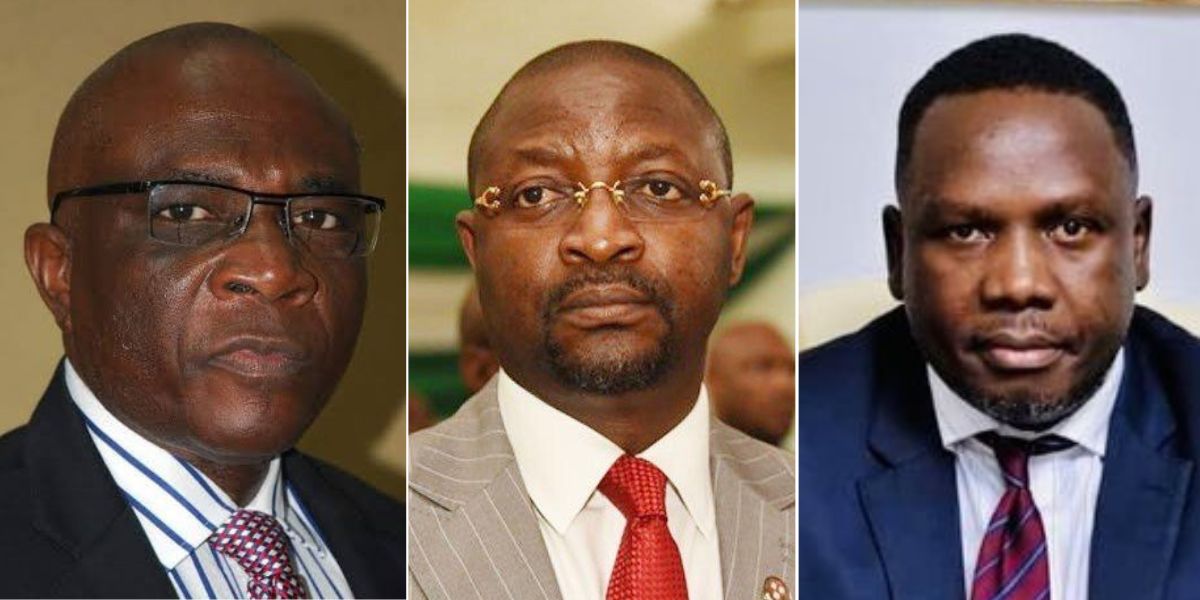
- Daniel Bwala (Special Adviserr Public Communication and Media)
- Bayo Onanuga (Special Adviser on Information and Strategy)
- Sunday Dare (Special Adviser on Public Communication and Orientation)
- Tunde Rahman (Senior Special Assistant to the President — Media)
- Abdulaziz Abdulaziz (Senior Special Assistant to the President — Print Media)
- O’tega Ogra – (Senior Special Assistant (Digital/New Media)
- Tope Ajayi – Senior Special Assistant (Media & Public Affairs))
- Segun Dada (Special Assistant — Social Media)
- Nosa Asemota – Special Assistant (Visual Communication)
- Mr Fela Durotoye (Senior Special Assistant to the President — National Values & Social Justice)
- Mr Fredrick Nwabufo (Senior Special Assistant to the President — Public Engagement)
- Mrs Linda Nwabuwa Akhigbe (Senior Special Assistant to the President — Strategic Communications)
- Mr Aliyu Audu (Special Assistant to the President — Public Affairs)
This is in addition to the Minister of information.
🤷♂️
The volume of whitewashing to be done under this “renewed hope cutting dagger” government ….

SUBSCRIBE TO OUR NEWSLETTER NOW
Support MATAZ ARISING’ journalism of integrity and credibility.
Good journalism ensure the possibility of a good society, an accountable democracy, and a transparent government.
We ask you to consider making a modest support to this noble endeavour.
TEXT AD: To advertise here – Email ad@matazarising.com
-
PHOTOS: Jerry Eze leads thousands in prayer at Man United’s Old Trafford
MaTaZ ArIsInGDallas, Texas Old Trafford, Manchester United’s 74,000-capacity stadium, became a house of worship on Saturday as Nigerian pastor Jerry Eze led the NSPPD UK Prayer Conference, drawing believers from across Britain and beyond. By Okiki Adeduyite Hosted by Streams of Joy International, the conference brought together believers from across the United Kingdom and around the…
-
Soludo’s wife denies claim that Peter Obi is godfather of their son
MaTaZ ArIsInGDallas, Texas Wife of the Governor of Anambra State, Mrs Nonye Soludo, has denied claims that former governor of the state and political rival of her husband, Mr Peter Obi, was a godfather of one of their sons at baptism. A statement by the Media Assistant to the First Lady of Anambra State, Mr…
-
2027: Peter Obi, Kwankwaso working for Tinubu, don’t vote them – Adeyanju alleges

MaTaZ ArIsInGDallas, Texas Activist lawyer, Deji Adeyanju, on Saturday, alleged that the Nigeria Democratic Congress, NDC, presidential candidate, Peter Obi and his running mate, Rabiu Kwankwaso are working for President Bola Tinubu like they did in 2023. Adeyanju urged Nigerians not to vote for Obi in 2027 because such votes are for Tinubu and the…