

Wale Adeleke
In recent times, reports have indicated that the government plans to charge some participants of the #endbadgovernance protest with treason. Compounding this disturbing development is the recent report that the Department of State Services (DSS) summoned a member of a group involved in a lawsuit filed by indigenous landowners. The lawsuit seeks to uncover whether Dangote paid $100 million to the Lagos State Government (LASG) to acquire their land, where the Dangote Refinery now stands.
It’s unclear how a private land matter before a court is an issue of state security for an agency that has yet to explain how a Binance employee escaped from its custody, causing international embarrassment to the country. For a nation grappling with daily increases in banditry, kidnapping, and other forms of terrorism, it speaks to the skewed priorities of the administration that a private land matter could be a focus of the DSS.
The combination of these heavy-handed tactics paints a disturbing picture of a regime seemingly willing to manipulate law enforcement to silence opposition, stifle dissent, and quell any form of criticism or protest. It appears we, as a country, are on a dangerous slippery slope, and is disturbing enough to compel individuals to rise above petty partisan affiliations and speak up in defense of the most fundamental freedom in a democracy: the freedom to dissent and protest. Failure to do so risks allowing our democracy to devolve into a fascist totalitarian state.
The silver lining amidst this sad decline towards fascism is that the history of governance in Nigeria teaches us that attempts to impose totalitarian regimes have always been met with resistance and eventual failure. Even military dictatorships have been unable to maintain long-term control.
The key performance indicators (KPIs) for governance worldwide are based on two factors: law and economics. Nigerian citizens have never traded one for the other but have consistently insisted on a government that not only provides economic stability but also respects their basic civil liberties. This insistence was evident during past military dictatorships when agitation for civilian administration remained strong despite the economic benefits provided by some military regimes.
The current administration appears to have overlooked these lessons, as it continues to lose public support in both law and economics spheres. The government’s economic reform policies, although necessary for course correction, have been painful for many Nigerians, leading to the recent #endbadgovernance protests. This has significantly eroded public goodwill.
Compounding the resentment generated by these harsh economic policies with repressive and unnecessary weaponization of law enforcement, the Tinubu administration runs the risk of further eroding its public support and goodwill, ultimately expanding, rather than reducing opposition. It is an unnecessary and avoidable self-inflicted wound that could only be accounted for by a combination of ignorance of the lessons of hidtory and arrogance of transitory power.
As Martin Niemöller’s famous poem about the rise of Nazi Germany reminds us, “First they came for the Jews, then the Romas, the academia… and by the time they came for me, I was alone.” If the Tinubu administration continues on this trajectory, the narrative would be the opposite of Niemöller’s famous poem, in which the Nazi government successfully divided and conquered the German people. Rather, it would be a narrative of, first, Tinubu lost the labor unions, then the students, the clergy, and nonpartisan moderates, until he is left standing alone. It is a path of self-destruction.
The previous administration had a poor track record of acknowledging and responding to reports of impunity, which was unsurprising given its leadership by a former military leader who, at one point, staged a coup before his election. In contrast, many Nigerians expected Tinubu, with his background in political activism and leadership in the pro-democracy movement against the military regime, to be more responsive to criticism and protective of basic civil liberties.
Thus far, these expectations have been dashed. However, there is still hope for redemption if Tinubu takes the recent police state-leaning developments seriously, reverses course from the road to fascism, and demonstrates a commitment to upholding democratic values like freedom of expression and the right to peaceful dissent. He doesn’t have the luxury of silence; he needs to speak up.

WhatsApp Community
SUBSCRIBE TO OUR NEWSLETTER NOW
Support MATAZ ARISING’ journalism of integrity and credibility.
Good journalism ensure the possibility of a good society, an accountable democracy, and a transparent government.
We ask you to consider making a modest support to this noble endeavour.
TEXT AD: To advertise here – Email ad@matazarising.com
-
40 Years In Politics, I’ve Not Seen President With Better Plan Than Tinubu- Masari
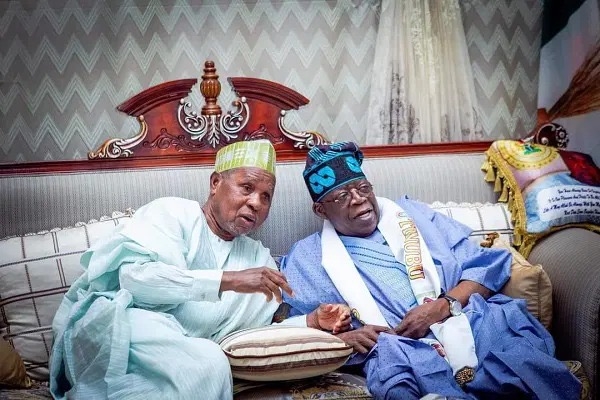
MaTaZ ArIsInGDallas, Texas Former Speaker of the House of Representatives and ex-Katsina State Governor, Aminu Masari, has said that in nearly four decades of active participation in Nigerian politics, he has not seen a president with a better plan for the country than President Bola Ahmed Tinubu. Masari made the assertion in a video shared…
-
Dangote’s Industrial Strategy: Refining, Fertiliser and Energy Infrastructure

Aliko Dangote
-
2027: Wike draws fresh battle lines with APC govs
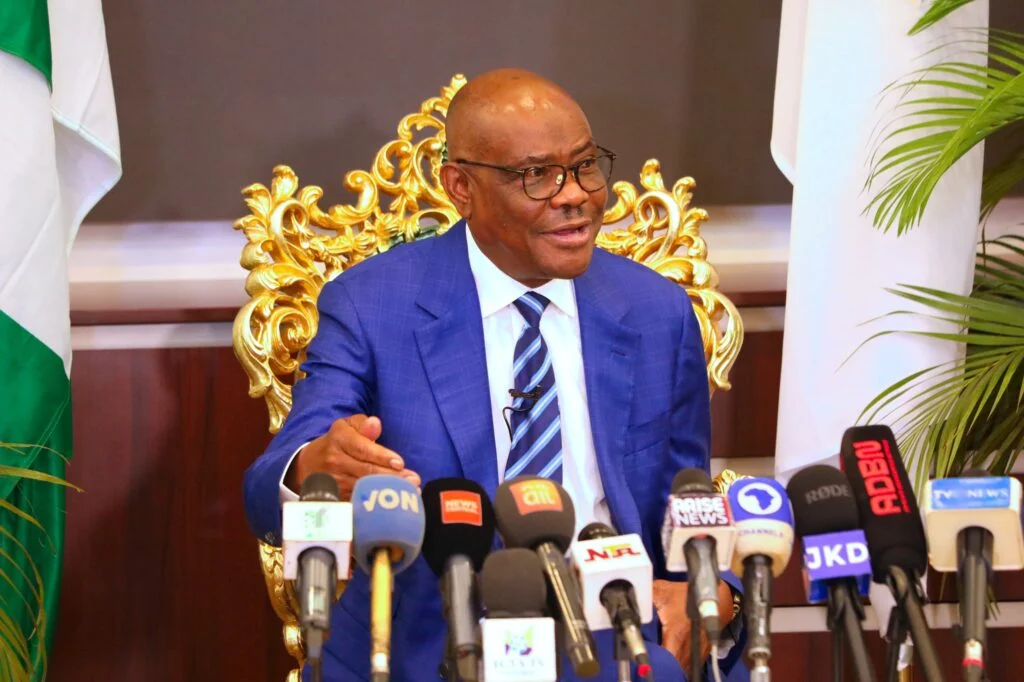
MaTaZ ArIsInGDallas, Texas The Minister of the Federal Capital Territory, Nyesom Wike, on Monday dismissed concerns by some governors of the All Progressives Congress that the proposed Rainbow Coalition could undermine the ruling party ahead of the 2027 elections. Speaking on TVC’s Journalists’ Hangout, Wike said the coalition was primarily aimed at mobilising support for…