Ayo Dada
To understand Bola Ahmed Tinubu’s political journey, one must first understand the role he played in the formation of the All Progressives Congress (APC) and the sacrifices, political calculations and strategic patience that eventually positioned him for the presidency.
“In Politics, Patience Is Power: They Pushed Him to the Sidelines, He Stayed the Course, Mastered the Game, and Returned to Claim the Presidency. Tinubu’s Rise Was No Accident; It Was Strategy, Structure and Timing!”
Tinubu came into the merger with six sitting governors from the defunct Action Congress of Nigeria (ACN), a merger he initiated and championed:
- Kayode Fayemi – Ekiti State
- Babatunde Fashola – Lagos State
- Ibikunle Amosun – Ogun State
- Rauf Aregbesola – Osun State
- Adams Oshiomhole – Edo State
- Abiola Ajimobi – Oyo State
The All Nigeria Peoples Party (ANPP) came with three governors:
- Kashim Shettima – Borno State
- Ibrahim Gaidam – Yobe State
- Abdulaziz Yari – Zamfara State
The All Progressives Grand Alliance (APGA) came with one governor:
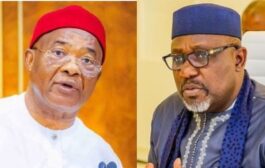
- Rochas Okorocha – Imo State
The Congress for Progressive Change (CPC) came with one governor:
- Tanko Al-Makura – Nasarawa State
That historic merger gave birth to the All Progressives Congress (APC), and he emerged as the party’s national leader.
He threw his full political weight behind Muhammadu Buhari, helping him secure the party’s presidential ticket. He also backed the choice of Yemi Osinbajo as Buhari’s running mate, a decision that became part of the winning formula in the 2015 presidential election.
Yet, after the victory, the political story took a different turn, the same political establishment he helped build gradually pushed him to the sidelines.
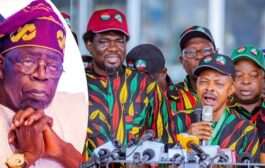
Look at the attached picture below.
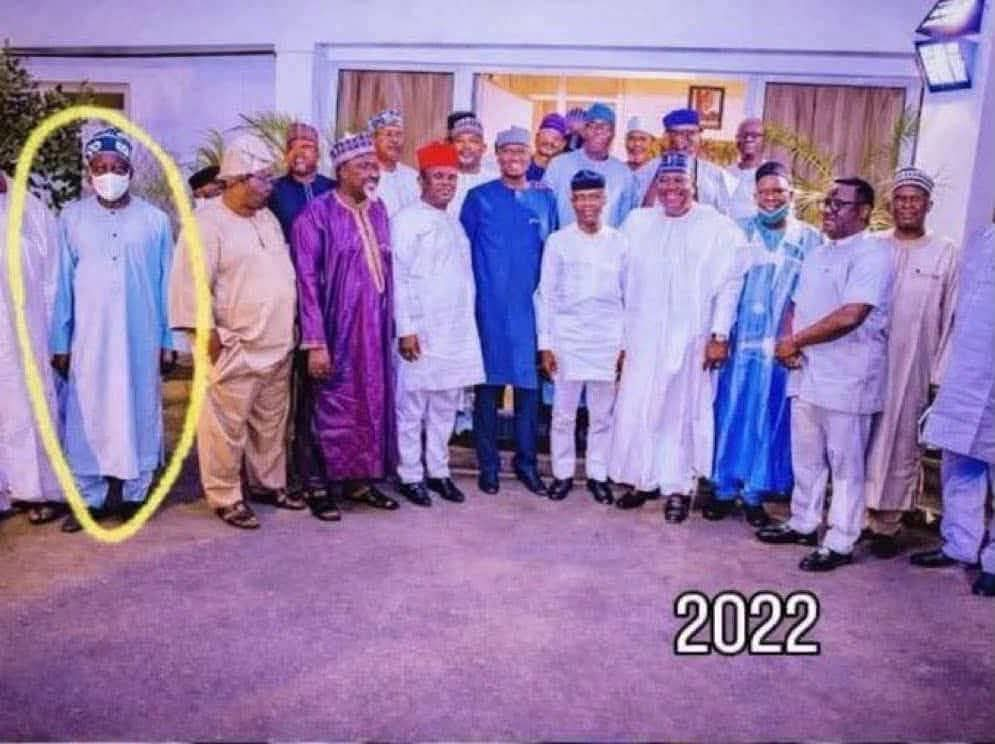
But after the victory, the political story took a different turn.
The man who had invested so much in building the APC gradually found himself pushed to the margins of the very political structure he helped establish.
And this was not merely political speculation.
In an interview on the Naija Unfiltered podcast, former APC interim National Chairman Chief Bisi Akande offered further insight into what Tinubu allegedly experienced during the Buhari administration.
According to Akande, Tinubu was deliberately sidelined during important party meetings between 2015 and 2023. He described situations in which Tinubu was positioned behind other officials, despite his standing and contributions to the party.
Akande also spoke about the alleged rejection of ministerial nominees associated with Tinubu. Names such as Dele Alake and Wale Edun were reportedly among those whose nominations were bypassed in favour of other candidates, a development interpreted as an attempt to weaken Tinubu’s influence within the administration.
There was also the question of Vice President Yemi Osinbajo’s presidential ambition ahead of the 2023 APC primaries.
Akande recounted Buhari’s denial of having encouraged Osinbajo to challenge Tinubu for the presidential ticket. He invoked the cultural understanding that a political protégé should not turn against the mentor who helped elevate him.
These revelations paint a picture of the difficult political environment Tinubu reportedly navigated between 2015 and 2023
It tells a story that goes beyond a thousand political statements. It captures the reality of his political relegation. This is neither fiction nor speculation. It is a reflection of what happened.
But what did he do in response?
He did not abandon the party. He did not launch public attacks against its leadership. He did not allow his political frustration to destroy the structure he had helped create.
Instead, he retreated strategically, worked behind the scenes, rebuilt his political strength and quietly positioned himself for the ultimate prize: succeeding Buhari as president.
He behaved as though he was comfortable with his political marginalisation, while patiently waiting for the right moment.
And when that moment arrived, he made his move — and won.
That is the difference between a political strategist and a political wanderer.
Tinubu’s political journey is fundamentally different from Atiku’s. Atiku moved from the PDP to the ACN, returned to the PDP, moved to the APC, and eventually returned to the PDP before becoming associated with the ADC. His political journey has been characterised by repeated party movements.
Tinubu, on the other hand, has demonstrated remarkable consistency in his political calculations. He has maintained his political base, built alliances, nurtured structures and pursued a clearly defined ambition with patience and determination.
He is not a political gambler. Neither is he the kind of political kalo-kalo player Wike recently described.
There is another political figure who once suggested that when your house is on fire, you should simply run away rather than make an effort to put out the fire. Interestingly, he still commands a following, although cracks are increasingly appearing in his political camp, with supporters reportedly departing one after another.
And as for that other political contender, the reality is becoming increasingly difficult to ignore: he is losing relevance in the real political contest. The recent confrontation with his own running mate, who reportedly nearly slapped him, only adds another dimension to the growing perception of political disarray.
Politics is not just about making noise, jumping from one platform to another or declaring ambitions. It is about building structures, managing relationships, understanding timing, enduring setbacks and knowing when to make your move.
Tinubu’s political journey offers a lesson in patience, political organisation and strategic calculation. He understood the game, stayed in it and ultimately achieved the objective he had been working towards.
A LESSON BEYOND THE PRESIDENCY
Beyond the personalities and political rivalries, Tinubu’s journey raises an important question about the nature of political leadership: What happens when the people who help build a political institution find themselves sidelined by the very institution they helped create?
His experience, as recounted by Chief Bisi Akande, offers an opportunity to reflect on patience, political relationships, loyalty and the importance of sustaining political structures even in moments of disagreement.
For political leaders, party stakeholders and emerging political actors, the lesson is that enduring political influence is not built on public declarations alone. It also involves organisation, consultation, negotiation, resilience and an understanding of the institutions through which political power is contested.
As Nigeria continues to navigate its political future, the need for stronger political institutions, mutual respect among party stakeholders and constructive engagement cannot be overstated.
The ultimate test of political leadership is not simply how one rises to power, but how one builds relationships, manages differences and contributes to the survival and strength of the political institution that made that journey possible.
That is the broader lesson worth taking from the political journey of Bola Ahmed Tinubu.
THE SECOND-TERM QUESTION 2027 – 2031: CONTINUITY, CONSOLIDATION AND THE ROAD AHEAD
If Tinubu’s political journey teaches anything, it is that leadership is not always about immediate gratification. It is also about long-term planning, institutional relationships, resilience and the ability to remain focused on clearly defined objectives despite political setbacks.
That brings us to the question of 2027 and the debate surrounding a second presidential term.
A second-term conversation should not be reduced to political sentiment, personality loyalty or the historical contributions of any individual to the APC. It should be an opportunity to examine the direction of the country, assess the administration’s record and consider whether continuity offers a credible pathway to consolidating ongoing reforms.
The Tinubu administration has embarked on major economic and structural policy changes. These include fuel subsidy removal, foreign exchange reforms and efforts to strengthen government revenue. These decisions have generated significant debate, economic adjustments and hardship for many Nigerians.
Supporters of continuity may argue that major structural reforms require time to produce their intended benefits. However, that argument must be accompanied by measurable progress, improved living conditions, stronger purchasing power, employment opportunities, food security and greater confidence in the economy.
The question, therefore, is not simply whether Tinubu deserves another term because of his political history. It is whether his administration can demonstrate sufficient progress, respond effectively to public concerns and present a convincing roadmap for the next four years.
For the APC, the 2027 conversation also raises questions about party cohesion, internal democracy, leadership succession and the importance of respecting the contributions of the different political blocs that came together to establish the party.
The political experience that produced the APC should remind its stakeholders that political institutions are sustained through consultation, mutual respect and collective responsibility.
Ultimately, a second-term proposition must be earned through governance, performance and public confidence.
Tinubu’s political journey explains how he arrived at the presidency. His administration’s record and its plans for the future will determine how convincingly it can make the case for another four years.
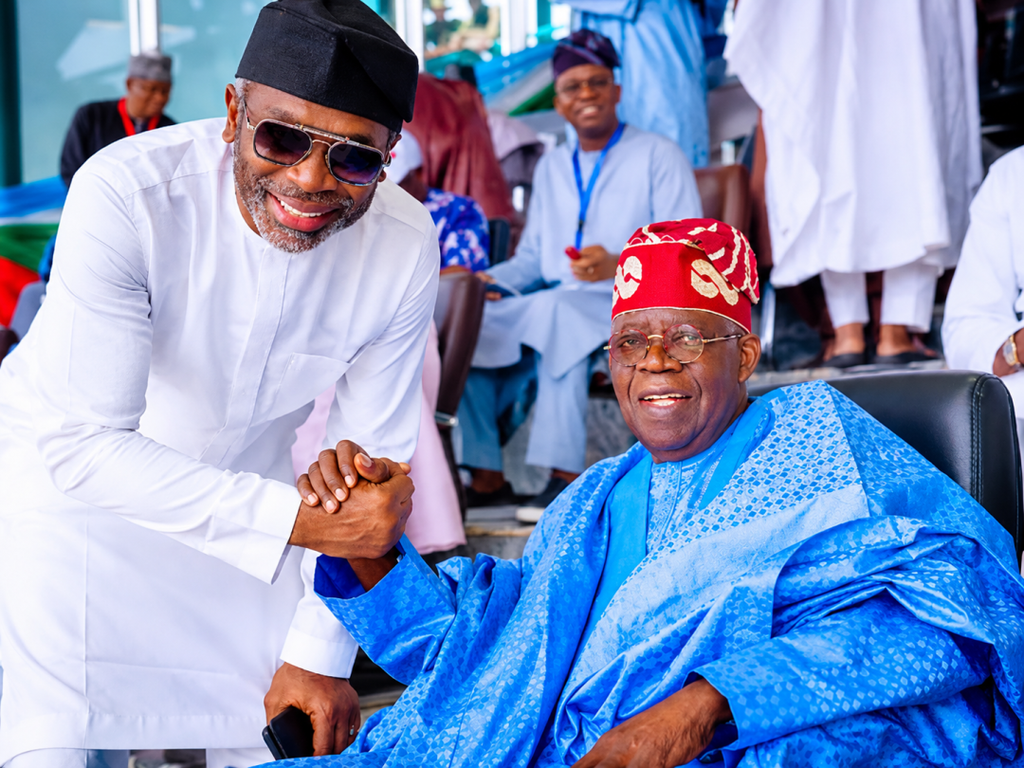
For Friends of Gbajabiamila For BOLA TINUBU (FFoG) 2027, this is an opportunity to encourage a serious national conversation about leadership, continuity, accountability and the future of Nigeria.
Opinion | Mataz Arising News


1SUBSCRIBE TO OUR NEWSLETTER NOW
Support MATAZ ARISING’ journalism of integrity and credibility.
Good journalism ensure the possibility of a good society, an accountable democracy, and a transparent government.
We ask you to consider making a modest support to this noble endeavour.
TEXT AD: To advertise here – Email ad@matazarising.com
LATEST POSTS
-
From Political Relegation to the Presidency: The Tinubu Strategy of Patience, Power and Political Mastery

Ayo Dada MaTaZ ArIsInGDallas, Texas To understand Bola Ahmed Tinubu’s political journey, one must first understand the role he played in the formation of the All Progressives Congress (APC) and the sacrifices, political calculations and strategic patience that eventually positioned him for the presidency. “In Politics, Patience Is Power: They Pushed Him to the Sidelines,…
-
EXCLUSIVE: Access Bank MD Roosevelt Ogbonna Took The Mortgage For His £15 Million London Mansion From Access Bank UK

Roosevelt Ogbonna
-
Judgment Declaring Okorocha Winner Of Imo West Senatorial Primary Is Travesty Of Justice — Commissioner
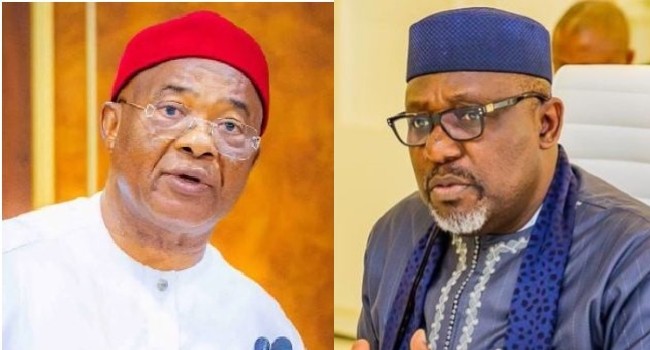
MaTaZ ArIsInGDallas, Texas The Imo State Commissioner of Information, Declan Emelumba,said that the Court of Appeal would be approached to reverse the decision of the lower court. By Eyitope Kuteyi The Imo State Commissioner of Information, Declan Emelumba, has rejected the judgment of the Federal High Court, which declared former governor Rochas Okorocha the winner…