
By Babajide Ojo
23 October 2026
With exactly 85 days left until the 16 January 2027 presidential election, the airwaves are dominated by familiar campaign theatrics. We are being inundated with the rhythmic chanting of slogans, the public spats over torn billboards and the inevitable trading of personal insults. Thankfully, we are not going to be hearing about shaky hands and legs this season.
While it is easy to look at the current political landscape and conclude that Nigerian politics has completely abandoned policy in favour of performance art, a much more rigorous conversation is happening underneath if we strip away the noise of the rallies and look closely at the actual data, policy decisions and economic indicators.
This means that the choice before voters in 2027 is not just about who has the catchiest anthem or who can make the loudest noise on social media but a fundamental debate over the economic architecture of our nation.
The “Renewed Hope” Scorecard
To make an informed choice, we must first assess the ruling All Progressives Congress (APC) administration based on the promises made and the mandate it secured in 2023.
President Bola Tinubu’s administration took office promising immediate, painful, but structural overhauls. Looking back at the trajectory of the last three years, the execution of that mandate shows a mix of completed structural shocks, ongoing transitions and emerging macroeconomic turnarounds.
On the execution front, the administration delivered on the highly contentious promises that previous governments avoided for decades.
The official removal of the fuel subsidy on inauguration day and the subsequent unification of the foreign exchange window represented a deliberate shift towards a market-driven economy.
Structurally, the administration successfully championed local government autonomy through a historic Supreme Court ruling, ensuring direct funding to local government areas. It also launched the Nigerian Education Loan Fund (NELFUND) to institutionalise interest-free student loans, which has benefited close to 1.5 million students to date.
Meanwhile, other foundational initiatives remain a work in progress. Insecurity is being tackled head-on, with many countries collaborating with Nigerian security forces to dismantle terrorist networks and eliminate their kingpins. The legislative and operational push for decentralised state policing is moving steadily to actualisation, with as many as twenty-four states assenting to the bill, thus meeting the constitutional threshold.
Tax Reform: Lifeline for the High Street, Oxygen for MSMEs
Crucially, a foundational campaign promise was fully realised with the passage and operationalisation of the landmark Tax Reform Act.
Far from being a mere legislative exercise, this sweeping reform has systematically dismantled the chaotic web of over 50 duplicating state and federal levies, collapsing them into a streamlined, single-digit tax regime.
For everyday consumers, the act serves as a direct shield against the current high cost of living. Value Added Tax (VAT) has been entirely removed from fundamental survival items, including basic food, healthcare, public education, residential rent, electricity, and baby products.For small businesses, which represent the backbone of the economy, the legislative shift is even more dramatic as Micro, small, and medium enterprises (MSMEs) with an annual turnover below ₦50 million are now entirely exempt from Company Income Tax (CIT).
By legally wiping out the threat of multiple taxation and arbitrary street-level harassment by revenue collectors, the reform has freed up vital cash flow, giving small businesses the breathing room needed to survive macro-shocks.
These internal policy shifts are beginning to manifest in broader economic turnarounds.
According to data from the World Bank, Nigeria’s economy grew by 4.2% in the first half of 2026, a steady climb from the 3.9% recorded in 2025. Gross external reserves rose significantly to $53.8 billion as of August 2026, driven by a robust $12 billion current account surplus.
Furthermore, the aggressive collection of non-oil revenues under the new tax framework has drastically increased statutory cash transfers directly to states and regional development commissions to fund major infrastructure like the Lagos–Calabar Coastal Highway, the Sokoto–Badagry Highway, and other legacy projects embarked upon by the administration.
However, it must be admitted that this macroeconomic stabilisation came at a significant human cost. The immediate devaluation of the Naira and the end of cheap fuel triggered a historic cost-of-living crisis, forcing the government to forego over ₦3.3 trillion in fuel taxes and import duties over the last few years, in addition to other palliative measures, just to cushion consumer shock.
The Opposition Alternatives: Cheap Gimmicks and Subsidy Flip-Flops
This ongoing economic friction forms the exact foundation of the opposition’s campaign. However, rather than presenting sustainable alternative roadmaps, the leading opposition figures have resorted to populist gimmicks, attempting to leverage the electorate’s economic exhaustion to grab power.
Consider Peter Obi of the Nigeria Democratic Congress (NDC). During his 2023 campaign, Obi vocally condemned the petrol subsidy, famously branding it a “profligate scam” that needed to go immediately. Yet, in a stark political U-turn in October 2026, Obi reversed his stance during an interview with the BBC, vowing to restore the petrol subsidy under the guise of “eliminating corruption”. This massive flip-flop has drawn sharp criticism from economic analysts, who view it as a direct abandonment of economic logic in favour of securing cheap votes ahead of January 2027.
Equally concerning is the strategy deployed by Atiku Abubakar of the African Democratic Congress (ADC). Atiku has consistently championed a private-sector-led model, yet his current campaign relies heavily on pushing for the reintroduction of fuel subsidies and other market intervention templates.
Economists have however warned that attempting to bring back any variation of the ruinous subsidy regime which historically drained trillions from national infrastructure to line the pockets of black-market cartels would be an act of fiscal suicide.
By promising to re-shackle the Nigerian treasury to the volatile beast of fuel subsidies, both Obi and Atiku are treating complex macroeconomic surgery as a populist game, gambling the country’s long-term survival for short-term electoral gain.
Moving Beyond the Spectacle: A Case for Consolidation
The current administration is steadily and faithfully adhering to the blueprints written in the Renewed Hope Manifesto, even amidst the evolving policy reversals of the opposition.
The success of these macroeconomic reforms is currently being evidenced by the massive Foreign Direct Investments (FDIs) trooping into the country in renewed investments. Wall Street heavyweights are actively backing this trajectory, marked by global giant JP Morgan expanding operations with a ₦50 billion statutory deposit to establish its merchant banking license in Nigeria.
Simultaneously, oil majors like Shell BP and Mobil are returning to reinforce upstream operations after their previous divestments, signalling a massive global vote of confidence in Nigeria’s fiscal stabilisations.
Nigeria thus stands at a critical historical juncture.
Economic transformations of this scale are long-term endeavours that require institutional continuity, policy stability and the courage to outlast the initial discomfort of structural adjustments. To abort these policies mid-stream by switching to the regressive, populist alternatives offered by the opposition would mean forfeiting everything we have collectively endured since 2023.
It is up to us, the electorate therefore, to stop looking at the stage and start reading the balance sheets, with our future dependent on our ability to reject short-sighted gimmicks.
To truly consolidate these hard-earned macroeconomic gains and secure a resilient financial future, returning the current administration to power for a second term is not merely the logical choice but an economic imperative.
Over the next 85 days, let our vote be cast for stability, growth, and structural progress.
Babajide Ojo
A Political and Public Affairs Analyst writes from London, United Kingdom

1SUBSCRIBE TO OUR NEWSLETTER NOW
Support MATAZ ARISING’ journalism of integrity and credibility.
Good journalism ensure the possibility of a good society, an accountable democracy, and a transparent government.
We ask you to consider making a modest support to this noble endeavour.
TEXT AD: To advertise here – Email ad@matazarising.com
LATEST POSTS
-
Tinubu’s 90-day relief plan a scam to bait voters — ADC campaign

MaTaZ ArIsInGDallas, Texas By Luminous Jannamike The African Democratic Congress (ADC) Presidential Campaign Council has accused President Bola Tinubu of using his 90-day cost-of-living relief plan to bait voters ahead of the 2027 presidential election, arguing that the programme’s deadline falls after Nigerians would have voted. Phrank Shaibu, Director of Strategic Communication of the ADC…
-
90-Day Action Plan To Ease Cost Of Living For Nigerians
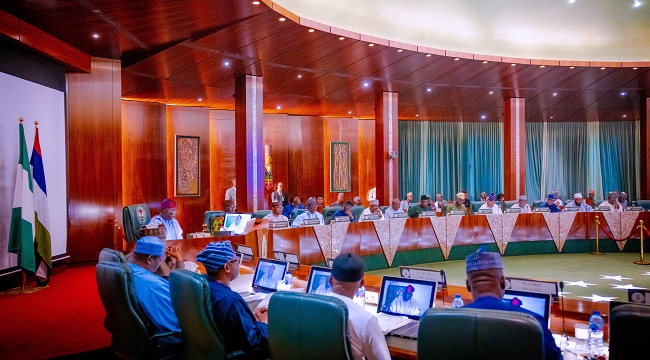
MaTaZ ArIsInGDallas, Texas .Reviews Ebola response, tasks states on preparedness The National Economic Council (NEC) on Thursday Rose from its monthly meeting and endorsed a 90-day economic action plan proposed by the Federal Ministry of Finance to consolidate gains from President Bola Tinubu’s economic reforms. The plan focuses on reducing the cost of living, improving…
-
He Started It, Came To My Site To Castigate Me’ — Umahi Blows Hot At Peter Obi
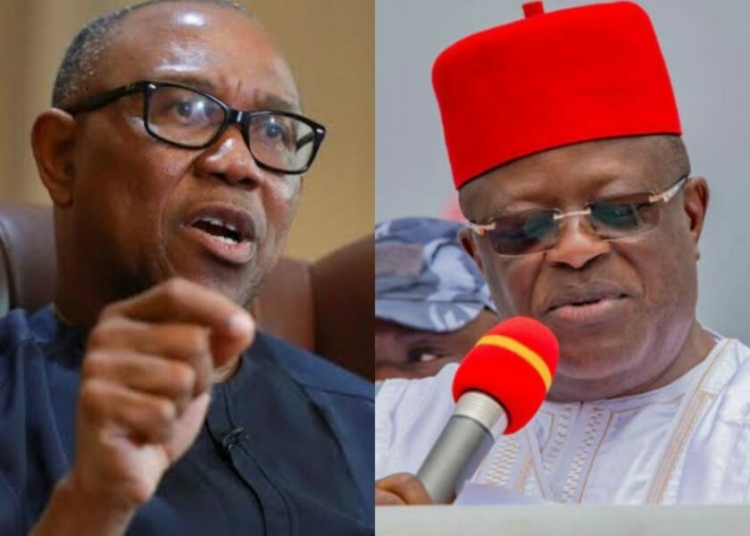
MaTaZ ArIsInGDallas, Texas The Minister of Works, David Umahi, has accused Peter Obi, presidential candidate of the Nigeria Democratic Congress (NDC), of initiating their confrontation over the Lagos-Calabar Coastal Highway project. Umahi said he did not attack the former Anambra State governor but was responding to criticism Obi allegedly directed at him during a visit…