By Obinna Ezugwu
•”It’s a political vendetta,” Chekwas
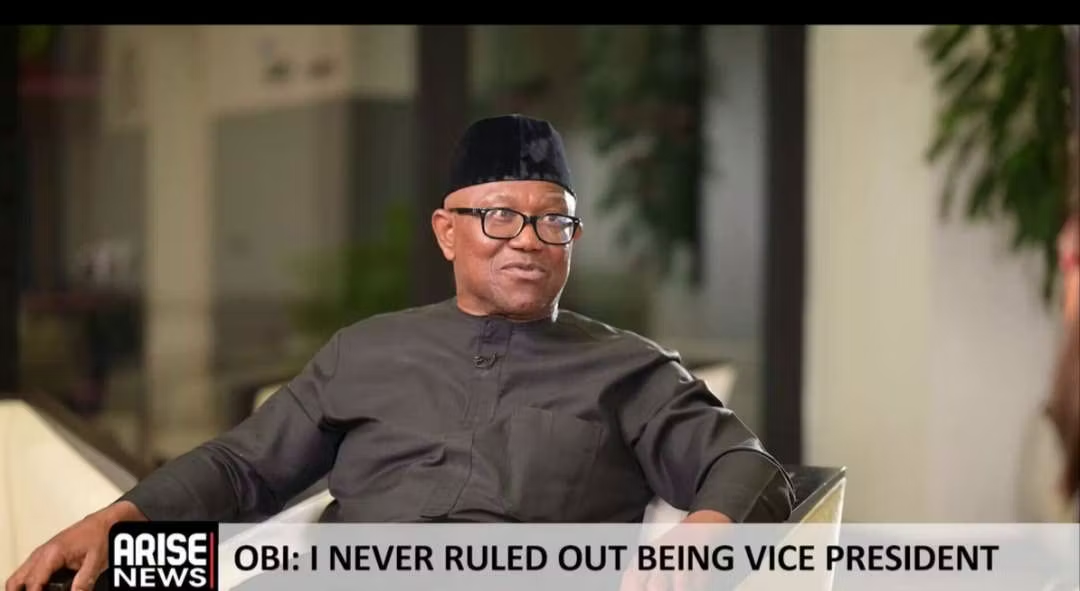
The growing confrontation between former Anambra State governor and presidential candidate of the Nigeria Democratic Congress (NDC), Mr. Peter Obi, and influential political leaders from the South-East is taking an increasingly consequential turn ahead of the 2027 election, exposing deep divisions within a region that has long demanded greater access to Nigeria’s highest political office.
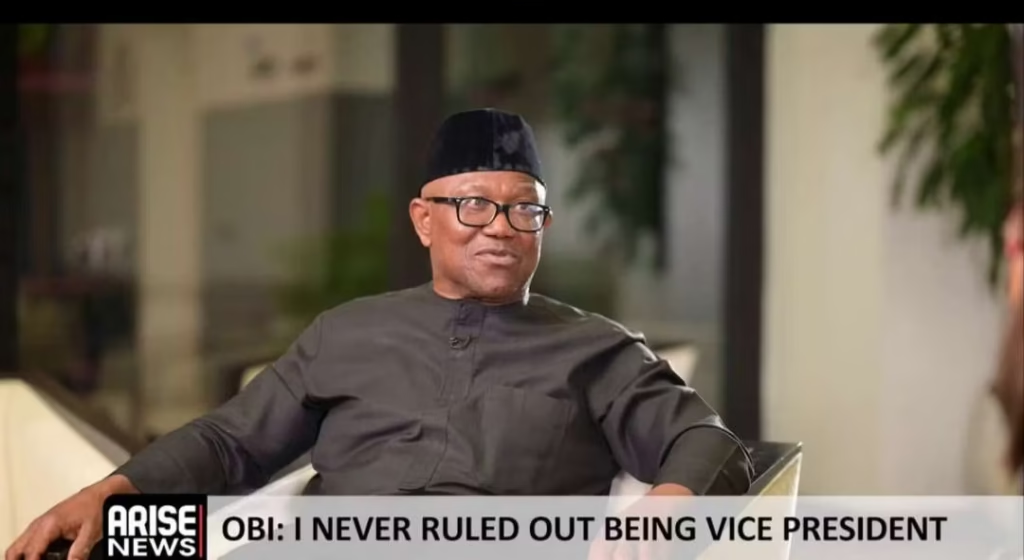
From Minister of Works Engr. David Umahi’s challenge to Obi’s record, and Gov. Charles Soludo’s campaign against his political credibility to the alignment of South-East governors with President Bola Tinubu, the opposition to Obi’s presidential ambition is becoming more pronounced.
In Enugu State, where Gov. Peter Mbah has adopted a less confrontational public posture towards Obi, developments surrounding the former governor’s political activities have raised further questions about the environment for opposition politics in the region.
The suspension of a traditional ruler days after receiving Obi and the disruption of political meetings associated with the NDC, have fuelled concerns about the treatment of the former Labour Party presidential candidate and his supporters by his own people.
The state government did not officially link the monarch’s suspension to Obi’s visit, while the reported disruption of NDC activities has generated concerns about political freedom. Nevertheless, the developments have added to a growing perception among Obi’s supporters that the resistance to his ambition extends beyond ordinary political disagreement.
What makes the confrontation particularly striking for many people is that it is unfolding in the South-East, a region whose political leaders have repeatedly complained about marginalization and the difficulty of securing the presidency..
Obi, whose performance in the 2023 presidential election attracted substantial support across the country, represents one of the strongest opportunities in recent decades for an aspirant from the region to compete seriously for the presidency on a nationwide platform.
Yet, rather than rallying around his candidacy, several influential South-East political figures appear determined to weaken his prospects, with some openly supporting President Tinubu’s re-election bid.
Umahi challenges Obi, invokes home-town comparison
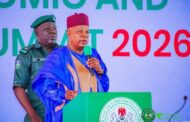
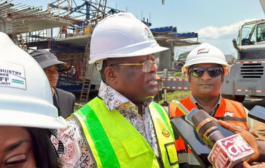
The latest exchanges have brought Umahi, a former Ebonyi State governor, who is now minister of works, into sharper focus. Speaking on Channels Television last week, Umahi challenged the argument that Obi’s record as Anambra governor should make him the preferred presidential candidate of the South-East.
“I built the best university and teaching hospital in Nigeria, and my airport is one of the best. When people talk about performance, mine is not just talk: go and verify, the evidence is there. Show Peter Obi’s village and my own, Uburu, let’s compare,” he said.
The remarks, which invoked a comparison between Umahi’s home-town of Uburu in Ebonyi State, and Obi’s Agulu community in Anambra State, drew criticism from those, who considered the argument an attempt to turn a national presidential contest into a competition between communities.
For critics, the comparison was, particularly, troubling because it appeared to frame the question of political leadership around the relative development of the home-towns of two prominent Igbo politicians, rather than their records, policies, and capacity to govern Nigeria.
Umahi’s supporters could argue that he was defending his record against what he considers an exaggerated portrayal of Obi’s achievements. However, the intervention has also reinforced the perception that the contest is becoming personal, with the minister using his own achievements to challenge Obi’s standing.
Umahi’s political position is significant. Having governed Ebonyi State for eight years under the Peoples Democratic Party before defecting to the All Progressives Congress, he is now a senior member of the Tinubu administration, and one of the most prominent South-East politicians working with the ruling party.
His opposition to Obi, therefore, intersects with a wider political strategy in which influential figures from the region are seeking to consolidate their relationships with the federal government ahead of the next election.
For Obi’s supporters, the central question is why such efforts appear increasingly directed at discrediting a fellow South-Easterner whose presidential ambition has attracted support well beyond the region.
Soludo takes the battle to Obi’s political base
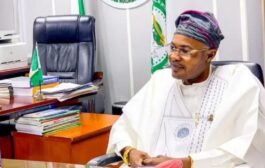
Soludo has been even more direct in his opposition to Obi. On October 5, the Anambra State Government, through an account associated with the governor’s Office of New Media, urged the electorate to resist Obi and the NDC in the 2027 election.
The government accused the former governor of working against the All Progressives Grand Alliance (APGA), the party under which he governed Anambra State, and portrayed him as a threat to the party’s political interests.
In a message directed at APGA supporters, it declared: “A betrayal alert for Ndi APGA. Since 2014, Obi has had one mission: to destroy the party that made him.”
The message further alleged that Obi had supported efforts against APGA while Tinubu defended the party, concluding with an appeal to the electorate to “resist the NDC”.
The intervention followed a renewed dispute over multilateral development financing obtained during Obi’s tenure as governor, which the Soludo administration had characterised as debt inherited from its predecessors.
Obi disputed that description, arguing that the government had combined different categories of development financing, including approved facilities, amounts drawn, and outstanding balances, to produce a figure of $123.77 million that it attributed to his administration.
According to Obi, the facilities were primarily World Bank and International Fund for Agricultural Development programmes negotiated by the Federal Government and accessed by participating states through subsidiary arrangements.
He maintained that he did not personally approach any financial institution to borrow money or issue a bond on behalf of Anambra State.
The former governor also cited Debt Management Office records, claiming that the state’s external debt stood at approximately $30 million when he left office in March 2014, against the $123.77 million subsequently presented as debt left by his administration.
Obi acknowledged that the state had repayment responsibilities under the financing arrangements but argued that each facility needed to be assessed separately, based on its approval, drawdown, and repayment history.
The disagreement has, consequently, developed into a contest over the interpretation of Obi’s record in office.
For Soludo, the controversy provides an opportunity to challenge the legacy of his predecessor and defend APGA’s political interests. For Obi, it has become necessary to rebut allegations that he left behind financial liabilities that undermine his claims to responsible governance.
The dispute has also exposed the increasingly strained relationship between the two prominent Anambra politicians whose disagreements predate the present presidential contest.
Chief Chekwas Okorie, founder of APGA, had accused Soludo of using his support for Tinubu as a cover for what he described as a sustained campaign against Obi. In a statement, Okorie expressed disappointment over the governor’s criticisms, arguing that Obi had continued to show him respect despite their political differences.
Okorie traced the animosity to earlier political contests, including the 2009 Anambra governorship election, which Obi won against Soludo, and subsequent disagreements over APGA’s internal politics.
He also referred to Soludo’s disqualification from the party’s governorship primary in 2013 and the 2023 Anambra Central senatorial contest, in which APGA’s Victor Umeh lost the party’s ticket before winning the election on the Labour Party platform.
Okorie interpreted these episodes as contributing to a long-standing political rivalry, although his characterisation of Soludo’s motives remains an allegation rather than an established fact.
He urged the governor to concentrate on the challenges confronting Anambra State, and warned against allowing political rivalry to overshadow governance.
The disagreement has become more complicated because Soludo has openly backed Tinubu for 2027, citing their long-standing relationship and his approval of the President’s economic reforms. In 2025, the governor said his support for Tinubu was firm, describing the President as a friend of more than two decades.
APGA, subsequently, endorsed Tinubu as its preferred presidential candidate for the 2027 election, with the party’s leadership saying the decision followed consultations, and was in the country’s overall interest.
The result is an unusual political alignment in which the governor of the state that produced Obi and the party under which he once governed are backing the incumbent President rather than the former governor’s presidential ambition.
Enugu Antics Raise Fresh Concerns
While Umahi and Soludo have been comparatively vocal, developments in Enugu State have raised questions about other methods through which political opposition to Obi might be expressed.
On September 25, the Enugu State Government announced the suspension of Chief Williams Ezugwu, the traditional ruler of Ibagwa Opi Ogbozalla Autonomous Community in Nsukka Local Government Area, days after he received Obi at his palace.
The Commissioner for Chieftaincy Affairs, Charles Egumgbe, announced the suspension in a statement issued through the ministry’s public relations officer, Emeka Nebeife.
The government accused the monarch of persistent conduct allegedly inconsistent with the state’s Traditional Rulers Law. Among the allegations were failure to subscribe to the community’s code of conduct, and failure to constitute a cabinet to assist in administering the community.
The government did not identify Obi’s visit as a reason for the suspension, and there has been no official confirmation that the two developments were connected.
Nevertheless, the timing generated speculation among Obi’s supporters, who interpreted the action as a possible warning to traditional institutions and political actors inclined to receive the NDC presidential candidate.
The controversy has been compounded by reports that political meetings associated with the NDC have been violently disrupted in Enugu, with the person, who recorded one of the incidents reportedly arrested. The incidents have intensified scrutiny of the political environment in a state whose governor, Peter Mbah, belongs to the APC, and has cultivated a close working relationship with the Federal Government.
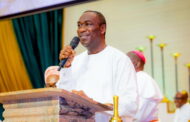
The developments have prompted lawyer and political analyst, Chidi Anthony, to question the direction of South-East politics.
Anthony argued that the suspension of a traditional ruler shortly after receiving Obi, alongside the positions taken by Soludo and Umahi, illustrated the extent to which political calculations within the region could undermine its collective interests.
“The greatest enemy of the Igbo man in Nigeria is, in many cases, another Igbo man,” Anthony argued.
He maintained that the contradiction was, especially, troubling because Obi had become the first Igbo presidential candidate in recent decades to attract such broad national attention and support.
According to him, the politicians most determined to oppose Obi were not necessarily competing against him for the same position in 2027, but could be positioning themselves for appointments and other political opportunities under the existing power structure.
Anthony said the development reflected a shift away from collective political bargaining towards individual calculations involving ministerial positions, legislative offices and the possibility of becoming vice-president in a future administration.
Awuzie, Okorie oppose Umahi, Soludo
The opposition to Obi has not gone unanswered. Prof. Ukachukwu Awuzie, former national president of the Academic Staff Union of Universities, recently called on Umahi and Soludo to stop what he described as attempts to discredit the NDC presidential candidate.
Speaking with journalists in Owerri, Imo State, Awuzie urged the two politicians to concentrate on their respective responsibilities rather than engaging in attacks against Obi.
He also criticised the apparent silence of prominent Igbo leaders and Ohanaeze Ndigbo, arguing that the region’s elders should intervene to prevent political disagreements from becoming damaging to its wider interests.
“There should be a limit to greed, envy, and jealousy. They should face governance; govern well, and minister well,” he said.
Awuzie argued that Obi’s appeal extended beyond the South-East and could not easily be dismissed through attacks on his record or personality.
His intervention reflects a broader concern among Obi’s supporters that the political elite is failing to recognise the strategic significance of the former governor’s national profile.
Okorie’s criticism of Soludo has similarly sought to distinguish legitimate political disagreement from what he regards as a vendetta.
The APGA founder argued that the governor should be more concerned about the performance of his administration, and the verdict of history than about undermining Obi’s presidential bid.
South-East governors rally behind Tinubu
The opposition to Obi has unfolded alongside moves by South-East political leaders to consolidate support for Tinubu.
The region has witnessed efforts to organize serving governors and former governors around the President’s re-election campaign, making it an important arena in the ruling party’s attempt to strengthen its political reach beyond its traditional strongholds.
The forum of serving South-East governors has announced support for Tinubu, although Abia State Gov. Alex Otti, subsequently, said he was not part of the resolution.
Otti’s position complicates attempts to present the region as politically unanimous. His Labour Party has also not adopted the same posture as APGA, and the APC-aligned political figures backing Tinubu.
Nevertheless, the broader pattern has reinforced the impression that a substantial section of the region’s political leadership is more interested in working with the incumbent President than in building a collective platform around Obi.
The emergence of groups, such as the City Boy Movement, which has attracted young entrepreneurs and social media influencers to Tinubu’s re-election campaign, has further expanded the range of political organizations mobilizing support for the President in the South-East.
Other politicians and groups are backing different presidential contenders, including former Vice-President Atiku Abubakar of the African Democratic Congress.
These developments show that the region is not politically homogeneous. They also reveal how the contest for influence ahead of 2027 is creating competing networks that may weaken any attempt to present the South-East as a unified political bloc.
For the APC, endorsements by prominent South-East figures offer an opportunity to demonstrate that Tinubu’s support is not confined to the party’s strongest regional bases. For politicians, such as Umahi and Soludo, alignment with the President could also preserve or improve their access to the federal political establishment.
But for those, who believe the South-East should use the 2027 election to negotiate a stronger position in Nigeria’s power structure, the strategy carries considerable risks.
The danger of returning to the political margins
Observers say the implications of the unfolding confrontation extend beyond the personal relationships between Obi, Umahi, Soludo and Mbah. At stake is the South-East’s ability to translate its demographic weight, commercial influence, and political aspirations into a meaningful role in the national distribution of power.
For decades, political leaders and organizations from the region have complained that the South-East has been marginalized in federal appointments, infrastructure allocation, and access to the presidency.
The region’s grievances are rooted partly in the aftermath of the Nigerian Civil War, and in the political arrangements that have repeatedly placed it outside the dominant coalitions competing for power.
Yet, when an aspirant from the region gains national prominence, the response of some of its leading politicians appears to be driven less by the prospect of strengthening the region’s negotiating position than by the immediate advantages of alignment with the federal establishment.
A journalist and author from the South-South, who requested anonymity, offered a broader interpretation of the development, arguing that Nigeria’s political structure makes it difficult for smaller, or less cohesive regional blocs, to secure the presidency without major institutional changes.
He said the country’s electoral arrangements, combined with unresolved questions about representation and the distribution of political power, had historically favoured candidates able to command large regional constituencies and forge alliances across the country’s principal political blocs.
In his analysis, the North’s political consolidation and the South-West’s ability to build alliances with northern power centres have given both regions advantages that the South-East has struggled to replicate.
The analyst distinguished between leaders who came to power through the normal electoral process and those whose emergence depended on exceptional political circumstances.
He cited Nnamdi Azikiwe’s largely ceremonial presidency under the First Republic and Johnson Aguiyi-Ironsi’s brief tenure as military head of state, while describing Goodluck Jonathan’s emergence as President following Umaru Yar’Adua’s death as an exceptional transition rather than the product of a conventional presidential contest won by a South-South candidate.
The distinction is central to his argument: the South-East and South-South have produced prominent national figures, but neither has established the same sustained capacity to control the alliances that determine presidential outcomes.
The analyst warned that the South-East could find itself increasingly marginalized if its political leaders continue to prioritize individual advancement over a coordinated regional strategy. He argued that the same process had followed Jonathan’s departure from office in 2015, when the South-South lost much of the influence it had enjoyed while one of its own occupied the presidency.
“After Jonathan, the South-South has gone back to being a spare tyre,” he said, arguing that many of the region’s politicians had since concentrated on securing appointments and other benefits rather than rebuilding a durable national political platform.
He believes the South-East now faces a similar danger. “What is going on in the South-East is exactly what happened in the South-South after Jonathan. Once Jonathan left power, the South-South left the negotiating table. Everyone started looking for what they can get from the system,” he said.
The analyst’s most consequential warning concerns the possibility that the current political arrangement could endure beyond the 2027 election.
He argued that unless the country’s unresolved structural questions are addressed, a future northern administration could reopen the contest for power without the informal understandings that have sometimes favoured rotation between the North and South.
In that scenario, regional leaders, who have weakened their collective bargaining position in exchange for immediate political benefits could discover that their influence is difficult to recover.
He described the South-East’s present difficulties as evidence of the danger facing regions that fail to build a common position when a candidate from their area has a realistic opportunity to compete nationally.
“What you find happening in the South-East is actually flank activities from groups that are not consequential,” he said, suggesting that politicians seeking personal advancement could end up helping to reinforce a political structure in which the region remains peripheral.
He added: “It is the South-East now because there’s a Peter Obi, who is a threat to the status quo.”
The argument is not that the South-East must automatically support Obi because he is Igbo. Rather, it is that the region risks losing an opportunity to negotiate from a position of strength if its leaders are unable to distinguish legitimate political competition from the broader strategic interests of their constituents.
A national opportunity or another regional illusion?
Anthony’s intervention makes a related argument, although from a different perspective. He said he supported Obi because he considered him the best candidate for the presidency, not simply because they shared an ethnic identity.
Nevertheless, Anthony expressed concern that Obi’s candidacy could represent a rare opportunity for the South-East to produce a presidential contender with substantial support beyond the region.
He argued that political leaders, who oppose Obi today in the hope of securing future positions could underestimate the difficulty of reproducing the coalition that has given the former governor his national profile. Anthony cited Abia governor, Dr. Alex Otti, as a potential figure who could have enjoyed wider acceptance but who, he said, had indicated that he was not interested in pursuing the presidency.
For Anthony, the question is whether the South-East’s political establishment recognizes the rarity of a candidate, who can appeal to voters across regional and ethnic boundaries. He warned that the political opportunities being pursued by some leaders might prove less enduring than they imagine.
“Perhaps, by then, they will understand that what they are doing to Obi today, other people can do to them,” he said.
The warning points to a central paradox in the South-East’s current political predicament. The region has often argued that Nigeria’s political establishment is unwilling to accommodate its ambitions, yet some of its most influential figures are helping to sustain the very alliances that critics say have kept it at the margins.
The counter-argument is that political pluralism should not require the South-East to unite behind a single candidate. Umahi, Soludo, Mbah and other politicians have the right to support Tinubu, or any other contender, just as voters and political parties have the right to reject Obi.
Regional solidarity cannot legitimately become a demand that all politicians from the South-East abandon their political affiliations, or endorse a candidate solely on ethnic grounds.
However, the controversy raises the question about whether political rivalry is being conducted within the boundaries of democratic competition, particularly, where allegations of disrupted meetings, arrests and pressure on traditional institutions emerge.
A regional political elite can disagree over candidates without denying opponents the right to organize, campaign and seek support. The distinction, observers say, matters because the credibility of any political endorsement depends partly on whether competing voices are permitted to operate freely.

1SUBSCRIBE TO OUR NEWSLETTER NOW
Support MATAZ ARISING’ journalism of integrity and credibility.
Good journalism ensure the possibility of a good society, an accountable democracy, and a transparent government.
We ask you to consider making a modest support to this noble endeavour.
TEXT AD: To advertise here – Email ad@matazarising.com
LATEST POSTS
-
Muslim clerics and Muslim president
MaTaZ ArIsInGDallas, Texas Monday Lines Muslim clerics and Muslim president By Lasisi Olagunju (Published on Monday, 12 October, 2026). The voice of Northern Nigeria, Daily Trust newspaper, reported on Wednesday last week that more than 1,000 Islamic clerics met in Kano and warned Muslims against re-electing President Bola Tinubu next year unless his administration changed…
-
Court strikes out charge against alleged ‘fake’ PFIPC DG Adeyemi
MaTaZ ArIsInGDallas, Texas By Ikechukwu Nnochiri ABUJA — The Federal High Court in Abuja on Monday struck out the eight-count forgery charge brought against the self-styled Director-General (DG) of the alleged “non-existent” Presidential Foreign Investment Promotion Council (PFIPC), Prince Adeniyi Adeyemi. Justice Mohammed Umar terminated further proceedings in the case following an application by the…
-
$1bn military arms was never paid into private accounts – Buratai

MaTaZ ArIsInGDallas, Texas Former Chief of Army Staff, retired Lt.-Gen. Tukur Buratai, has clarified that the one billion dollars earmarked for military arms procurement during his time was never paid into individual service accounts. Buratai made the clarification while delivering a keynote lecture at the Defence Correspondents Association of Nigeria (DECAN) Conference and Awards Ceremony…