
EphraimHill DC- Weekly Civic Data Intelligence | 26-09- 2026 | Idowu Ephraim Faleye+2348132100608
Tinubu’s record in Nigeria is becoming a central issue in the country’s political conversation as the 2027 election cycle approaches. Between September 20 and 26, Atiku Abubakar dominated the monitored news cycle with 51 articles, compared with Peter Obi’s 34, while stories explicitly tagged “2027 Election” recorded just 9. But beyond the headlines and political competition lies a bigger question: what has actually changed in Nigeria since President Bola Ahmed Tinubu assumed office in May 2023, and what does the evidence show?
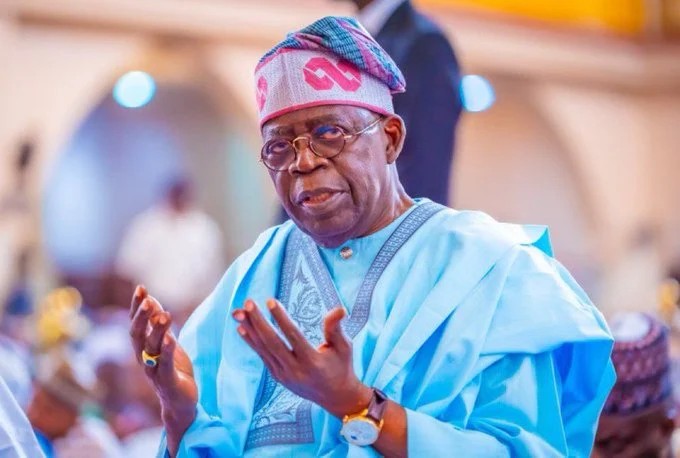
The numbers provide a useful starting point. Of Atiku’s 51 articles, 84.3% were classified as negative in tone, while 15.7% were positive. Peter Obi’s coverage was similarly tilted, with 79.4% negative and 20.6% positive. These figures describe the tone of monitored news content, not public opinion or voting intentions. Nevertheless, they show how political personalities and policy disagreements are shaping the news cycle ahead of the next election.
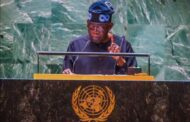
President Tinubu appeared alongside Atiku in 29 of the 51 articles, while the African Democratic Congress (ADC) featured in 16. Fuel subsidy policy, international diplomacy and opposition politics were among the issues driving the coverage. One report focused on the APC Presidential Campaign Council challenging Atiku to clarify his position on fuel subsidies, while other stories examined Nigeria’s UN General Assembly participation and the administration’s international standing.
The significance goes beyond political personalities. Fuel prices, economic relief, government spending and international engagement directly affect Nigerians. Therefore, the real question is not simply who dominates the headlines, but whether political arguments accurately reflect the policies, evidence and outcomes behind them.
Tinubu’s record must be examined against the economic conditions his administration inherited and the consequences of the reforms it introduced. When he assumed office in May 2023, Nigeria faced costly petrol subsidies, multiple foreign-exchange rates, weak government revenue, high debt-service pressure and serious electricity-sector problems. His administration responded with major reforms, particularly removing the petrol subsidy and liberalising the foreign exchange market.
These decisions imposed substantial hardship. Higher petrol prices increased transport and living costs, while exchange-rate adjustments raised the naira cost of imports and other essentials. The government has acknowledged the pressure on households and businesses, while arguing that the reforms were necessary to address structural weaknesses and improve the economy’s long-term position.
The subsidy debate illustrates why the country needs evidence rather than political slogans. Removing the subsidy reduced a major burden on government finances, but Nigerians must also ask how the resulting fiscal space has been used. Has it translated into better infrastructure, public services and economic opportunities? Equally, proposals by the opposition to restore subsidies should explain their financial cost and how they would be funded.
The foreign-exchange reform deserves the same scrutiny. Moving away from multiple exchange rates changed how foreign currency is priced and reduced some distortions, but it also brought high short-term costs. Nigeria cleared billions of dollars in outstanding foreign-exchange obligations, while foreign reserves rise to $45.4 billion at the end of 2025, with figures moving higher in 2026.
These developments can strengthen economic stability, but stronger reserves do not automatically mean cheaper food, higher real wages or improved household purchasing power. Macroeconomic stabilisation and better living standards are related, but they are not the same thing. The administration’s impressive macroeconomic performance must therefore be measured by whether economic improvements reach ordinary Nigerians.
Trade and government revenue provide further evidence. Nigeria recorded trade surpluses for several consecutive quarters, with the surplus reaching ₦7.46 trillion in the second quarter of 2025. Manufactured exports increased by 173% quarter-on-quarter, although the year-on-year increase was 67.2%. This distinction matters because impressive percentages can mislead when the comparison period is omitted.
The reported tax-to-GDP ratio of 13.5% and increased FAAC distributions also indicate changes in public revenue. However, higher nominal revenue does not automatically make citizens richer, particularly when inflation and exchange-rate movements affect purchasing power. The essential question is whether public funds are producing better services, infrastructure and economic opportunities.
Infrastructure is another area where Tinubu’s record can be measured. The Lagos-Calabar Coastal Highway, Sokoto-Badagry corridor, Second Niger Bridge, ongoing Federal roads and transport projects are intended to improve national connectivity. Their value, however, depends on whether they reduce travel time, lower logistics costs, connect producers to markets and support business activity. Nigerians deserve clear information about what has been delivered, what remains unfinished, and what benefits the investments are expected to produce.
Electricity presents a similar picture. Investments in transmission, renewable energy and off-grid solutions, alongside projects such as the Zungeru Hydropower Project, form part of the wider effort to improve supply. Yet, Gas supply, transmission constraints, distribution networks, metering and legacy debts remain significant challenges to the installed capacity. The practical test is whether households and businesses experience more reliable power and lower dependence on expensive generators.
Education and digital skills are equally important. The Nigerian Education Loan Fund introduced a new mechanism for financing tertiary education. More than 1.5 million students had benefited and over ₦282 billion had been disbursed by the administration’s third anniversary. The 3MTT programme and other digital-skills initiatives seek to prepare young Nigerians for a technology-driven economy.
The real impact of these programmes will depend on access, implementation and outcomes. Student loans should expand educational opportunities, while digital training should help participants secure employment, establish businesses and earn sustainable incomes. Training numbers and funds disbursed matter, but their long-term value lies in the opportunities they create.
The minimum wage increase from ₦30,000 to ₦70,000 is another clear policy change. However, inflation determines how much workers can actually buy with their wages. Similarly, the compressed natural gas programme is intended to provide an alternative to petrol-based transportation, but its success depends on availability, conversion rates, safety and whether commuters experience lower transport costs.
Agriculture, healthcare, social protection and small-business support must also be assessed by their results. Cash transfers, agricultural financing, mechanisation and primary healthcare interventions can help vulnerable households and support economic activity. But the government must demonstrate that assistance reaches intended beneficiaries and that programmes deliver measurable improvements.
Security remains another major national concern. The government has reported intensified military operations against terrorists and bandits. Boko-Hara, ISWAP and Banditry operational activities are reducing drastically, while insecurity continues in several parts of the country. Both realities matter: operational successes deserve recognition, but they do not establish that the security challenge has been resolved.
Tinubu’s record must also be examined alongside the responsibilities of state and local governments. Federal reforms cannot independently solve every problem facing Nigerian households. While the Federal Government manages national fiscal, monetary, trade, and major infrastructure policies, governors and local government chairmen have important responsibilities for healthcare, education, local roads, markets, agriculture, and employment.
As Nigerians examine national economic indicators, they should also ask what their state and local governments are doing to reduce food production costs, improve markets, strengthen local businesses and create jobs. Economic recovery is ultimately experienced through food prices, transport fares, electricity bills, wages and access to public services.
The central issue is not whether Tinubu has done everything right or nothing at all. Both positions ignore the complexity of governance. His administration has introduced significant economic, fiscal, infrastructure, education and energy reforms, while Nigerians continue to face high living costs, insecurity, unemployment and other serious challenges.
As the 2027 political cycle develops, the country needs more than competing slogans and headline counts. Without allowing the politicians to hoodwink them, citizens should examine in practical term what has changed since May 2023, what remains unfinished, how those reforms can be effectively coordinated to have impacts on the masses, and who is capable of doing these.
Ultimately, Nigeria’s progress must be measured through policies, implementation, results and accountability. Political competition should not blind citizens to genuine progress, just as political loyalty should not prevent them from questioning failure. The country deserves an honest examination of where it was, where it stands today, and what must happen next.
Nigeria’s growth numbers are real. Yet most Nigerians are not feeling this progress in their daily lives. This gap between rising national numbers and stagnant household welfare is not unique to Nigeria, it is one of the oldest problems in economics. But it has a clear explanation. The missing link is distribution, not growth. Growth is real, but it is concentrated in sectors and fiscal channels that do not quickly reach ordinary household income. A stronger GDP figure or a bigger reserve balance does not, on its own, put more food on anyone’s table.
This is also where responsibility shifts beyond the Federal Government. National indicators: GDP, inflation, reserves are largely shaped by federal fiscal and monetary policy. But the things Nigerians feel every day: food prices, transport fares, electricity bills, wages, and access to public services depend heavily on what state governors and local government chairmen do with their own resources and authority. Reducing food production costs, fixing local markets, supporting small businesses, and creating jobs are largely state and local responsibilities. A governor who receives higher FAAC allocations because national revenue has improved, but does not translate that into cheaper food or more local jobs, is failing citizens just as much as any federal shortfall would.
The central issue, then, is not whether Tinubu’s administration has done everything right or gotten everything wrong. Both extremes ignore how governance actually works. The administration has introduced real economic, fiscal, infrastructure, education, and energy reforms. At the same time, Nigerians continue to face high living costs, insecurity, unemployment, and other genuine hardships. Both things are true at once.
As the 2027 election cycle unfolds, Nigerians deserve better than slogans from any side. The right question is not simply whether the national indicators are positive, they clearly are, for now. The right question is whether that positive momentum is being converted, at every level of government, into lower food prices, functioning markets, stronger local businesses, and real job opportunities. Until that conversion happens, growth on paper will keep outrunning progress in people’s pockets.
However, the wider news environment provides further context. The monitoring pipeline recorded 2,557 articles between September 20 and 26, comprising 1,495 negative and 1,062 positive articles. Politics accounted for 453 articles, infrastructure 318, and the economy 175. Abuja and Lagos generated 444 location mentions. These figures show why political sentiment alone cannot determine the success or failure of an administration. Negative reporting does not automatically establish public rejection, just as positive coverage does not prove public approval. The substance of policies, implementation, costs, and measurable outcomes provide a more meaningful basis for assessment.
At EphraimHill DC, this is the purpose of Nigeria Weekly civic data intelligence: to examine the evidence behind Nigeria’s political and governance stories. Through the Data Lab and Data Intel, readers can explore the datasets, indicators, trends, and emerging risks shaping the national conversation.
EphraimHill DC is Nigeria’s civic data intelligence platform, where we track,analyze, and interpret national developments to help Nigerians understand the deeper patterns behind public events. Our analysis is institutional, evidence-based, and politically neutral.

1SUBSCRIBE TO OUR NEWSLETTER NOW
Support MATAZ ARISING’ journalism of integrity and credibility.
Good journalism ensure the possibility of a good society, an accountable democracy, and a transparent government.
We ask you to consider making a modest support to this noble endeavour.
TEXT AD: To advertise here – Email ad@matazarising.com
LATEST POSTS
-
Tinubu’s Record: What Has Changed in Nigeria, and What Does the Evidence Show?

MaTaZ ArIsInGDallas, Texas EphraimHill DC- Weekly Civic Data Intelligence | 26-09- 2026 | Idowu Ephraim Faleye+2348132100608 Tinubu’s record in Nigeria is becoming a central issue in the country’s political conversation as the 2027 election cycle approaches. Between September 20 and 26, Atiku Abubakar dominated the monitored news cycle with 51 articles, compared with Peter Obi’s…
-
Sanusi and the Betrayal of El-Rufai
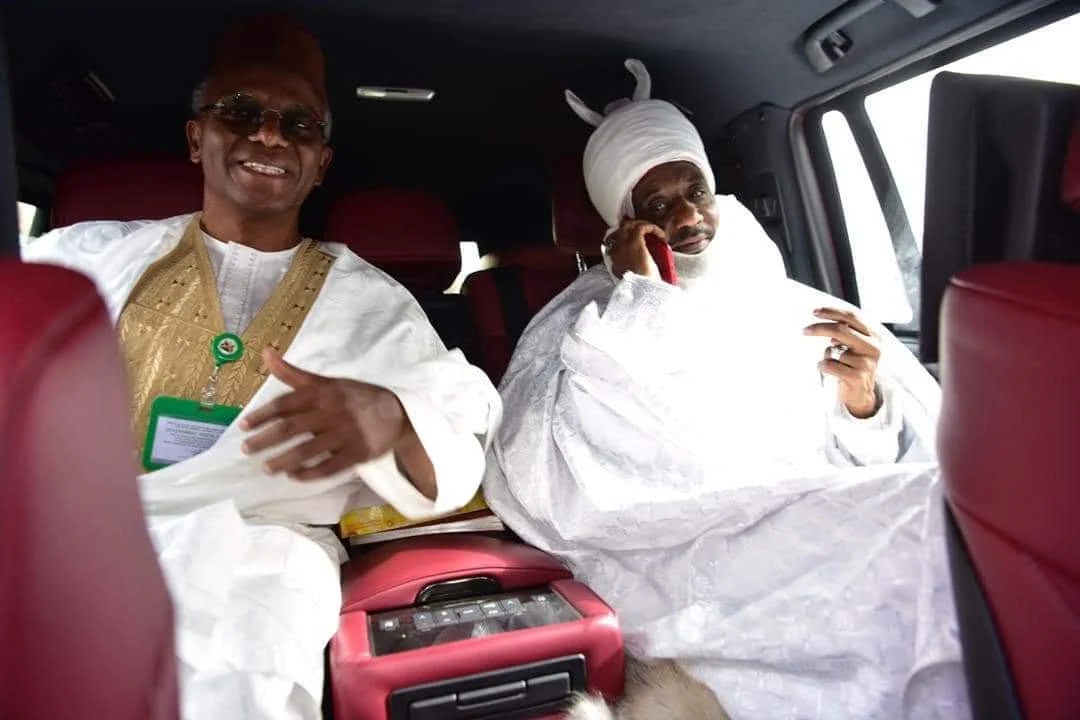
Sanusi & El Rufai
-
2027: I’ll lead Tinubu’s campaign team in FCT, Rivers — Wike

MaTaZ ArIsInGDallas, Texas Minister of the Federal Capital Territory FCT, Nyesom Wike, has announced plans to inaugurate and personally lead the campaign machinery for President Bola Tinubu’s re-election bid in Abuja and Rivers State. By Omeiza Ajayi Wike disclosed this on Friday in Chikuku, a community along the Kuje-Gwagwalada artery, Abuja, after inspecting the ongoing…