Nigeria’s opposition wants one voice for 2027, but 60% of this week’s coverage says unity is slipping. Between September 6 and 12, 2026, our analysis of 10 articles mentioning the opposition found that six carried a negative tone, while only four were positive. For a political movement promising Nigerians it can unite against the ruling APC, that is more than a media statistic; it is a warning that the opposition’s internal divisions are beginning to shape its public image.
The story becomes clearer when we look at what happened before this week’s headlines. In April, opposition parties gathered in Ibadan for the Opposition Political Parties National Summit and agreed to work towards producing a single presidential candidate for the 2027 election. The promise looked like the beginning of a serious political realignment, but only months later, the ADC became part of another political disagreement as Peter Obi and Rabiu Kwankwaso moved towards the formation of the Nigeria Democratic Congress, NDC.
That development exposes the difference between announcing unity and building it. Political leaders can sign communiqués and appear together at conferences, but elections are decided by candidates, voters, structures and votes. If politicians who promise one opposition continue building separate platforms, Nigerians will naturally question whether the coalition is a serious electoral strategy or another temporary political arrangement.
This week’s headlines provide a snapshot of that problem. The PDP attacked Ebonyi State Governor Francis Nwifuru over comments against the opposition, while Ebonyi PDP demanded that he retract the statement or resign. Another report described tension involving a powerful opposition figure facing a fresh governorship primary battle, while another one focused on disagreement over a proposal for a single four-year presidential term being used by opposition forces to challenge President Bola Tinubu. Then came the revealing headline: “2027: Opposition courts unity, but faces battle of ambitions.”
The language surrounding the opposition matters. When the dominant words are tension, fight, disagreement and ambition, they communicate something very different from a political communiqué promising unity. Nigeria’s opposition wants one voice for 2027, but its public narrative this week was dominated by the struggle to find that voice.
The people and organisations appearing in these stories reinforce the point. Governor Francis Nwifuru appeared twice and was central to the PDP dispute, while Dr Olu Agunloye appeared once. The ruling APC was mentioned four times, more than any individual opposition party, suggesting that much of the opposition conversation was still defined by its relationship with the ruling party rather than by a clear independent identity. PDP and SDP each appeared twice, while Naija News appeared three times because several stories were republished there.
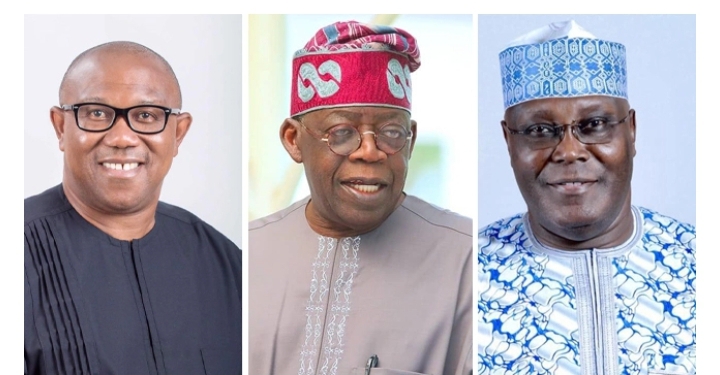
The bigger problem is electoral mathematics. The history of Atiku Abubakar and Peter Obi makes this clear. In 2019, Atiku was the PDP presidential candidate, and Obi was his running mate, but they lost to Muhammadu Buhari of the APC. In 2023, they contested separately, with Atiku on the PDP ticket and Obi on the Labour Party ticket, alongside Bola Tinubu of the APC.
Their combined support in 2023 was substantial, but it was divided between different candidates. That does not mean every Obi voter would have voted for Atiku or every Atiku voter would have voted for Obi. It simply demonstrates a basic electoral principle: combined political strength is not the same as concentrated electoral strength.
Consider a simple example. If Atiku has 25 supporters, Obi has 20, and another opposition candidate has 15, the opposition has 60 supporters altogether. But if APC has 40 supporters concentrated behind one candidate, APC can win because the opposition’s 60 are divided into three groups. The ballot paper has no column for “all opposition candidates combined.”
That should have been one of the biggest lessons from 2023. If the opposition wanted to defeat APC in 2027, the strategic question should have been how to prevent opposition votes from being divided again. Instead, the political landscape has become more complicated, involving Atiku’s ADC, Obi’s NDC, PDP factions, and other opposition interests.
An Obi supporter is not automatically an Atiku supporter. An Atiku supporter is not automatically an Obi supporter. And a voter dissatisfied with APC is not automatically the voter of whichever opposition candidate eventually emerges. Political dissatisfaction is potential support; it becomes electoral strength only when it is converted into votes for a candidate.
The wider national news data makes the opposition story more significant. Between September 6 and 12, our system collected and analysed 2,385 Nigerian news articles. Of these, 935 were positive and 1,450 negative, meaning about 61% of the week’s coverage carried a negative sentiment. The opposition’s 60% negative reading is therefore almost identical to the wider national news mood.
The risk data adds another warning. The week’s average risk score was 0.487, with higher scores representing more serious developments. Of the 2,385 articles, 91 were classified as CRITICAL and 445 as HIGH risk, giving 536 articles- more than one in five carrying significant risk. Only 608 were rated LOW risk.
Politics was the largest clearly defined topic, with 410 articles, after 602 stories fell into an unclassified category. Infrastructure followed with 291, women and gender issues with 188, and the economy with 131. Only 40 stories were classified directly as elections, but that number does not represent the full volume of election-related activity because much of the 2027 conversation is being classified as general politics or remains unclassified.
This matters for opposition analysis. A story about Atiku, Obi, Kwankwaso, ADC, NDC or PDP may be classified as politics even when its real significance is electoral. A serious political intelligence system therefore cannot rely only on topic labels; it must examine the people, organisations, themes, sentiment, risk, locations, and relationships behind the stories.
Geography provides another warning. Nigeria was mentioned 657 times, Abuja 187 times and Lagos 182 times. The United States appeared 154 times, reflecting the attention given to international developments involving Ukraine and the Middle East. But the strongest geographic risk signal came from the South East, which recorded a risk score of 0.95.
A high-risk score is not proof that a crisis is imminent. It is a signal that requires investigation. When a location records a score as high as 0.95, analysts, journalists, security agencies, and civil society organisations should examine what is driving the risk and whether media attention reflects the seriousness of the underlying events.
The security data is even more important. Security recorded a risk score of 0.87 while receiving below-average coverage relative to that risk. In simple terms, some security developments may be more serious than the amount of media attention they are receiving. Among the critical stories were claims involving a senator and alleged links to a terror kingpin, and the Edo Police arrest of 22 people over allegations including kidnapping, murder, defilement and armed robbery.
The system also identified 98 stories using positive or reassuring language around events rated as high risk. One example involved the Chief of Defence Staff attributing military gains against terrorists to collaboration. Positive reporting is not automatically misleading, but when positive framing repeatedly appears around high-risk events, journalists and civil society organisations should examine whether public communication accurately reflects the underlying situation.
This is where political intelligence differs from ordinary political commentary. A commentator may say the opposition is divided; data can show how often that division appears, what language surrounds it, which politicians drive the narrative, and whether sentiment is becoming more negative. The same approach can identify whether a political storyline is gaining momentum before it peaks, where political risk is concentrating, and which actors or narratives are gaining influence.
The political personalities in this week’s dataset show where attention is concentrated. Tinubu was mentioned 286 times, followed by Peter Obi with 113 and Atiku Abubakar with 93. Kwankwaso and Nyesom Wike each recorded 26 mentions, while Vice President Kashim Shettima recorded 21. Donald Trump’s 27 mentions also show how international developments can compete with domestic politics for public attention.
But the opposition’s biggest weakness may not be popularity. It is organisation. While opposition parties continue negotiating candidates, platforms and alliances, APC has expanded its political structure through the movement of governors and other political actors into the ruling party. By 2026, APC had expanded its control to roughly 31 of Nigeria’s 36 states through these movements. That does not mean APC will automatically win those states in the presidential election, because governors do not own voters and Nigerians can vote differently at different levels.
However, political structures matter. A governor brings legislators, local leaders, political associates, ward structures, and established relationships. When a governor moves parties, the political network around that office can also shift. Former Adamawa Governor Ahmadu Fintiri, for example, said his political machinery, including structures across the state’s 226 wards and 21 local government areas, was moving with him when he joined APC.
The same principle applies to other defections. When Zamfara Governor Dauda Lawal moved from PDP to APC in 2026, he cited the crisis and structural problems within PDP among his reasons. Each major defection can therefore weaken opposition structures while strengthening APC’s organisational reach.
This creates a political feedback loop: fragmentation weakens opposition structures; weakened structures encourage defections; defections strengthen APC; and a stronger APC can become more attractive to politicians seeking political security. At a certain point, fragmentation stops being just an opposition problem and becomes a mechanism that produces further weakness.
The constitutional requirement for presidential victory makes this organisational advantage important. Under Section 134 of the Constitution, a presidential candidate must secure the highest number of votes and at least one-quarter of the votes cast in at least two-thirds of the states and the Federal Capital Territory. With 36 states plus the FCT, that means reaching the 25% threshold in at least 24 jurisdictions.
This is why electoral organisation matters as much as popularity. Just as economic production requires land, labour, and capital, electoral production also requires voters, organisation, mobilisation, resources, leadership, communication, and political structures. A politician can be popular online and still lack the machinery required to translate that popularity into votes.
APC therefore has more than a presidential candidate. It has the presidency, a growing network of governors, legislators, party structures and local political relationships. None of these guarantees victory, because incumbency can also become a burden when citizens are unhappy with economic conditions, insecurity or government performance. But dissatisfaction with APC will not automatically become votes for Atiku, Obi or another opposition candidate.
That is the real challenge. The opposition must not only ask how many Nigerians are dissatisfied with APC; it must ask how many of those Nigerians can be brought behind the same candidate. If one dissatisfied voter chooses Obi, another chooses Atiku, and another chooses a third opposition candidate, the size of public dissatisfaction can be large while the incumbent remains the largest individual bloc.
Atiku and Obi therefore face a strategic decision that goes beyond personal popularity. They must decide whether their individual political strength is more valuable than the collective strength that could emerge if their supporters were brought behind one candidate. The same question applies to every opposition leader who believes APC can be defeated in 2027.
There are democratic ways to solve the problem: a genuine coalition, negotiated candidacy, transparent internal selection, strategic withdrawal, or a power-sharing arrangement. The mechanism matters less than the objective – preventing opposition votes from being scattered. That will require sacrifice because political leaders may have to put collective electoral objectives ahead of individual ambitions.
The biggest mistake would be to confuse popularity with electoral strength. Atiku can be strong, Obi can be strong, PDP can retain historical structures, ADC can attract political actors, and NDC can build a passionate following. But if these strengths compete for the same voters, they can cancel one another out.
This is why the 60% negative opposition coverage matters. Nigeria’s opposition wants one voice for 2027, but six out of every ten opposition stories in this week’s sample were negative. If that pattern continues, the opposition will have an image problem that cannot be solved by another unity meeting; unity must become visible in decisions, candidate negotiations, organisational integration and a common message.
That does not mean the opposition is destined to lose. Political conditions can change quickly, especially when economic hardship, insecurity and governance concerns influence voter behaviour. APC’s organisational advantage is real, but it is not permanent, and the ruling party must still persuade Nigerians that its record deserves another mandate.
The opposition’s opportunity therefore exists, but opportunity is not victory. Its leaders must convert dissatisfaction into organised electoral support, and they must do so before the campaign reaches the point where personal ambitions and competing structures become too difficult to reconcile.
Our system also detected pairs of articles that appeared to describe closely related events but were placed under different topic categories. This illustrates why automated classification, while fast and useful, requires human review. If reports about the same event are classified differently, analysts can mistake multiple reports of one event for several independent trends and distort the picture of what is actually gaining momentum.
This is precisely where a data intelligence platform such as EphraimHill DC adds value. The objective is not simply to count news stories but to identify emerging narratives, measure sentiment, locate risk, track political actors and organisations, detect changes in attention, and provide decision-makers with evidence before a storyline becomes a crisis. For campaign teams, that means knowing what is gaining momentum, where it is happening, and how the public information environment is changing before reacting blindly.
The message for the opposition is therefore simple: stop measuring unity by meetings and start measuring it by outcomes. Are competing candidates reducing or increasing? Are political disputes being resolved or multiplying? Are party structures being integrated or separated? Is the opposition developing one message that voters understand, or are different leaders still selling different political futures?
The same discipline should apply to APC. A large political structure does not mean that every voter within it is loyal to the party. Governors cannot transfer every vote in their states, and defections do not automatically produce victory. APC must still defend its record, manage internal ambitions and persuade Nigerians.
But the arithmetic remains unforgiving. Sixty opposition supporters divided into 25, 20 and 15 can lose to 40 supporters standing behind one candidate. The same 60, if organised behind one candidate, can defeat 40. The difference is not the size of the political base; it is the concentration and organisation of that base.
That is the real 2027 question. Do Atiku, Obi, Kwankwaso and the other opposition leaders want to prove that each can command a significant following, or do they want to prove that those separate followings can become one electoral force? The first can produce rallies, headlines and social-media excitement; the second is what can produce victory.
Before anyone blames the electoral system for another opposition defeat, the opposition must examine its own arithmetic. Genuine electoral malpractice must be exposed and challenged, but divided opposition votes are not, by themselves, evidence of rigging. A serious political movement must first confront the weaknesses in its own strategy.
The 2027 election may therefore become a contest between consolidation and fragmentation. APC is building a broad political structure while the opposition is still struggling to turn separate political strengths into one electoral machine. Nigeria’s opposition wants one voice for 2027, but 60% of this week’s coverage says unity is slipping – and the longer that pattern continues, the harder it will be to convince voters that the opposition has solved its most important strategic problem.
The wider data adds another layer to the warning. Nigeria recorded 91 Critical-risk stories and 445 High-risk stories during the week, while security recorded a risk score of 0.87 and the South East reached 0.95. These are reminders that political competition is taking place alongside serious security and governance pressures, and political parties cannot afford to spend all their energy fighting over positions while the country generates problems voters expect them to address.
In the end, the ballot box will not ask which opposition leader had the loudest supporters, the biggest rally or the strongest social-media following. It will ask which candidate received the votes and satisfied the constitutional requirements for victory. The opposition therefore has one central task before 2027: turn separate political strengths into concentrated electoral strength.
The full dataset behind this analysis – including the articles, entities, sentiment classifications, risk scores, and geographic signals is available through EphraimHill DC’s Data Lab. The Data Intelligence dashboard and geo-maps provide a deeper view of how political narratives, risk, and public information are moving across Nigeria.
EphraimHill DC is Nigeria’s civic data intelligence platform, where we track, analyse, and interpret national developments to help Nigerians understand the deeper patterns behind public events. Our analysis is institutional, evidence-based, and politically neutral.

1SUBSCRIBE TO OUR NEWSLETTER NOW
Support MATAZ ARISING’ journalism of integrity and credibility.
Good journalism ensure the possibility of a good society, an accountable democracy, and a transparent government.
We ask you to consider making a modest support to this noble endeavour.
TEXT AD: To advertise here – Email ad@matazarising.com
LATEST POSTS
-
Nigeria’s Opposition 2027: 60% of This Week’s Coverage Says Unity Is Slipping

MaTaZ ArIsInGDallas, Texas Nigeria’s opposition wants one voice for 2027, but 60% of this week’s coverage says unity is slipping. Between September 6 and 12, 2026, our analysis of 10 articles mentioning the opposition found that six carried a negative tone, while only four were positive. For a political movement promising Nigerians it can unite…
-
We need more Oloyedes in govt agencies
MaTaZ ArIsInGDallas, Texas I didn’t get a chance to write a retrospective evaluation of Professor Is-haq Oloyede’s tenure as JAMB registrar when most people did after his departure in July because the time of his exit competed with more pressing national discourses that invited my intervention. But I have always been haunted by a gnawing…
-
Fani-Kayode demands justice as two more Nigerians killed in South Africa

MaTaZ ArIsInGDallas, Texas Nigerian High Commissioner-designate to South Africa, Chief Femi Fani-Kayode, has demanded urgent action by the South African Government to protect Nigerians and bring perpetrators of killings involving Nigerian nationals to justice. Fani-Kayode, reacting to the recent killings of Bishop Michael Taiwo Fakunle and James Uchechukwu Nwankwo in Johannesburg in a statement made…