
ABUJA— AS parties field candidates across the 28 states where governorship elections will hold in 2027, fierce battles loom as outgoing governors fight to produce their successors and first term governors, aside from Siminalayi Fubara of River State, struggle to retain their seats.
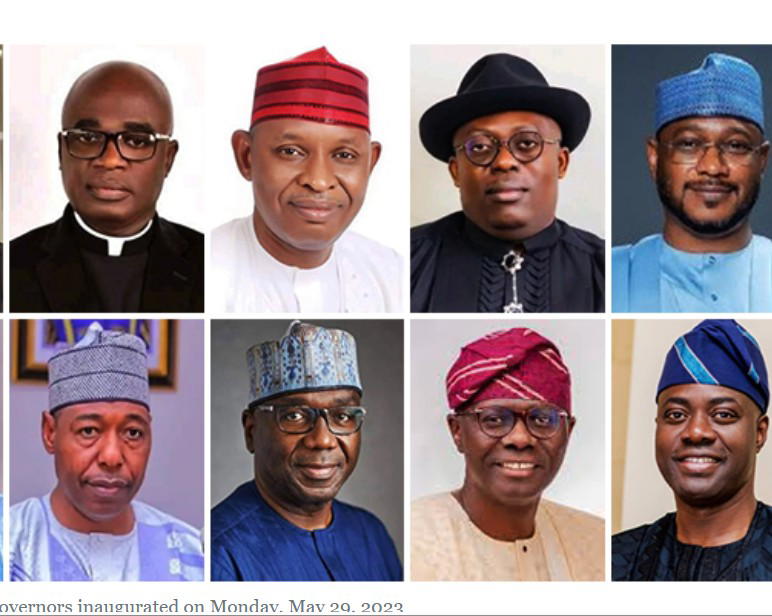
There will be no election in seven states that have off-cycle governorship polls. Among the first term governors, Fubara did not get a re-election ticket.
Defections, broken alliances and the weight of incumbency have set the stage for what is panning out as Nigeria’s most consequential election in a generation.
Incumbents, godfathers dark horses clash in 18 northern states
The battle for the control of government houses across Nigeria’s 18 northern states has been declared. Parties have fielded their candidates. Godfathers have picked sides. And in several states, the men who were once political allies are now sworn enemies.
The 2027 governorship elections in the North will be fought on multiple fronts — incumbency, ethnic zoning, insecurity, economic hardship, and the raw, unpredictable force of godfather politics.
Vanguard correspondents examine the state of play, state by state.
Kaduna: Three-way war for Sir Kashim Ibrahim House
Of all the northern battlegrounds, Kaduna promises the most spectacular fight. Three formidable candidates, including Governor Uba Sani of the APC; Shehu Usman Bawa (popularly called Shehu ABG) of the PDP; and former governorship candidate, Isa Ashiru, of the ADC, have formed what analysts described as a genuine three-way contest.
Sani enters the race with the twin advantages of incumbency and the APC’s entrenched state machinery. But Ashiru, who lost to Sani in 2023, has forged what observers say is a potent political alliance with former Governor Nasir Ahmad El-Rufai, a man widely regarded as the soul of opposition politics in Kaduna State.
The irony is rich: El-Rufai and Sani were once inseparable allies. That relationship is now dust, and its wreckage may cost the incumbent dearly.
Kano: Kwankwaso sharpens his sword
In Kano, Governor Abba Yusuf faces what may be the political battle of his life. Having recently defected from the NNPP to the APC, he arrives at 2027 without the Kwankwasiyya movement that midwifed his 2023 victory.
His estrangement from political godfather and former governor, Dr. Musa Kwankwaso, has opened the door for former Deputy Governor Gwarzo, expected to fly the NDC flag and inherit the Kwankwasiyya support base.
The PDP has fielded Dr. Muhammad Bello Dalha from the Wike faction, while Sheikh Ibrahim Khalil flies the ADC flag. Despite the turbulence, political observers believe state structure still favours Yusuf unless Kwankwaso’s machine shifts into full gear.
Benue, Taraba and Adamawa: Where the unexpected may happen
In Benue, the incumbent, Rev. Fr. Hyacinth Alia, of the APC, who swept to power in 2023 on the “Yes Father” wave, faces stiff resistance from former Attorney General of the Federation, Chief Michael Aondoakaa, of the PDP, who commands both grassroots reach and the powerful backing of former Governor Samuel Ortom.
Former Reps member, Herman Hembe of the ADC and Senior Advocate, Sebastian Hon, of the SDP add further complexity. Incumbent advantage, however, still tilts in Alia’s favour.
Taraba is more fluid. Governor Agbu Kefas, having secured the APC ticket, now faces Senator Emmanuel Bwacha, his 2023 APC primary rival who crossed to the PDP and was affirmed as its candidate.
A factional dispute within the Taraba PDP, however, clouds the opposition picture, as INEC is yet to certify which faction’s candidate will appear on the ballot.
In Adamawa, the retirement of Governor Fintiri opens a free-for-all. The APC is banking on PTDF’s former Executive Secretary, Ahmed Tijjani Galadima, while the PDP has fielded technocrat, Dr. Maurice Vonolboki, who dramatically returned to the party days before its primaries after alleging he was being sidelined in the APC.
Most analysts, however, believe former Vice President Abubakar Atiku, running for the presidency on the ADC ticket, holds the decisive card in Adamawa. His backing of the ADC candidate could prove the election’s ultimate swing factor.
One-party fortresses: Borno, Yobe hold firm
Borno and Yobe remain the North’s most impenetrable APC strongholds. Since the return of democracy in 1999, no opposition party has won the governorship in either state.
With both incumbents completing their two terms, Borno’s APC has settled on consensus candidate, Eng. Mustapha Gubio, handpicked by outgoing Governor Babagana Zulum, while Yobe’s APC has rallied behind former SSG, Baba Mallam Wali, the preferred successor of Governor Mai Mala Buni. The opposition is present in both states but poses no credible threat.
Plateau, Zamfara, Bauchi: The wild cards
On the Plateau, Governor Caleb Mutfwang, who sensationally defected from the PDP to the APC in early 2026, swept the APC primary with over 233,000 votes. With full backing from APC National Chairman, Prof. Nentawe Yilwatda, Mutfwang enters the race as heavy favourite.
His main challenger, PDP’s Kefas Wungak Ropshik, brings philanthropic credibility but faces a mountain without party machinery to match.
Zamfara’s Governor Dauda Lawal, another recent APC convert from the PDP, is widely tipped to retain his seat. His most formidable challenger is NDC’s Senator Kabiru Marafa — a big political name who, analysts say, may have slightly diminished his appeal by leaving the APC.
Bauchi is the North’s most unpredictable theatre. The state’s political history has never rewarded incumbents or their anointed successors — and Governor Bala Mohammed’s dramatic defection from the PDP to the APC has scrambled the chessboard entirely. The APC has turned to former Governor Mohammed Abdullahi Abubakar, while the PDP’s Usman Adamu Sufi faces the complication of governing without Bala Mohammed’s grassroots blessing. The wildest card is Senator Shehu Buba Umar, who sensationally quit the APC primaries, citing lack of internal democracy, and defected to the PRP — transforming himself into what analysts call “a powerful third-party disrupter.”
The rest of the North: Incumbency advantage holds
Across Niger, Sokoto, Kebbi, Nasarawa, Kwara, Katsina, Jigawa and Plateau. The broad pattern favours sitting governors or their preferred successors.
In Niger, Governor Muhammed Bago enjoys a clean record of infrastructure delivery and salary payment that makes him the overwhelming favourite. In Sokoto, Governor Ahmed Aliyu’s incumbency is tempered by rising insecurity and a credible ADC challenge from former Deputy Governor Manir Daniya.
In Kebbi, Governor Nasir Idris faces former Attorney General Abubakar Malami of the ADC — a heavyweight contender fighting multiple legal battles that, paradoxically, may earn him sympathy votes. Kwara has sprung a surprise: the state House of Assembly Speaker, 41-year-old Salihu Yakubu Danladi, beat the governor’s preferred candidate to the APC ticket, raising the first real prospect of a governor from Kwara North since the aborted Third Republic.
In Katsina, Governor Dikko Radda faces a rematch against PDP’s Lado Danmarke, his 2023 opponent, in what is shaping up as a familiar but intensely competitive contest.
The Big Picture
What emerges from a survey of the northern political landscape is a region in ferment — where yesterday’s alliances are today’s battlefronts, where defections have reshuffled the deck in at least seven states, and where the APC’s structural dominance is being tested by a resurgent ADC, an emboldened NDC, and the lingering weight of godfather networks.
Of the 19 states examined, the APC appears most likely to retain at least 12 governorships. But in Kaduna, Kano, Adamawa, Bauchi and Taraba, the outcomes remain genuinely open, and it is there that Nigeria’s political future in the North will be written.
Lagos, Oyo, Abia, Enugu; South’s big gov wars begin
Across 11 southern states having governorship polls, next January, the major political parties have fielded their candidates, the alliances are hardening, and the political temperature is rising. What is emerging is a complex, multi-fronted battle shaped by defections, factional wars, zoning calculations and the ever-present incumbency factor.
Lagos: KOH walks in, GRV, opposition race eye brow
In Lagos, the APC has effectively handed its ticket to Deputy Governor Dr. Obafemi Hamzat — better known as KOH — in what was less a primary and more a coronation. Hamzat polled a staggering 657,917 votes out of 657,974 accredited votes cast across the state’s 245 wards. His lone opponent, one Jim-Kamal, managed a single vote. Earlier withdrawals by Jandor and Samuel Ajose, had sealed the inevitability of Hamzat’s emergence.
But the real contest lies beyond the APC. The Social Democratic Party has produced Femi Olaniyi, a former IPAC chairman in Lagos who emerged as consensus candidate at a primary in Somolu. The PDP settled on Deji Doherty at a primary in Ikeja. And in the most competitive opposition primary, Gbadebo Rhodes-Vivour — GRV — won the ADC ticket with 12,948 votes, defeating Owolabi Salis who polled 6,183 in what the latter’s camp described as a controversial exercise.
With KOH’s APC machinery and the structural weight of Lagos’ ruling party behind him, the path to Alausa looks clear — but GRV, whose 2023 Labour Party outing exposed deep hunger for change among Lagos youth, remains the most potent opposition wildcard.
Oyo: Makinde’s shadow looms
In Oyo, Governor Seyi Makinde may be term-limited but his political shadow stretches deep into 2027. The PDP’s preferred successor is Bimbo Adekanmbi — a respected former Commissioner for Finance under the late Governor Abiola Ajimobi, whose rare capacity to attract both PDP loyalists and moderate APC voters makes him a formidable prospect. A fresh alliance between the PDP and the Allied Peoples Movement is expected to further cement Adekanmbi’s structural advantages.
The APC, however, is not conceding Agodi without a fight. Its two leading contenders — Senator Sharafadeen Alli of Oyo South, reportedly enjoying the backing of Ibadan’s influential political old guard including loyalists of the Olubadan; and former CBN Deputy Governor and 2019 APC flag-bearer Adebayo Adelabu — are locked in internal jostling for the party’s soul. Adelabu continues grassroots consultations despite whispers that the Presidency may not be fully behind his bid.
The ADC has fielded Chief Taofeek Adegoke, a prominent Ibadan businessman. The Accord Party is torn between popular broadcaster Oriyomi Hamzat and grassroots politician Kunle “Goodugoodu” Busari. With Ibadan dominating the candidate landscape across all parties, zoning is less the issue — party structure and coalition-building will decide this race.
Abia: Otti running against himself
In Abia, political analysts have arrived at an unusual consensus: Governor Alex Otti’s greatest opponent in 2027 is public expectation — not any candidate. The Labour Party incumbent is universally expected to be returned unopposed. His administration’s visible infrastructure renewal, urban regeneration and reform-driven governance have earned him rare cross-party goodwill, and Abia’s unbroken tradition of re-electing sitting governors adds historical weight to his advantage.
The APC has produced Chief Eric Opiah, a businessman from the Ngwa axis of Abia Central — ironically the same senatorial bloc as Otti. Opiah carries federal backing and financial muscle, but the Abia APC is a fractured vessel. Former Minister Henry Ikoh has formally challenged his emergence, alleging primary manipulation and petitioning the party’s national leadership. The internal war is not yet resolved, and even if it were, the structural task of dislodging a governor perceived as transformative remains enormous.
As one political analyst put it: “Otti will be contesting against Otti in the 2027 Abia governorship race.”
Enugu: Will PDP’s civil war threatens Mbah’s smooth ride?
Governor Peter Mbah of the APC secured his party’s governorship ticket in Enugu by consensus — unopposed. No rival purchased the nomination form. His incumbency has, for now, rendered the APC primary a formality.
The more dramatic story is within the PDP — and it is the story of a party at war with itself. Two factions, one reportedly aligned to Minister Nyesom Wike and the other to Saminu Turaki’s national caucus, have produced separate candidates: Chief Uche Nnaji from the Wike-controlled faction, and Hon. Dona Nwogbo from the Turaki camp. A third claimant, Chief Samson Nnamani — suspended by the Wike faction — has counter-suspended his opponents and declared himself the rightful candidate. The national leadership’s resolution of this three-cornered crisis will determine whether the PDP mounts a coherent challenge or implodes on the starting line.
Meanwhile, the NDC has Senator Gil Nnaji, a veteran of the 2023 cycle who stood down for Mbah. The ADC has settled on Chief Obodoeze Ocho, the only candidate from Enugu North, in a state where the prevailing zoning consensus favours Enugu East through 2031.
Ocho, a one-term advocate, frames second terms as governance failures — a messaging gamble in a state where Mbah is seeking precisely that.

1SUBSCRIBE TO OUR NEWSLETTER NOW
Support MATAZ ARISING’ journalism of integrity and credibility.
Good journalism ensure the possibility of a good society, an accountable democracy, and a transparent government.
We ask you to consider making a modest support to this noble endeavour.
TEXT AD: To advertise here – Email ad@matazarising.com
LATEST POSTS
-
Summit ahead of 2027: Uncertainty trails opposition parties’ single candidate plan against Tinubu

MaTaZ ArIsInGDallas, Texas Tinubu, Atiku, Obi, others: Big promises ahead of the 2027 presidential election. Who can fix Nigeria? • Atiku, Obi, Kwankwaso, Makinde, others remain on separate platforms • G-100 in search of structure as Wike predicts easiest election yet for president. By Clifford Ndujihe, Omeiza Ajayi & Liminous Jannamike Uncertainty is trailing tomorrow’s…
-
Tinubu’s Rainbow Coalition Is Outpacing Nigeria’s Opposition -And the Data Proves It

MaTaZ ArIsInGDallas, Texas Tinubu’s Rainbow Coalition Is Outpacing Nigeria’s Opposition, and this week’s numbers make that gap difficult to ignore. Thirteen articles tracked the coalition story this week, compared with just nine about the opposition camp trying to challenge it. That may not look like a huge difference, but it becomes significant when viewed against…
-
Presidency asks Nigerians to ignore Atiku’s promises, trust Tinubu’s policies

MaTaZ ArIsInGDallas, Texas Mr Abubakar, on Thursday, vowed to reopen Nigerian borders for legal cross-border trade. The administration of President Bola Tinubu has said that it should be judged by measurable outcomes in security, economic recovery, and citizens’ welfare, not by campaign promises from former Vice President Atiku Abubakar to reopen borders or restore fuel…