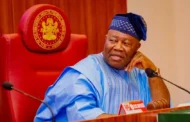

| Oyedele becomes new finance minister as President nominates Darma to replace Dangiwa
| This marks second time Edun will exit top job on health grounds

BY JONATHAN NDA-ISAIAH and MARK ITSIBOR, BIDON MIBZAR, ABUJA, YUSUF BABALOLA, BUKOLA ARO-LAMBO and OLUSHOLA BELLO, LAGOS
The decision by President Bola Ahmed Tinubu to remove Mr. Wale Edun as the minister of finance and coordinating minister of the economy has stirred widespread debate across Nigeria’s policy, business, and political circles, raising fundamental questions about why he was actually removed, the direction of fiscal policy, the internal dynamics of government, and the broader health of the economy.
The President had yesterday removed Edun and the minister of housing and urban development, Arc. Ahmed Musa Dangiwa, from office in a minor cabinet reshuffle.
In Edun’s place, the president appointed Prof. Taiwo Oyedele barely one month after his appointment as the minister of state for finance, a move many analysts say had long been anticipated, even if the timing caught some observers off guard.
The cabinet reshuffle, confirmed in a memo issued by the Office of the Secretary to the Government of the Federation, marks one of the most consequential changes in the economic management team since the beginning of the administration.
While official communication offered little detail beyond the announcement, a combination of insider accounts, expert commentary, and policy signals over the past year had begun to paint a clearer picture of the factors that may have led to Edun’s exit.
For many close watchers of the government, Edun’s removal did not come as a surprise. Sources within the Presidency suggest he was replaced mainly on health grounds.
It was also gathered that this is not the first time he has left Tinubu’s cabinet on health grounds. During Tinubu’s second term as governor of Lagos State, Edun also resigned from his cabinet in February 2004, barely one year into it, on health grounds.
Also, in October 2025, he took ill and had to be flown abroad for treatment. Sources close to the presidency said he had just turned 70 and the job was obviously taking a major toll on his health.
“It’s not uncommon for health to become a factor in high-pressure roles like that,” a senior economist said. “But in a system where outcomes are everything, any sign of slowdown can quickly become an issue.”
However, Dangiwa’s exit was attributed to the President’s dissatisfaction with his performance in the Ministry. Sources said the President wanted a more aggressive delivery of his housing programme nationwide.
Edun Thanks President
Meanwhile, Mr Edun has expressed gratitude to President Bola Ahmed Tinubu following his removal from office, describing his time in government as an honour and a privilege to serve Nigeria.
In a statement issued shortly after his exit, Edun thanked the president for entrusting him with key responsibilities since the administration’s start in May 2023.
He recalled serving first as head of the Presidential Transition Committee, then as special adviser on monetary policy, before his eventual appointment as finance minister.
Reflecting on his tenure, Edun said the administration inherited a fragile economy but worked collectively to stabilise the macroeconomic environment and strengthen fiscal sustainability.
According to him, these efforts contributed to economic growth rising from about 2 per cent to over 4 per cent, while inflation declined significantly from 35 per cent to 15 per cent.
He noted that the reforms were driven by a shared commitment to restoring public trust, boosting investor confidence, and ensuring inclusive economic growth.
Edun also acknowledged the support of colleagues in the Federal Executive Council, state governors, and stakeholders across the public and private sectors, describing their collaboration as critical to the progress recorded.
While admitting that significant work remains, he expressed optimism about Nigeria’s economic direction, stating that the foundations for long-term growth have been firmly established.
He wished his successor well and reaffirmed his commitment to continuing to support the administration and contribute to national development.
Experts downplay economic risks
Despite the drama surrounding his exit, financial experts have largely dismissed concerns that the change will destabilise the economy.
Ayokunle Olubunmi of Agusto & Co. described the development as part of the normal cycle of governance. “Removal of a minister is the prerogative of the President,” he said. “Soldiers go, soldiers come.”
Olubunmi emphasised that the real focus should now shift to the new minister’s policy direction rather than the departure of his predecessor. In his view, the transition is unlikely to trigger any immediate economic shock.
“I don’t think the impact is going to be that significant,” he said. “What matters is what the new minister will do.”
He also stressed the need for a more balanced approach to economic management, arguing that revenue generation must be matched by efficient utilisation.
“It’s not only about raising revenue,” he said. “The question is how effectively those resources are used.”
Also, a professor of arbitration and energy law, Tayo Bello said Nigerians should not expect Oyedele to perform miracles.
He said that while age and intellect are on Oyedele’s side, the fact remains that Nigeria’s fiscal challenges are so huge that they cannot be solved by Oyedele alone.
While criticisms of Edun’s tenure have been prominent, several experts have also acknowledged his contributions to economic reform.
Dr. Muda Yusuf of the Centre for the Promotion of Private Enterprise noted that Edun played a key role in advancing important policy initiatives, particularly in the early phase of the administration.
“He effectively championed a number of important reforms in economic management,” Yusuf said.
However, he acknowledged that the reforms came with significant short-term costs, particularly for ordinary Nigerians grappling with inflation and rising living expenses.
“Reform is an ongoing process,” he said. “It cannot be fully achieved in one, two, or three years.”
This duality—progress at the macro level alongside hardship at the micro level—has been a defining feature of Nigeria’s recent economic trajectory, and one that likely influenced public and political perceptions of Edun’s performance.
Oyedele’s emergence and expectations
The appointment of Oyedele has been widely welcomed by analysts, many of whom see it as a strategic move to deepen fiscal reforms and improve policy coherence.
A respected tax expert, Oyedele has been closely associated with the administration’s fiscal reform agenda, particularly in tax policy. His elevation to the top finance role is seen as a signal of continuity, albeit with a renewed emphasis on execution.
Economic analyst, Dr. Justin Amase described the appointment as a “good choice,” citing Oyedele’s depth of knowledge and experience.
Similarly, stockbroker Charles Fakrogha expressed confidence in his ability to deliver improved outcomes.
“Oyedele has the capacity and wherewithal to do the job even better,” Fakrogha said.
However, he also cautioned that success will depend on broader stakeholder engagement.
“The economy doesn’t entail one person taking decisions,” he said. “All stakeholders must be involved.”
For Oyedele, the challenge ahead is formidable. He inherits an economy still grappling with inflationary pressures, currency volatility, and the social impact of ongoing reforms.
There are also expectations that he will bridge the perceived gap between monetary and fiscal policy, ensuring that both arms of economic management work in greater harmony.
Analysts say one immediate priority will be improving the efficiency of public spending and accelerating project delivery, areas that were sources of contention under the previous leadership.
At the same time, there is growing pressure for more people-centred policies that can cushion the impact of reforms on vulnerable populations.
“Nigerians are suffering,” Olubunmi noted. “Policies must take that into account.”
Meanwhile, Arc. Ahmed Musa Dangiwa’s exit as the minister of housing and urban development has, however, sparked mixed reactions among stakeholders and the public, with analysts offering a nuanced assessment of his performance.
Housing policy experts say his tenure was marked by strong policy articulation but uneven execution.
A Lagos-based urban development analyst, Tunde Alabi, noted that while the Renewed Hope Housing Programme was “ambitious and well-structured,” its impact remained limited by slow implementation and financing bottlenecks.
“There was clear intent to reform the system, especially around housing finance and PPPs, but delivery on the ground did not match the scale of the housing deficit,” he said.
Similarly, a development economist, Dr. Amina Yusuf, argued that Dangiwa made modest progress in repositioning housing as an economic tool but struggled with structural challenges such as land titling complexities and weak mortgage penetration.
“He moved the conversation forward, but systemic constraints slowed tangible outcomes,” she added.
From the industry side, some private developers commended efforts to improve engagement with investors and standardise processes. However, they pointed to persistent issues, including high construction costs, inflation, and regulatory delays, that continued to hinder large-scale housing delivery.
Public sentiment has also been divided. While some Nigerians acknowledged visible federal housing projects in select states, others criticised the limited accessibility and affordability of the units delivered, arguing that they remained out of reach for low- and middle-income earners.
On social media, reactions ranged from praise for initiating reforms to criticism that more decisive action was needed to bridge Nigeria’s estimated multi-million housing deficit.
Dangiwa’s departure comes at a time when pressure is mounting on the federal government to deliver scalable and affordable housing solutions, particularly in urban centres where demand continues to outstrip supply.
As a new minister prepares to take over, an Abuja based developer who pleaded not to be mentioned by name said the priority will be translating existing frameworks into measurable outcomes, improving access to housing finance, and addressing long-standing bottlenecks in land administration.
He said for Dangiwa, his tenure may ultimately be judged as one that laid important policy groundwork but left the harder task of large-scale delivery for his successor.
Broader implications for governance
Beyond the specifics of economic policy, Edun’s removal highlights broader themes in the governance style of President Tinubu.
Observers note a pattern of assertiveness and willingness to make changes when expectations are not met. This approach, while decisive, also underscores the high stakes and intense scrutiny facing members of the administration.
“The President has shown that he will act if he is not satisfied,” Fakrogha said. “That is part of leadership.”
At the same time, the episode raises questions about institutional stability and the balance between continuity and change in economic management.
Among Nigerians, reactions have been mixed. Some see the change as a necessary step to reinvigorate the economy, while others worry about the implications of frequent leadership changes.
There is also a lingering sense of uncertainty about the full reasons behind Edun’s exit, particularly given the interplay of policy disagreements, administrative restructuring, and health concerns.
For many, the key question is not just why he was removed, but what the change will ultimately mean for the economy.
As the dust settles, attention is shifting from the circumstances of Edun’s departure to the prospects under Oyedele’s leadership.
There is cautious optimism that the new minister’s expertise and alignment with the administration’s reform agenda will translate into more effective policy implementation.
At the same time, the challenges remain daunting, and expectations are high.
In the final analysis, Edun’s exit reflects the complex realities of economic governance in Nigeria—a delicate balancing act between policy ambition, administrative capacity, and the lived experiences of citizens.
Experts agreed that whether the change will mark a turning point in the country’s economic trajectory will depend not just on the new minister, but on the collective ability of the government to deliver results that resonate across all segments of society.

1SUBSCRIBE TO OUR NEWSLETTER NOW
Support MATAZ ARISING’ journalism of integrity and credibility.
Good journalism ensure the possibility of a good society, an accountable democracy, and a transparent government.
We ask you to consider making a modest support to this noble endeavour.
TEXT AD: To advertise here – Email ad@matazarising.com
LATEST POSTS
-
54-Year-Old Nurse Sentenced To 14 Years In Prison For $69 Million Medicaid Fraud In U.S.
Rita Anagho
-
Tinubu mandates Shettima to lead Nigeria’s delegation to UNGA

MaTaZ ArIsInGDallas, Texas By Saheed Oyelakin President Bola Tinubu has mandated Vice President Kashim Shettima to represent him and lead Nigeria’s delegation to the 81st Session of the United Nations General Assembly in New York, United States. The development ends weeks of speculation over whether Tinubu would personally attend the annual gathering of world leaders. Nigeria’s…
-
Shehu Sani tells truth to his North

MaTaZ ArIsInGDallas, Texas Monday Lines By Lasisi Olagunju (Published in the Nigerian Tribune on Monday, 21 September, 2026). ‘Truth Is Trouble’ is Professor Niyi Osundare’s latest book. What the poet laureate says in English, we say in another sense in Yoruba: Òótọ́ korò, truth is bitter. Then there is Ayékòótọ́, the name we give the…