

By Babajide Ojo
As Nigeria gradually moves toward the next election cycle, many young voters, especially Gen-Z Nigerians, are asking a simple question: Is the country actually changing in ways that matter for our future?
For supporters of President Bola Ahmed Tinubu, the answer lies in the economic reforms launched since 2023. While these policies have sparked intense debate at home, they have also drawn significant support from international institutions, investors and foreign governments who see them as the kind of structural changes Nigeria has long postponed. Yet, the very people who stand to benefit most from these reforms have often been the most sceptical.
As the generation that will live longest with the consequences of today’s policies, understanding these reforms is therefore critical.
For decades, Nigeria’s economy struggled with structural problems of heavy fuel subsidies, multiple exchange rates, weak government revenue and declining investor confidence. But after taking office, the Bola Ahmed Tinubu administration removed the petrol subsidy and unified the country’s foreign-exchange system, two moves economists had recommended for years but which previous governments did not have the political will to implement.
Though controversial, these decisions immediately exposed real economic costs that had previously been hidden and brought to fore the false basis upon which the Nigerian economy had been operating on. However, internationally, they were widely interpreted as evidence of political courage.
The International Monetary Fund described the early reforms as a “strong start” toward correcting long-standing economic distortions. According to the IMF, removing subsidies and unifying exchange rates helps restore transparency and make economies more attractive to investors.
For young Nigerians entering the workforce, one idea matters enormously – investor confidence.
No one, least of all business people, throws money away. Before investors bring their money, they ask one simple question: “Is this place stable and predictable?”
When reforms make the economy clearer and more transparent, investors feel confident. And when investors feel confident, they bring money to build businesses.
Those businesses then need people to work for them.
That is why international institutions say economic reforms are so important. When investors trust the system, they invest. That investment is what ultimately creates jobs for millions of young Nigerians.
Support has also come from the World Bank, which approved major financial support programmes aimed at stabilising Nigeria’s economy and protecting vulnerable households during the transition.
World Bank officials have described the reforms as “critical” for putting the country on a more sustainable economic path.
Some senior officials have even pointed to Nigeria’s experience as a reference case in discussions about how large developing economies can undertake difficult reforms quickly.
The African Development Bank has also publicly backed the reform programme, describing it as a set of “bold macroeconomic reforms.”
The Bank has provided significant financial support to help Nigeria stabilise its public finances and accelerate development programmes.
For many African economic planners, Nigeria’s success or failure matters far beyond its borders. As the continent’s largest economy, Nigeria’s reforms are seen as central to Africa’s broader economic future. Which is why our young people should Pay Attention.
Nigeria’s Gen-Z population is the largest youth demographic in the country’s history. Millions are entering universities, launching startups, building digital businesses or seeking opportunities abroad.
What matters most to them is not political rhetoric but opportunity.
Economic reforms are often uncomfortable in the short term because they dismantle systems that hide real costs. But they also create the conditions that allow economies to grow more sustainably.
International policy analysts argue that Nigeria’s exchange-rate reforms have already made the country more competitive globally.
Research from the London-based institute Chatham House suggests that a more realistic currency could encourage exports, attract foreign investment and strengthen domestic production.
For young entrepreneurs building businesses in tech, manufacturing or the creative industries, those shifts could make a real difference.
Another pillar of the reform programme focuses on modernising Nigeria’s tax system and improving revenue collection.
Nigeria currently has one of the lowest tax-to-GDP ratios in the world. Increasing government revenue while simplifying tax rules is seen by economists as essential for funding infrastructure, education and healthcare.
The administration has therefore enacted sweeping tax reforms aimed at modernising revenue collection and reducing bureaucratic complexity.
While supporters of the government acknowledge that reforms have come with real challenges, including inflation and rising living costs, international financial institutions consistently argue that structural reforms are often difficult at the beginning because they expose economic problems that have accumulated over decades. The real test, analysts say, is whether the reforms are sustained long enough to produce long-term gains.
As Nigeria approaches the next election cycle, the national conversation will inevitably focus on leadership choices. But for Gen-Z voters who will inherit the Nigeria that is being built today, the question should be less about political personalities and more about the direction of the country itself.
For young Nigerians seeking jobs, building startups, creating art, coding software or launching new industries, the stakes could not be higher as the reforms are not simply about correcting economic policies but about laying the foundations for a country where investment grows, businesses expand and opportunities multiply.
In the end, Gen-Z voters will have to decide whether they want a Nigeria that continues the difficult work of rebuilding its economic foundations, or one that retreats to the familiar systems that many economists say held the country back for decades.
The choices are that serious.
*Babajide Ojo*
_A Political and Public Affairs Analyst, writes from London, United Kingdom._

1SUBSCRIBE TO OUR NEWSLETTER NOW
Support MATAZ ARISING’ journalism of integrity and credibility.
Good journalism ensure the possibility of a good society, an accountable democracy, and a transparent government.
We ask you to consider making a modest support to this noble endeavour.
TEXT AD: To advertise here – Email ad@matazarising.com
LATEST POSTS
-
Peter Obi Faces Petition for Allegedly Travelling with Passenger Using Fake Identities
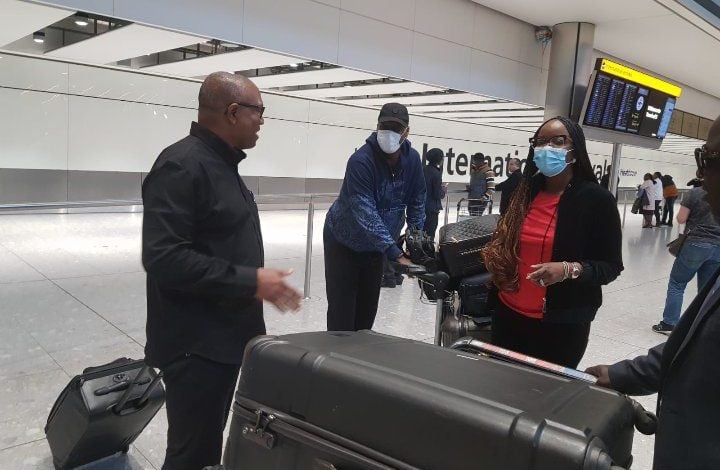
MaTaZ ArIsInGDallas, Texas A fresh petition has been submitted to the Minister of Aviation and Aerospace Development, Festus Keyamo, calling for an investigation into Nigeria Democratic Congress (NDC) presidential candidate Peter Obi over allegations that he repeatedly travelled with a passenger who allegedly used fake identities to board flights. The petition, dated July 12, 2026,…
-
Afrophobia: Should Nigeria ask South African companies to leave?

MaTaZ ArIsInGDallas, Texas Monday Lines 2 Afrophobia: Should Nigeria ask South African companies to leave? By Lasisi Olagunju (Published in the Nigerian Tribune on Monday, 6 July, 2026). Jacob Zuma was President of South Africa when he declared on October 21, 2013 that South Africa should not “think like Africans in Africa, generally.” The remark,…
-
Why I did not take Brazil’s penalty against Norway – Vinicius
MaTaZ ArIsInGDallas, Texas Brazil’s hopes of ending their long wait for World Cup glory came to a painful end after a 2-1 defeat to Norway in the Round of 16, with Erling Haaland scoring twice to eliminate the five-time champions. The aftermath of the defeat was dominated by questions over why Vinicius Júnior did not…