
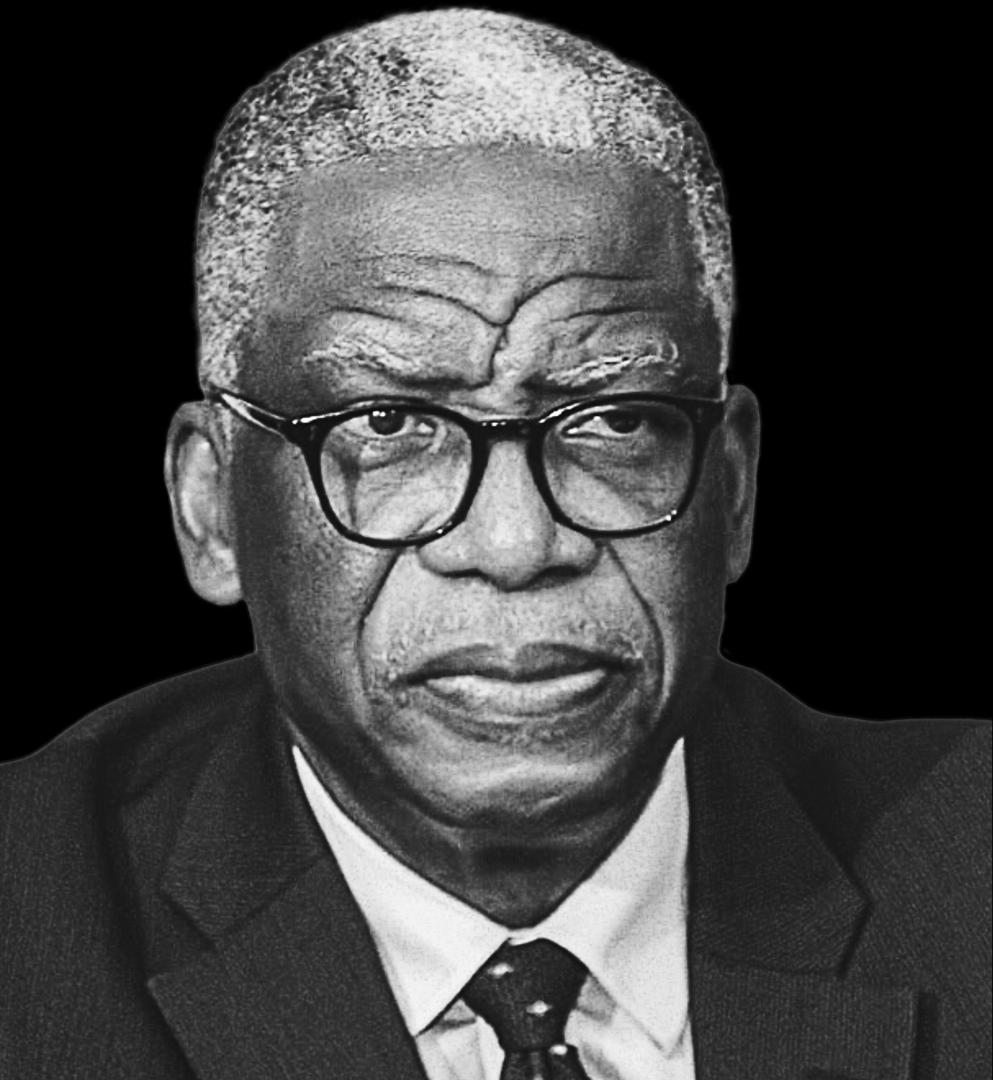
Dr. Richard Ikiebe
For more than two decades, Nigerians have periodically placed their hopes in technocrats (bankers, economists, lawyers, engineers, and academics) as agents of reform. Their credentials inspired confidence, and their entry into public life was often read as proof that governance might finally be taken seriously.
Now in retrospect, most of these experiments delivered only marginal gains or ended in disappointment. Their record suggests that Nigeria’s crisis is not simply about who leads, but about the kind of leadership and statecraft the country now requires.
In the Nigerian context, technocrats are senior professionals whose legitimacy rests on expertise and a reputation for relative integrity. Technocrats were often appointed to signal seriousness to investors, donors, and rating agencies, giving government a credible reformist image while the deeper structures of patronage remained intact.
Unlike career politicians, they often enter public life from outside party structures, drafted as supposedly non-partisan problem-solvers. To a public exhausted by patronage and incompetence, their appeal was obvious. They seemed disciplined, data-driven, and capable of bringing order and seriousness to governance. For a period, the word “technocrat” itself became a shorthand for hope.
That hope surfaced repeatedly. At the federal level, successive administrations assembled high-profile economic teams to stabilise the economy and reassure investors. At the state level, some governors unveiled “dream teams” of private-sector professionals and academics as commissioners and advisers. Each wave was greeted as a fresh beginning, as evidence that competence might finally gain a foothold in Nigerian governance.
But technocrats did not enter a neutral arena. They stepped into a political machine whose real levers of power remained in the hands of party barons, godfathers, and informal networks largely indifferent, if not hostile, to reform. Many were given impressive titles and substantive responsibilities, but they had little control over, say, the deployment of coercive power, for example.
Their authority depended vertically on the president or governor who appointed them, not on any horizontal independent social or political base. Most lacked grassroots structures, loyal party blocs, or mass constituencies that could defend them when their reforms began to threaten entrenched interests. Nor could they easily rally civil society or professional bodies in their support.
Once they became inconvenient, they were contained through quiet reshuffles, orchestrated scandals, or the steady withdrawal of political backing. Many discovered the same hard truth: expertise without power is rarely enough.
There is little reason to doubt that most technocrats entered public life with sincere intentions. They came armed with reform blueprints, policy briefs, and years of specialised expertise. But in a rent-seeking political order, good intentions and technical competence are seldom sufficient. Policies were drafted and strategies announced, yet implementation was frequently partial, selective, or quietly undermined. In many cases, their work became little more than decoration on an unchanged system.
More troublingly, some were gradually absorbed by the very order they had hoped to reform. Under pressure to be “pragmatic,” clear principles blurred, and reform language was used to justify decisions that served narrow political interests. For many Nigerians, the disappointment was profound. Because expectations had been so high, the eventual disillusionment was sharper. Over time, “technocrat” ceased to evoke automatic trust and came, for some, to mean respectability in service of a broken system.
At the heart of this pattern lies a basic error: the confusion of expertise with power. Nigeria’s deepest problems are not chiefly technical; they are political, rooted in entrenched interests, distorted incentives, and durable power bargains. Technocrats can design better taxes, budgets, regulations, and social programmes. What they cannot do, alone, is compel the coalitions that control power to adopt, fund, and enforce those reforms.
The familiar “lone hero” narrative is therefore misleading. It imagines that one brilliant minister, central banker, or agency head can, by sheer competence, overcome a system designed to resist change. Real statecraft is not simply the design of sound policy; it is the harder labour of building coalitions, reshaping incentives, and sometimes altering the rules of the game itself.
No isolated technocrat, however gifted, can accomplish that from within a hostile political order. The clearest lesson from Nigeria’s failed technocratic forays is that a rent-seeking system can absorb expertise and credibility without embracing reform. Technocrats may help governments appear serious to investors and citizens, yet their presence often serves as political cover rather than a guarantee of change.
The lesson is plain: entering such a system without institutional backing, clear red lines, and an exit strategy makes it likely that your skills will be used on terms not your own.
This history has also damaged the future talent pool. The visible disappointment of past technocrats has made many capable professionals and academics deeply wary of public service. The result is a shrinking pool of willing, competent citizens and a political class that grows ever more insular.
However, the answer is to embed something bigger within expertise: organised, non-partisan statecraft. Nigeria’s technocrats failed because they were asked to fix a deeply entrenched extractive order as isolated individuals, without the power, coalitions, or platforms that real statecraft requires.
The way forward is to cultivate platforms where credible professionals, civic leaders, and reform-minded public servants work together, with clear norms and mutual support, to pursue structural change rather than symbolic inclusion.

1SUBSCRIBE TO OUR NEWSLETTER NOW
Support MATAZ ARISING’ journalism of integrity and credibility.
Good journalism ensure the possibility of a good society, an accountable democracy, and a transparent government.
We ask you to consider making a modest support to this noble endeavour.
TEXT AD: To advertise here – Email ad@matazarising.com
LATEST POSTS
-
NNPC remits N7.9tn to Federation Account in seven months

MaTaZ ArIsInGDallas, Texas The Nigerian National Petroleum Company Limited remitted N7.91tn to the Federation Account between January and July 2026, even as its crude oil and condensate production fell to 1.68 million barrels per day in July. The figures were contained in the NNPC’s July 2026 operational and financial performance report released on Wednesday. The…
-
North, biggest beneficiary of my reforms —TINUBU
MaTaZ ArIsInGDallas, Texas ***Insists subsidy policy saved Nigeria from fatal hemorrhage ***ACF, MBF, Northern Christians disagree over Tinubu’s claim. ***President doing better than Buhari, North benefiting from reforms — Northern Christians By Omeiza Ajayi, Peter Duru, Ibrahim Hassan & Luminous Jannamike ABUJA — The Arewa Consultative Forum, ACF, Middle Belt Forum, MBF, and Northern Christians…
-
With 10 years, ₦1.2 billion, over 40 tertiary institutions in 2026, OPay says it’s here to stay
MaTaZ ArIsInGDallas, Texas For OPay, the decision to invest in Nigerian students is ultimately a decision to invest in Nigeria itself. PRESS RELEASE • September 2, 2026 OPayScholars Programme For a Nigerian student, a scholarship can mean more than money. It can mean staying in school when a family is struggling to pay fees. It can…