By Idowu Ephraim Faleye +2348132100608
Not long ago, Nigeria looked like a country the world had quietly written off. The headlines were predictable—corruption, insecurity, weak institutions, struggling infrastructure. Many global powers engaged only when it suited them, and even then, the relationship often felt one-sided. Nigeria was seen as a place to extract value, not a partner to build with. For years, it seemed like the world had moved on, leaving Nigeria to deal with its problems alone.
But something has changed. Suddenly, Nigeria is back in the global spotlight. Not as a problem to manage, but as a prize to win. The same powerful countries that once kept their distance are now showing unusual interest. They are calling, visiting, inviting, negotiating, and offering support. The tone has shifted. The urgency is new. And the intention is clear.
Nigeria has become a bride again. This time, however, it is not just one suitor. It is several. And they are not ordinary suitors. They are some of the most powerful countries in the world—countries whose decisions shape global politics and economics. The competition is quiet in some places and obvious in others, but it is very real.
On one side, the United States is stepping forward with strong signals. There are statements of support, promises of partnership, and offers of assistance. Security cooperation is being emphasized. Economic ties are being discussed. There is a clear attempt to draw Nigeria closer, to build trust, and to secure alignment. The message is simple, even if it is not openly stated—“come closer to us.”
At the same time, Britain is not standing still. The old colonial relationship, once seen as a burden, is now being repackaged as a shared history that can be turned into future opportunity. Diplomatic visits are increasing. Invitations are being extended. Trade talks are being revived. There is a soft, polite, but firm effort to remain relevant, to stay connected, and to ensure that Nigeria does not drift too far away.
Then there is China, moving in its own unique way. Less talk, more action. Less public pressure, more quiet deals. Roads are being built. Railways are being financed. Infrastructure is rising. Agreements are signed without too much noise. It is a different kind of approach—subtle, persistent, and deeply strategic.
So, what is going on? Why has Nigeria suddenly become so important? The answer is not hard to find. It lies beneath the soil and within the structure of the global economy. The world is changing fast. Industries are evolving. New technologies are rising. Energy systems are shifting. And all of these changes require resources—massive amounts of resources.
Nigeria has those resources. Oil and gas are still important, even as the world talks about renewable energy. But beyond that, there are solid minerals that are now in high demand—minerals needed for batteries, electronics, and modern industries. These are not just ordinary resources. They are strategic assets. Any country that controls them holds power.
And Nigeria is sitting on them. This is why the attention has returned. This is why the calls are coming in. This is why the competition is heating up. It is not just about friendship. It is about survival. The industrial growth of these powerful countries depends on steady access to raw materials. And Nigeria is one of the places where those materials can be found in abundance.
However, this is not a new story. It is a continuation of an old one. For decades, Nigeria has been part of a global system that benefits others more than it benefits itself. Raw materials are taken out at low prices. Finished products are sold back at high prices. Local industries struggle to survive. Refineries stop working. Steel plants collapse. Manufacturing remains weak.
And while all this is happening, the same countries now showing interest were watching. Some were even benefiting from the situation. It is hard to ignore the uncomfortable truth. Nigeria’s weakness has not just been a domestic failure. It has also been convenient for others. A country that cannot process its own resources is easier to control. A country that depends on foreign technology has fewer choices. A country that borrows to survive has limited bargaining power.
In many ways, Nigeria was kept in a position where it could not fully rise. Even the issue of insecurity cannot be completely separated from this larger picture. Conflicts, insurgency, and banditry have damaged the country deeply. And yet, the global arms trade continues to thrive. Weapons flow across borders. Interests are protected. And instability, in some strange way, becomes part of a system that benefits certain players.
At the same time, Nigeria has also paid a heavy price in human capital. Its best brains have left in search of better opportunities abroad. Doctors, engineers, scientists, and professionals continue to migrate. Their skills strengthen other economies while Nigeria struggles to replace them.
So, when we say Nigeria is now a bride again, we must understand what kind of marriage this has been in the past. It has often been unequal. It has often been exploitative. And it has rarely been in Nigeria’s full interest.
But today, something is different. For the first time in a long time, there is real competition. And competition changes everything. When only one suitor is available, the bride has little choice. But when several suitors are competing, the situation shifts. There is room to negotiate. There is space to demand better terms. There is an opportunity to choose wisely.
Nigeria is now in that position. The United States wants influence. Britain wants relevance. China wants access. Each of them is offering something. Each of them is hoping to gain something. And for once, Nigeria is not without options.
This is where the real test begins. Because having options is one thing. Using them wisely is another. Nigeria cannot afford to repeat the mistakes of the past. It cannot jump into another relationship without clear terms. It cannot accept offers that look good on the surface but create deeper problems in the long run. It cannot allow itself to become dependent all over again, just in a different form.
Instead, this moment must be used carefully and strategically. If these countries want access to Nigeria’s resources, then Nigeria must demand value in return. Not just money, but development. Not just promises, but real results.
For example, it is not enough to export raw materials. Nigeria must insist on building local industries. Steel rolling mills must work again. Refineries must be revived. Manufacturing must grow. If foreign partners are involved, then they must bring technology, not just contracts.
Technology transfer is key. Without it, Nigeria will remain dependent. With it, Nigeria can begin to stand on its own. This means training local workers, sharing knowledge, and building systems that Nigerians can manage independently over time.
Trade must also be rethought. Nigeria should not always be at the receiving end of price decisions. It must push for fair pricing of its resources. It must explore ways to trade in its own currency or in systems that reduce dependence on foreign currencies. This is not easy, but it is necessary for long-term economic independence. Another important issue is freedom of choice. Nigeria must not be forced into exclusive relationships. It should be able to work with the United States, Britain, China, and others without being pressured to choose sides. The world is moving towards multipolarity, and Nigeria must position itself to benefit from that reality.
At the same time, caution is needed. Not every offer is a good one. Some loans may come with hidden risks. Some agreements may limit future options. Some partnerships may create new forms of dependency. Nigeria must look beyond the immediate benefits and think about long-term consequences.
Strong institutions are essential here. Without transparency and accountability, even the best opportunities can be wasted. Corruption can turn strategic deals into personal gains. Weak governance can allow exploitation to continue under a different name.
So, while the world is focusing on Nigeria, Nigeria must also focus on itself. It must build capacity. It must invest in education and skills. It must support innovation. It must create an environment where local industries can thrive. Because in the end, no amount of foreign partnership can replace strong domestic foundations.
Still, this moment should not be underestimated. It is rare. It is important. And it is full of possibilities.
Nigeria, once ignored, is now being pursued. The same global powers that once seemed distant are now paying attention. The balance has shifted, even if slightly. And in that shift lies an opportunity to rewrite the story. The question is simple. Will Nigeria remain just a bride, admired but controlled? Or will it become a partner, respected and equal? The answer will depend on the choices made now.
Because in international politics, there are no permanent friends, only permanent interests. And for the first time in a long time, Nigeria’s interests are back on the table.
What happens next will determine whether this renewed attention becomes another chapter of exploitation—or the beginning of true transformation.
@ 2026 EphraimHill DataBlog. Idowu Ephraim Faleye is a freelance writer promoting good governance and public service delivery +2348132100608

1SUBSCRIBE TO OUR NEWSLETTER NOW
Support MATAZ ARISING’ journalism of integrity and credibility.
Good journalism ensure the possibility of a good society, an accountable democracy, and a transparent government.
We ask you to consider making a modest support to this noble endeavour.
TEXT AD: To advertise here – Email ad@matazarising.com
LATEST POSTS
-
Peter Obi Faces Petition for Allegedly Travelling with Passenger Using Fake Identities
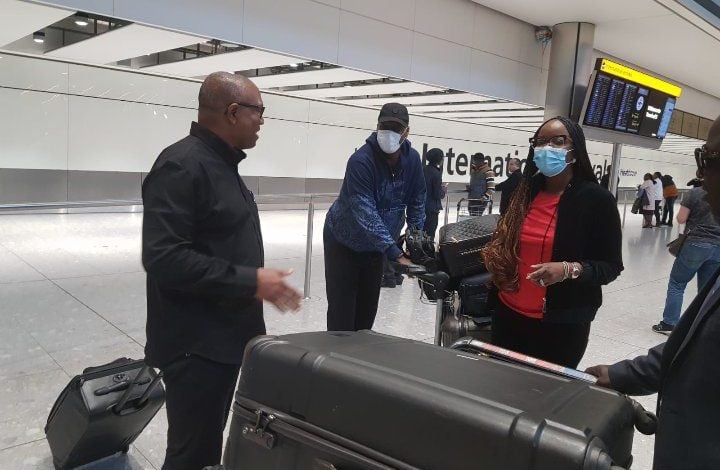
MaTaZ ArIsInGDallas, Texas A fresh petition has been submitted to the Minister of Aviation and Aerospace Development, Festus Keyamo, calling for an investigation into Nigeria Democratic Congress (NDC) presidential candidate Peter Obi over allegations that he repeatedly travelled with a passenger who allegedly used fake identities to board flights. The petition, dated July 12, 2026,…
-
Afrophobia: Should Nigeria ask South African companies to leave?

MaTaZ ArIsInGDallas, Texas Monday Lines 2 Afrophobia: Should Nigeria ask South African companies to leave? By Lasisi Olagunju (Published in the Nigerian Tribune on Monday, 6 July, 2026). Jacob Zuma was President of South Africa when he declared on October 21, 2013 that South Africa should not “think like Africans in Africa, generally.” The remark,…
-
Why I did not take Brazil’s penalty against Norway – Vinicius
MaTaZ ArIsInGDallas, Texas Brazil’s hopes of ending their long wait for World Cup glory came to a painful end after a 2-1 defeat to Norway in the Round of 16, with Erling Haaland scoring twice to eliminate the five-time champions. The aftermath of the defeat was dominated by questions over why Vinicius Júnior did not…