
The minister said Mr Tinubu inherited entrenched problems that previous administrations lacked the political courage to confront.

Regional Development Minister Abubakar Momoh says the economic reforms of President Bola Tinubu are bold measures to prepare Nigeria for a future of shared prosperity.
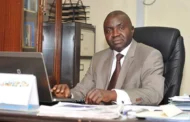
Mr Momoh said this while delivering the 55th Founder’s Day Lecture of the University of Benin (UNIBEN) on Monday in Benin. He spoke on the topic “Reforms for a Shared Prosperity.”
The minister noted that many Nigerians who are feeling the immediate pains of the ongoing reforms might not fully understand why the government had to take decisive action on long‑standing structural distortions in the economy.
According to him, Mr Tinubu inherited entrenched problems that previous administrations lacked the political courage to confront.
Mr Momoh asserted that the removal of the petrol subsidy on the president’s first day in office was one of the most critical steps to rescue the economy from a system that drained resources and incentivised smuggling, rent‑seeking, and corruption.
“No previous administration had summoned the courage to confront this situation until President Tinubu introduced decisive reforms,” he said.
The minister highlighted the absurdity of selling refined petroleum products cheaply in Nigeria only for the subsidised fuel to be smuggled to neighbouring countries.
He noted that the present administration chose to endure public criticism now rather than postpone tough decisions that would only worsen Nigeria’s economic trajectory.
Mr Momoh also justified the unification of Nigeria’s exchange rate, describing the previous system as one that rewarded arbitrage rather than genuine productive activity.
“Those who genuinely needed foreign exchange could not get it while a few people gamed the system. The reforms were designed to restore transparency and strengthen investor confidence,” he said.
The minister highlighted other reforms, including the operationalisation of the Petroleum Industry Act (PIA), the establishment of the Host Community Development Trust, and ongoing investment in local refining.
He pointed to the Dangote Refinery’s plans to expand production from 650,000 barrels per day to 1.4 million barrels as proof that confidence was returning to the sector.
The minister also referenced indigenous refinery projects and modular refineries, noting that the government’s new 15 per cent import duty on imported fuel was part of a “Nigeria First” industrial policy aimed at strengthening domestic production.
On the energy transition, he emphasised the Presidential Compressed Natural Gas Initiative (PCNGI) as a key strategy to reduce transportation costs while aligning with Nigeria’s climate commitments.
Mr Momoh also addressed the power sector, revealing that the government had approved the issuance of a N4 trillion bond to clear verified debts owed to power‑generation companies and gas suppliers, part of a broader plan to restore liquidity.
He said revenue collection in the sector rose by 70 per cent in 2024 after regulatory adjustments.
Mr Momoh further disclosed that the Federal Executive Council had approved N68.7 billion for solar farms in eight universities and teaching hospitals, including UNIBEN.
He argued that although the economic transition has imposed hardship, it is building the foundation for long‑term stability.
“The reforms I have outlined, though challenging in the short term, are necessary to build a Nigeria where prosperity is shared, sustainable, and inclusive.
“Nigeria stands today at a difficult yet decisive juncture,” he said.
The university’s vice‑chancellor, Edoba Omoregie, linked the university’s development trajectory to the federal government’s reform agenda.
He disclosed that UNIBEN had recently benefited from several federal interventions.
“Only yesterday, I received again seven more tricycles to ease transportation on campus.
“Also from TETFund, we received N1 billion for our agricultural development and N5 billion for the Senate building, and so many others—too numerous to enumerate now,” he said.
(NAN)

1SUBSCRIBE TO OUR NEWSLETTER NOW
Support MATAZ ARISING’ journalism of integrity and credibility.
Good journalism ensure the possibility of a good society, an accountable democracy, and a transparent government.
We ask you to consider making a modest support to this noble endeavour.
TEXT AD: To advertise here – Email ad@matazarising.com
LATEST POSTS
-
54-Year-Old Nurse Sentenced To 14 Years In Prison For $69 Million Medicaid Fraud In U.S.

Rita Anagho
-
Tinubu mandates Shettima to lead Nigeria’s delegation to UNGA

MaTaZ ArIsInGDallas, Texas By Saheed Oyelakin President Bola Tinubu has mandated Vice President Kashim Shettima to represent him and lead Nigeria’s delegation to the 81st Session of the United Nations General Assembly in New York, United States. The development ends weeks of speculation over whether Tinubu would personally attend the annual gathering of world leaders. Nigeria’s…
-
Shehu Sani tells truth to his North

MaTaZ ArIsInGDallas, Texas Monday Lines By Lasisi Olagunju (Published in the Nigerian Tribune on Monday, 21 September, 2026). ‘Truth Is Trouble’ is Professor Niyi Osundare’s latest book. What the poet laureate says in English, we say in another sense in Yoruba: Òótọ́ korò, truth is bitter. Then there is Ayékòótọ́, the name we give the…