The Presidency has commended the Economic and Financial Crimes Commission for what it described as an outstanding transformation since its inception, lauding the agency’s growth into a leading anti-corruption institution.
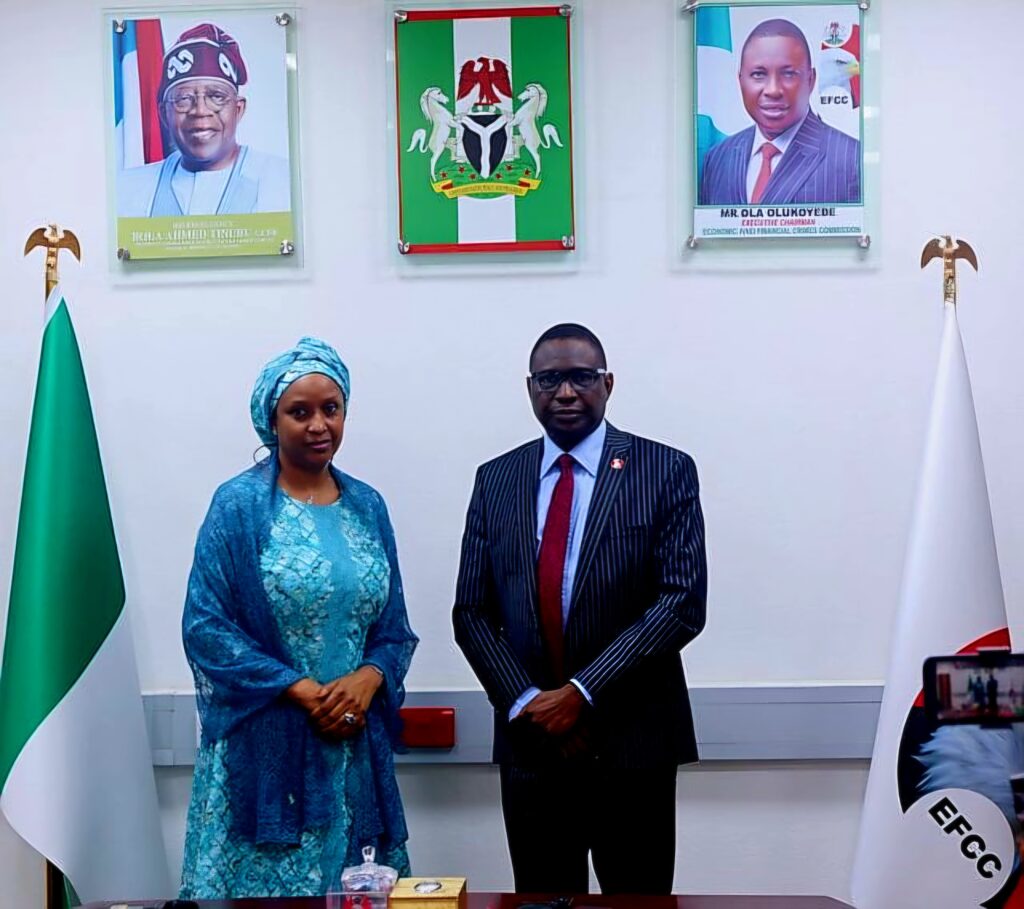
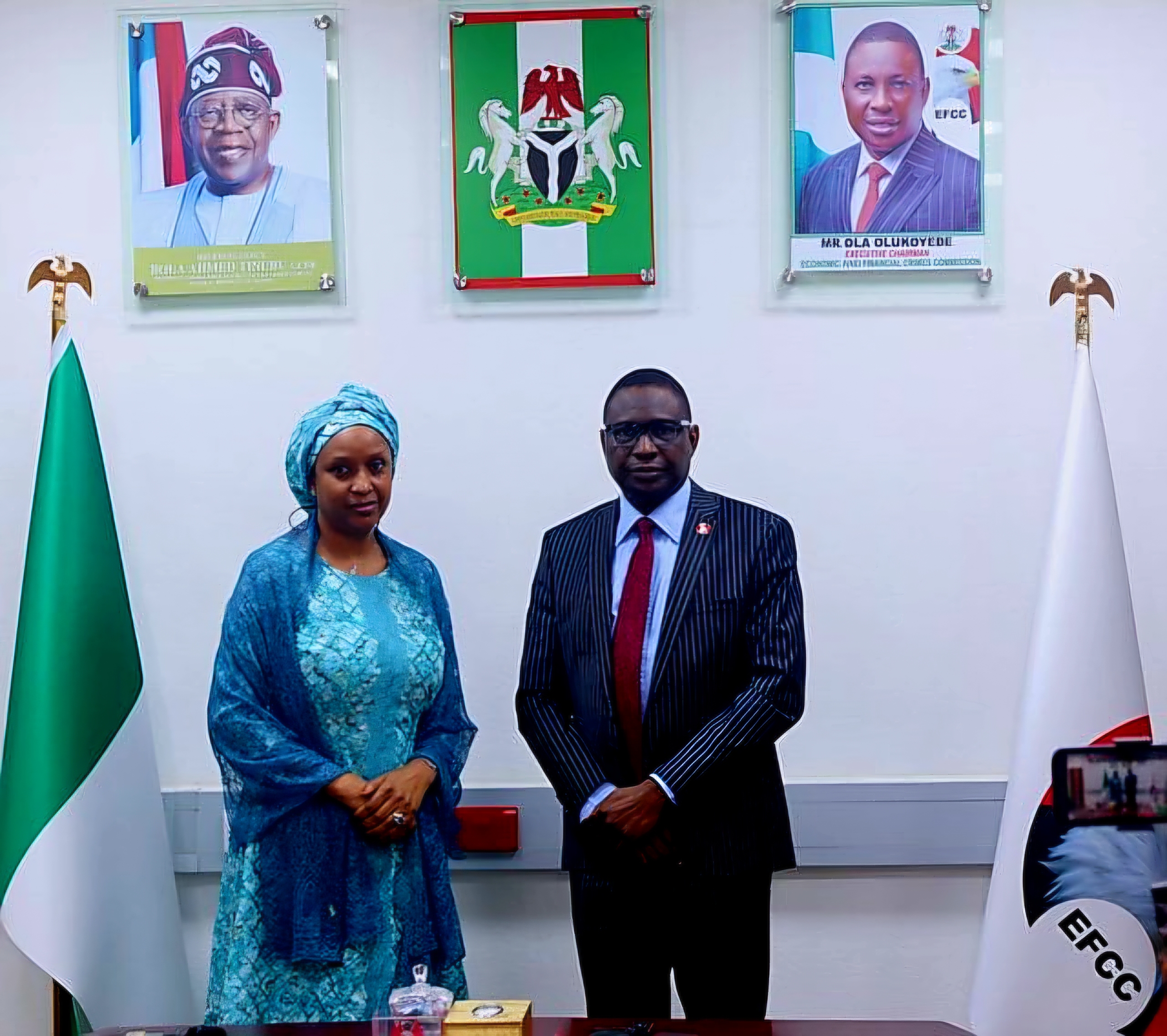
In a statement shared on X by EFCC, the Special Adviser to the President on Policy and Coordination and Head of the Central Results Delivery Coordination Unit, Hadiza Bala Usman, gave the commendation on Thursday, when she led a delegation to present the Performance Charter of the Commission to the EFCC Executive Chairman, Ola Olukoyede, at the agency’s headquarters in Abuja.
“You should all be proud of yourselves, seeing your trajectory,” Usman said. “Some of us have been observing the EFCC journey for a long time, and I just want to say that collectively your staff and the organisation should be very proud of what has been built in these years. Every day you visit EFCC, you see how it has improved. I’m not sure there’s any organisation that has grown the way the EFCC has grown from 2000 to date.”
Usman said the visit formed part of the Presidency’s efforts to strengthen performance monitoring and accountability across government institutions.
Regarding the performance indicators of the Commission, she explained that the Central Results Delivery Coordination Unit developed the EFCC Performance Charter through engagement with experts who provided the requisite knowledge, tools, and technical support from the Foreign, Commonwealth and Development Office, as well as the Partnership for Agile Governance and Climate Engagement.
“They provided us with support in terms of the technical content of what we are presenting here to you. That’s why they are part of this team, and they will contribute towards our submission. Mr Chairman, sir, we have concluded the assignment. We have done the initial draft of the Performance Charter,” she said.
According to her, the document outlines target baseline data and measurable indicators for assessing the Commission’s performance on a monthly, quarterly, and annual basis. It is expected to serve as a framework for monitoring and evaluating the EFCC’s performance on its mandate as well as its local and international obligations.
“The Charter aims to strengthen transparency, accountability, and informed decision-making,” she said, adding that it defines performance expectations for every department, unit, and zonal office through clear Key Performance Indicators (KPIs).
Usman further disclosed that the final phase of the process would involve a validation session with EFCC staff to review and refine the document before full implementation.
Responding, EFCC Executive Chairman Ola Olukoyede praised the Presidency for its support and commended Usman’s coordination role, noting that proper policy alignment had been a major gap in past administrations.
“One of the things that past administrations lacked is coordination,” Olukoyede said. “Even when individual MDAs are performing well, silo operations cannot produce optimal results. That’s why this initiative is so important.”
He explained that the EFCC under his leadership has already adopted internal policy reforms to guide its operations, ensuring that every aspect of its mandate is driven by structured and measurable frameworks.
“We are not just out there to hunt people and make noise about the work we do,” he said. “It’s not enough to recover assets, we must ensure those recoveries translate into societal impact. That requires proper policy coordination.”
Olukoyede, however, stressed the need for improved financial capacity to enable the Commission to effectively execute its mandate.
“You have addressed almost every area of our mandate, but not resource allocation,” he said. “I recover money, but I can’t touch it. If I’m allowed even five percent of recoveries, I won’t need to appear before the National Assembly for funding. We need a policy reform that ensures sustainable financial capacity for the EFCC.”
He assured that the Commission would integrate the Performance Charter into its operations and continue to deliver on its anti-corruption mandate with transparency, accountability, and measurable results.

1SUBSCRIBE TO OUR NEWSLETTER NOW
Support MATAZ ARISING’ journalism of integrity and credibility.
Good journalism ensure the possibility of a good society, an accountable democracy, and a transparent government.
We ask you to consider making a modest support to this noble endeavour.
TEXT AD: To advertise here – Email ad@matazarising.com
LATEST POSTS
-
Tinubu’s 90-day relief plan a scam to bait voters — ADC campaign

MaTaZ ArIsInGDallas, Texas By Luminous Jannamike The African Democratic Congress (ADC) Presidential Campaign Council has accused President Bola Tinubu of using his 90-day cost-of-living relief plan to bait voters ahead of the 2027 presidential election, arguing that the programme’s deadline falls after Nigerians would have voted. Phrank Shaibu, Director of Strategic Communication of the ADC…
-
90-Day Action Plan To Ease Cost Of Living For Nigerians
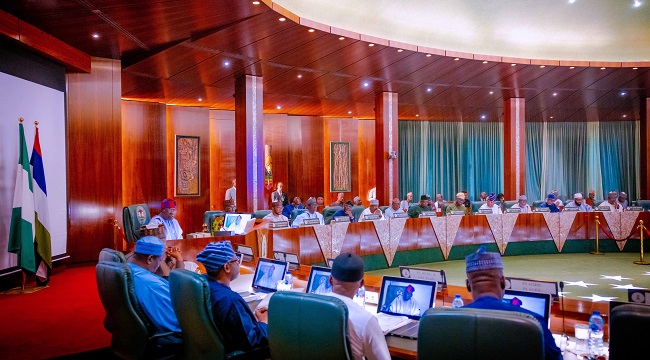
MaTaZ ArIsInGDallas, Texas .Reviews Ebola response, tasks states on preparedness The National Economic Council (NEC) on Thursday Rose from its monthly meeting and endorsed a 90-day economic action plan proposed by the Federal Ministry of Finance to consolidate gains from President Bola Tinubu’s economic reforms. The plan focuses on reducing the cost of living, improving…
-
He Started It, Came To My Site To Castigate Me’ — Umahi Blows Hot At Peter Obi

MaTaZ ArIsInGDallas, Texas The Minister of Works, David Umahi, has accused Peter Obi, presidential candidate of the Nigeria Democratic Congress (NDC), of initiating their confrontation over the Lagos-Calabar Coastal Highway project. Umahi said he did not attack the former Anambra State governor but was responding to criticism Obi allegedly directed at him during a visit…