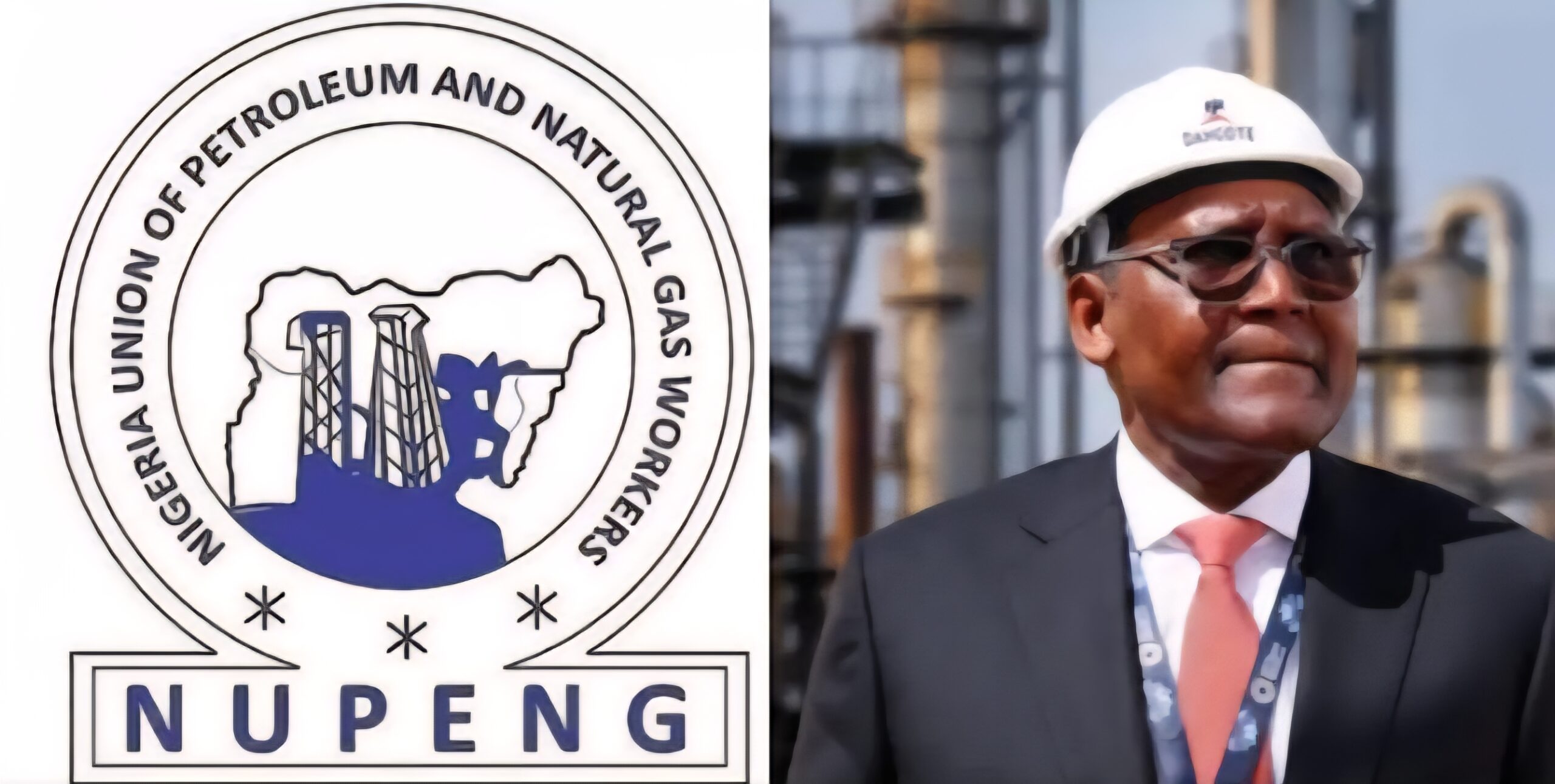
After several years of unending fuel crisis in the country, a bold industrialist with generational vision and unrivalled determination, chose to tread the path that angels dread. He built a massive oil refinery on a very challenging terrain in Lekki area of Lagos state. The capital outlay for the project runs into billions of dollars.
Due to the courage of one man, the most populous nation in Africa now enjoys consistent supply of gasoline (PMS), diesel, and aviation fuel. A grateful nation salutes the pioneer of this legendary industrial feat. With Dangote Refinery, and other refineries of varying production capacities, the nation is incrementally entering its own Golden Era of Industrial Revolution.
As it is in life, business, or politics; no incumbent power relinquishes its hold without a fight. Also, opposition is evidence of one’s strong position. If Dangote Refinery is facing resistance from any participants in the downstream, it is an indication of its positive impact on the economy. Dangote Refinery has earned the people’s respect, and it is futile to take it on in a PR battle. The court of public opinion has already rendered its verdict, and the winner is self-evident.
That said, Dangote Refinery’s Management needs to deescalate the situation with the Trade Unions and the Depot Operators. The refinery is as much a national asset, as it is a private business. Hence, the Management of the refinery should have a broader view of its role in national development. It is never in the best interest of the country to unwittingly make the private logistics framework and
system of the fuel distribution supply chain economically unviable.
While Trade Unions may be making difficult demands, a middle ground can still be found. The Chairman of the company knows the retail sector well enough, to understand that these operators also have investments to protect. It
shouldn’t be a zero-sum game.
Per Trade Union membership, from my own experience as a Reliability Engineer in a refinery setting, refineries in the United States (though private companies) do have unionized workers like United Steelworkers (USW), International Brotherhood of Teamsters (IBT) etc working on site. So, it is not unheard of that Union members work in private companies especially in the oil and gas sector, and production output is unimpacted by any industrial action. The refinery’s Management should explore avenues for industrial diplomacy with the Trade Unions.
While the objective may not be to destroy the complicated logistics web of the downstream sector, however, it may turn out to be an unintended consequence of the current standoff.
The free-market capitalist economy experiment is still in its infancy at this stage, and Dangote Refinery has the First Mover Advantage. Since it controls an outsized market share now, other players in the downstream sector are literally at its mercy. If the depots, the transporters etc. are displaced from the market, then the country runs the risk of over reliance on just one entity, without any other reasonable redundancy built into the system in the event of unforeseen disruption. Until there are more local producers of the same product in the economy, what we currently have in the downstream sector is an inelastic free market system.
The government is doing a good job moderating the system; however, other operators in the downstream sector need to stay in business, even if their profit margins would eventually take a hit. The ultimate objective should be what benefits the citizens. Dangote Refinery is in the best position to offer support within the deregulation framework.
In principle, the refinery could still offer a small discount to the local operators better than the gantry price and still maintain the current pump price. This isn’t an unrealistic ask because the refinery sometimes offers discounts on exported products too.
The operators asking for coastal delivery aren’t unreasonable either. Since, fuel importation is phasing out, seagoing vessels bringing cargoes into the country to discharge into the shore tanks would ultimately decline.
If Dangote Refinery could agree to coastal delivery, it would allow those vessels and barges (that would have been dormant) to move products from Lekki to Apapa port, where products are discharged into those shore tanks. Every aspect of the downstream sector should continue to operate at a reasonable profit margin, even if zero importation takes place, for national and energy security reasons. While not price-gouging on the customers.
Government agencies like NIMASA, NPA etc. may have to reduce their fees for domestic vessel movement, to lift the cost burden on both the refinery and the depot operators. This is how to build a vibrant circular economy locally, with Dangote Refinery as the main driver.
By Solomon metrics, the global benchmarking for refinery performance, and my own data-driven experience in reviewing asset reliability, I expect Dangote Refinery to hit 97% utilization within the first 2 years of its operation. And to perform its first Turnaround maintenance within the first 7 years of the start of its operation and every 6 years afterwards. With Mechanical Downtime (MDT) of 2% – 4%, and Regulatory and Process Downtime (RPDT) of 1% – 2%.
If these numbers are sustained, then the OA (Overall Availability) should range between 93% and 98%. Hence, by economic estimation the refinery breakeven point should be within 7 years of uninterrupted operations. With utilization in the top percentile, the refinery would be able to consistently meet domestic consumption requirement. Hence, the Management is accurate in affirming the refinery’s ability to adequately supply the domestic market, contrary to the supposed insinuation by DAPPMAN that it cannot.
In conclusion, the Chinese translation for the word ‘CRISIS’ is WEI-JI. WEI means danger, and JI opportunity. This crisis could be turned into opportunity for all parties if goodwill and good faith are
applied.
Kenny Oladipo,
A Senior Reliability Engineer, overseeing refinery operations and assets, with academic training in Mechanical Engineering and Law.
Kenny Oladipo has been Inducted into the Prestigious Marquis Who’s Who Biographical Registry.

1SUBSCRIBE TO OUR NEWSLETTER NOW
Support MATAZ ARISING’ journalism of integrity and credibility.
Good journalism ensure the possibility of a good society, an accountable democracy, and a transparent government.
We ask you to consider making a modest support to this noble endeavour.
TEXT AD: To advertise here – Email ad@matazarising.com
LATEST POSTS
-
What Makes an Effective President? Reflecting on President Tinubu’s Leadership

MaTaZ ArIsInGDallas, Texas By Idowu Ephraim Faleye Every election season, Nigerians passionately debate who deserves to lead the country. We argue over certificates, age, wealth, popularity, ethnicity, political party, and campaign promises, yet we often overlook the one quality that may matter most: No president can personally run the economy, defend the nation, build roads,…
-
How passenger’s ‘refusal’ triggered viral airport confrontation — Officials

MaTaZ ArIsInGDallas, Texas Airport officials have provided their account of the viral confrontation involving Progress Oberiko at Osubi Airport, Okpe Local Government Area of Delta State, following the passenger’s allegations of harassment and attempted extortion, which sparked widespread public reaction and prompted the Federal Airports Authority of Nigeria (FAAN) to order an investigation. Oberiko, travelling on…
-
How Buhari’s Govt Fuelled Banditry and Kidnapping — Ex-DSS Director Reveals
MaTaZ ArIsInGDallas, Texas Former Director of the Department of State Services (DSS), Dennis Amachree, has blamed the administration of late former President Muhammadu Buhari for the worsening insecurity that gripped Nigeria during his years in office. Presidential election coverage Amachree made the claims in his newly released book, “DSS@40: My Journey Behind the Shield,” where…