

The Nigerian Correctional Service(NCoS) says no fewer than 8,246 inmates are currently suffering from mental illness across the custodial centres nationwide.

The Nigerian Correctional Service(NCoS) says no fewer than 8,246 inmates are currently suffering from mental illness across the custodial centres nationwide.
The Assistant Controller General of Corrections, (ACG), in charge of Medical Services, Dr Glory Essien disclosed the figure during a public hearing on Tuesday in Abuja.
The News Agency of Nigeria (NAN) reports that the Independent Investigative Panel on Alleged Corruption, Abuse of Power, Torture, and Other Inhumane Treatment by the NCoS, began the third public hearing on Monday.
Essien, however, highlighted the harsh reality of incarceration and its impact on mental health during her address to the panel.
“We have 8,246 inmates with mental health conditions in our custodial centres.
“From the moment someone is brought in, those who have seen a custodial centre know what I mean.
“The police escort them to the gate and it’s opened, they’re admitted, and then that gate locked behind them.
“That instant loss of freedom can trigger something. Some begin to show signs of disturbed behaviour almost immediately, as if something in their mind has shifted,”she said.
Essien explained that the prison system relied on an internal network of trained inmate-leaders who assisted staff in identifying those showing signs of psychological distress.
According to her, these leaders are trained to alert the staff when they notice concerning behaviour.
“They might say, ‘This inmate seems dazed, hasn’t eaten, hasn’t spoken to anyone.’ That helps us intervene early,”she said.
Essien said in spite of these efforts, the scale of mental health issues far exceeded the available resources.
She said: “If you’re in a facility housing 500 to 1,000 inmates, and you’re the only attending doctor, nurse, or psychologist, it’s simply not possible to monitor everyone individually.
“That’s why we rely on these trained inmates to help us identify those in need, so we can provide care as best we can,” she said.
She, however, underscored the logistical challenges of delivering mental healthcare in correctional facilities.
“Mental illness is chronic. It’s not like malaria where you give a dose and it clears up, pointing to transportation issues, limited drug supplies, and staff shortage as ongoing obstacles.
“We’re not operating in a five-star environment.But with the little we have, we are committed to upholding the highest standards of our work,” she maintained.
Similarly, the Assistant Controller General of Corrections in charge of pharmaceutical services, Mohammed Bashir, addressed concerns around drug provision and mental health treatment.
He said that the Federal Government had actually been doing its enormous best to see that it catered for the health needs of the inmates.
“Money has been appropriated, but is the money enough? No.
“Out of 81,122 inmates in 256 correctional facilities nationwide, about 2.3 per cent are female,” he said.
Bashir revealed that a single item such as sanitary pads for menstruating inmates costs over “four million naira monthly.
On mental healthcare, Bashir confirmed that a psychological services unit had been created within the service to focus on treatment.
“We have partnership with this psychiatric and psychological association. We have the consultants who usually go to about 12 designated custodial centres that have a large number of these cases,” he said.
He, however, admitted that drug supplies often ran out within weeks due to inadequate funding and staffing.
In her remarks, the Permanent Secretary(PS) in the Ministry of Interior, Dr Magdalene Ajani, called for urgent support and systemic changes.
Ajani made a passionate appeal to the Nigerian Medical Association and pharmaceutical companies for support.
“Please come to Macedonia and help us. We are dire need for psychiatric and psychological aid in remote states beyond Abuja and Lagos.
Ajani, who chairs the panel expressed concern over the maldistribution of mental health professionals.
“Let them not only be centered in Abuja and Lagos. We need them to go out to the fields. Because if we even put two in the states, it will help them,”she added.
The PS stressed the need for transparency and collaboration with private companies, noting that public-private partnerships would be beneficial.
According to her, we can approach companies that can give us drugs as CSR, they do it.
“So, don’t let us sit in the office and forget our primary responsibility.
“Do it now. Build a bridge and empower younger people to be able to sustain that bridge that you are building,”she emphasised.(NAN)

1SUBSCRIBE TO OUR NEWSLETTER NOW
Support MATAZ ARISING’ journalism of integrity and credibility.
Good journalism ensure the possibility of a good society, an accountable democracy, and a transparent government.
We ask you to consider making a modest support to this noble endeavour.
TEXT AD: To advertise here – Email ad@matazarising.com
LATEST POSTS
-
Dangote’s Industrial Strategy: Refining, Fertiliser and Energy Infrastructure

Aliko Dangote
-
2027: Wike draws fresh battle lines with APC govs
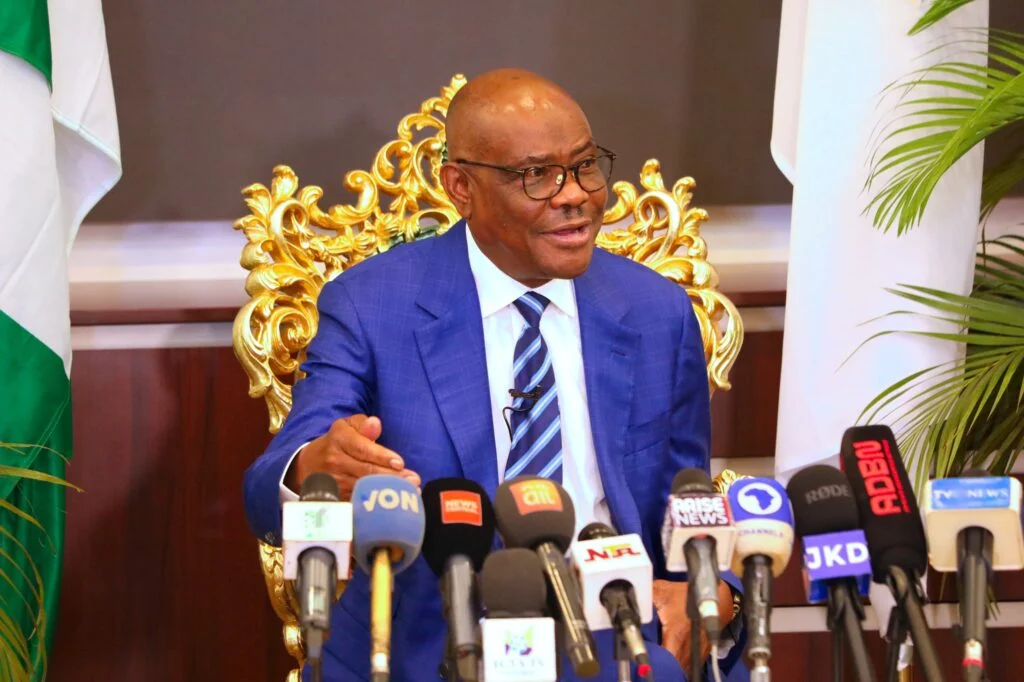
MaTaZ ArIsInGDallas, Texas The Minister of the Federal Capital Territory, Nyesom Wike, on Monday dismissed concerns by some governors of the All Progressives Congress that the proposed Rainbow Coalition could undermine the ruling party ahead of the 2027 elections. Speaking on TVC’s Journalists’ Hangout, Wike said the coalition was primarily aimed at mobilising support for…
-
Police arrest 251 terrorists, 343 others, rescue 1,066 kidnap victims in seven months

MaTaZ ArIsInGDallas, Texas Inspector-General of Police, IGP Olatunji Rilwan Disu, has disclosed that the Nigeria Police Force arrested 251 terrorists and suspected bandits and 343 murder suspects between February and September 2026. Disu made this known on Monday while declaring open the 2026 Conference and Retreat for Senior Police Officers (CARSPO) in Owerri, Imo State.…