

By Patrice Lovely
Sean “Diddy” Combs and Robert Sylvester Kelly, better known as R. Kelly, once embodied the dreamlike allure of superstardom. Their legacies, carved in the annals of music history, reflect brilliance overshadowed by their respective battles with legal and moral reckoning. These contrasting narratives reveal the fragility of power, the weight of accountability, and the perils of living under the glaring spotlight of fame.

Diddy: The Empire Under Siege
Diddy is more than a name—it’s an institution. A master architect of hip-hop culture, he transformed raw talent into global phenomena. The mogul’s ventures in music, fashion, and spirits crafted a kingdom, one that glittered with success. Yet, behind the immaculate public persona lies a labyrinth of challenges that threaten to shake his empire to its foundation.
While Diddy has deftly dodged prison walls, his life is no stranger to entanglements. Allegations of financial impropriety, business disputes, and whispers of scandal have painted a more complex picture of the man many hail as a visionary. His detractors claim his empire thrives on exploitation, while loyalists see him as a trailblazer unfairly targeted.
In the court of public opinion, Diddy stands trial daily. Despite maintaining his innocence, the ceaseless hum of controversy adds layers to his legacy, weaving threads of uncertainty into his narrative of success. His struggles are a stark reminder that even the most accomplished lives are not invincible to the fractures of fame and fortune.
R. Kelly: A Voice Silenced by Scandal
If Diddy’s troubles hover in the shadows, R. Kelly’s are spotlighted in unforgiving clarity. Once revered as the “Pied Piper of R&B,” Kelly was an unstoppable force in music—a genius whose melodies united generations. His songs, infused with soaring vocals and heartfelt lyrics, promised hope, passion, and transcendence. But behind the velvet curtain of his artistry, a darker reality brewed.
Convicted in 2021 on charges of racketeering, sexual exploitation, and violating federal statutes, Kelly’s descent from grace was as shocking as it was inevitable. The courts handed him a 30-year prison sentence, and his name became synonymous with betrayal and abuse.
Inside prison walls, the echoes of his once-mesmerizing voice fade, replaced by the stark reality of confinement. Accounts of his life behind bars depict a man battling isolation, stripped of the adoration he once commanded. For some, he remains a tragic figure—a flawed genius ensnared by his demons. For others, his conviction represents long-overdue justice for the countless lives irreparably harmed by his actions.
Reflections in the Mirror of Fame
The stories of Diddy and R. Kelly are more than personal sagas; they are reflections of the volatile interplay between power, accountability, and public perception. One navigates the treacherous waters of potential scandal, while the other grapples with the crushing weight of incarceration and a tarnished legacy.
Diddy’s journey serves as a cautionary tale of the pressures faced by those atop the summit. His ability to endure scrutiny while expanding his empire speaks to his resilience, yet it also underscores the precarious balance between ambition and integrity.
R. Kelly’s story, on the other hand, is a grim reminder of the dangers of unchecked privilege and the consequences of moral collapse. His fall is a testament to the inevitability of justice, however delayed it may seem.
The Fragile Dance Between Glory and Consequence
In the end, these tales are less about individual men and more about the human condition. They challenge us to question the nature of celebrity, the boundaries of forgiveness, and the responsibilities of those who wield influence.
Diddy’s empire may endure, or it may crumble under the weight of scrutiny. R. Kelly will likely live out his days reflecting on the choices that led him from global adoration to solitary confinement. Together, their narratives illuminate the harsh truth: Fame may elevate, but it cannot absolve.
For the audience, these stories provoke a collective reckoning. Are we too quick to idolize and too slow to demand accountability? Or are these figures merely scapegoats, sacrificed at the altar of cultural judgment?
In the end, their legacies remind us of an age-old lesson: Power is transient, glory is fleeting, but integrity endures.
Your Boy’s Latest

1SUBSCRIBE TO OUR NEWSLETTER NOW
Support MATAZ ARISING’ journalism of integrity and credibility.
Good journalism ensure the possibility of a good society, an accountable democracy, and a transparent government.
We ask you to consider making a modest support to this noble endeavour.
TEXT AD: To advertise here – Email ad@matazarising.com
LATEST POSTS
-
Nigeria rejects links to failed Niger coup
MaTaZ ArIsInGDallas, Texas The Federal Government has denied endorsement of the failed coup attempt in the Niger Republic. Minister of State for Foreign Affairs, Amb Sola Enikanolaye, in a statement issued on Thursday and made available to newsmen, rejected the claim and described it as an attempt to misinform the public. “The attention of the…
-
Tinubu a lifelong democrat, says Sanwo-Olu

MaTaZ ArIsInGDallas, Texas Lagos State Governor, Babajide Sanwo-Olu, has described President Bola Tinubu as a lifelong democrat committed to strengthening Nigeria’s democratic institutions. Speaking on Thursday at the seventh annual lecture of Freedom Online in Ikeja, Lagos, the governor said Tinubu was determined to leave behind a stronger democracy than he inherited, both for Nigerians…
-
Defence minister Musa accuses El-Rufai of planning killings in Southern Kaduna
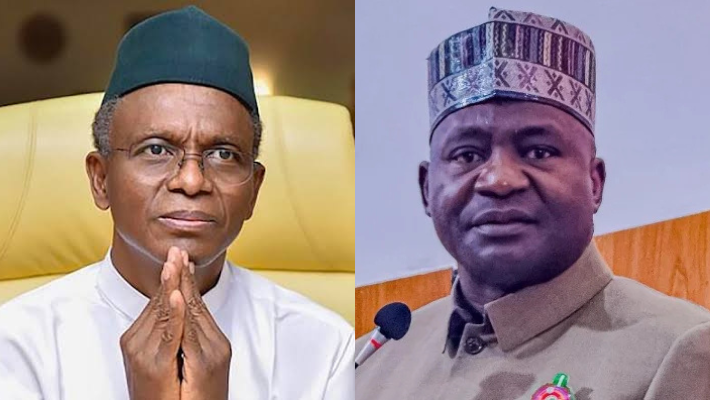
MaTaZ ArIsInGDallas, Texas Mr Musa’s allegations come as Mr El-Rufai continues to languish in detention. Minister of Defence Christopher Musa on Thursday accused former Kaduna State Governor Nasir El-Rufai of planning the mass killing of people in Southern Kaduna. Mr Musa made the allegations against Mr El-Rufai during an interview with Channels Television on Thursday.…