



Many Nigerians were shocked last Tuesday when Justice Kehinde Ogundare of the Federal High Court sitting in Lagos struck out the charge of naira abuse filed against celebrity bartender, Pascal Okechukwu, popularly known as Cubana Chief Priest, by the Economic and Financial Crimes Commission (EFCC).
The judge also directed Cubana Chief Priest to forfeit the sum of N10 million to the federal government as part of an out-of-court deal the defendant agreed with the EFCC in lieu of the charge. The trial judge simply adopted the terms of settlement agreement with the EFCC
Cubana Chief Priest was arraigned by EFCC on April 17, on a three-count charge of naira abuse. The offence contravened the provisions of Section 21(1) of the CBN Act of 2007. He, however, pleaded not guilty to the charges when they were read to him and was subsequently granted bail in the sum of N10 million.
At the proceedings, counsel for the EFCC, Bilkisu Buhari-Bala, informed the court that parties in the charge entered into the out-of-court settlement and the same was duly signed by both parties.
The defendant’s counsel, Chikaosolu Ojukwu (SAN) commended the reasonable action of the anti-graft agency in having the matter resolved. He said the defendant is equally remorseful and promised to turn over a new leaf going forward. He also said that the consequences of the settlement is for the court to dismiss the charge.
Many Nigerians condemned the approach adopted in the prosecution of the Cubana Chief Priest over naira abuse.
Recall that before his arraignment, two previous defendants that were arraigned for the same offence were convicted. While the first was given an option after she was convicted, the second was sent to prison without any option of fine.
Even though the EFCC said the settlement agreement with Cubana Chief Priest was pursuant to Section 14 (2) of the EFCC Establishment Act, 2004, many wondered why the same section of the EFCC was not invoked in the two previous cases that involved less-influential Nigerians.
They are of the view that the two previous offenders should have been given the same treatment.
With this two-faced justice system, only the poor will continue to face the law while wealthy individuals will continue to enjoy preferential treatment.

WhatsApp Community
SUBSCRIBE TO OUR NEWSLETTER NOW
Support MATAZ ARISING’ journalism of integrity and credibility.
Good journalism ensure the possibility of a good society, an accountable democracy, and a transparent government.
We ask you to consider making a modest support to this noble endeavour.
TEXT AD: To advertise here – Email ad@matazarising.com
-
Dangote’s Industrial Strategy: Refining, Fertiliser and Energy Infrastructure

Aliko Dangote
-
2027: Wike draws fresh battle lines with APC govs
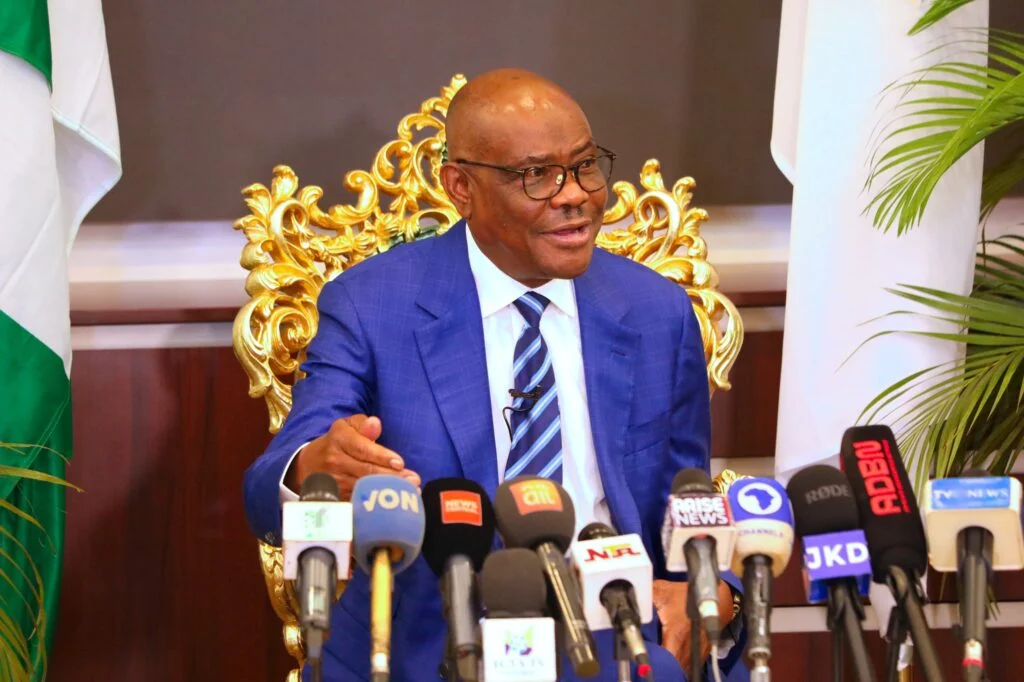
MaTaZ ArIsInGDallas, Texas The Minister of the Federal Capital Territory, Nyesom Wike, on Monday dismissed concerns by some governors of the All Progressives Congress that the proposed Rainbow Coalition could undermine the ruling party ahead of the 2027 elections. Speaking on TVC’s Journalists’ Hangout, Wike said the coalition was primarily aimed at mobilising support for…
-
Police arrest 251 terrorists, 343 others, rescue 1,066 kidnap victims in seven months

MaTaZ ArIsInGDallas, Texas Inspector-General of Police, IGP Olatunji Rilwan Disu, has disclosed that the Nigeria Police Force arrested 251 terrorists and suspected bandits and 343 murder suspects between February and September 2026. Disu made this known on Monday while declaring open the 2026 Conference and Retreat for Senior Police Officers (CARSPO) in Owerri, Imo State.…


