


According to him, the Western powers made a blunder by allowing Gaddafi to be killed.
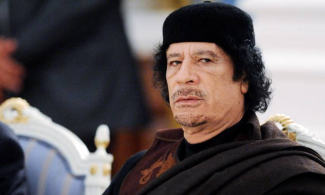
Italian Minister of Foreign Affairs and International Cooperation Antonio Tajani has described the killing of former Libyan leader, Muammar Gaddafi, as a serious mistake.
According to him, the Western powers made a blunder by allowing Gaddafi to be killed.
Italy’s top diplomat, who admitted that Gaddafi’s death unleashed years of chaos and conflict in the African country, said that the United States and NATO allies committed a major blunder by helping to oust the Libyan leader in a 2011 regime change operation, RT reports.
The Libyan head of state was executed by US- and UK-backed militants during a NATO military intervention.
Speaking on the sidelines of an event in Tuscany on Wednesday, Tajani, a journalist and former Italian Air Force officer, who has served as Deputy Prime Minister of Italy, observed that Libya’s troubles since Gaddafi was overthrown and murdered, have been worse.
He maintained that his administration was “certainly better than those who arrived later.”
“It was a very serious mistake to let Gaddafi be killed. He may not have been the champion of democracy, but once he was finished, political instability arrived in Libya and Africa,” he said.
The official noted that Rome had kept an agreement with the leader which “blocked the migratory flows and the situation was much more stable.”
Gaddafi was brutally executed by rebel fighters amid a NATO bombing campaign, conducted under the pretext of a no-fly zone during Libya’s 2011 civil war.
Though Washington and its allies described the mission as a “humanitarian” effort to end government attacks on civilians, a probe by the UK House of Commons later found that the “threat to civilians was overstated,” and that Western powers had ignored a “significant Islamist element” among the anti-Gaddafi militants.
In the aftermath of the regime change operation, Libya was divided between several competing governments, each claiming legitimacy to rule.
The factions have continued to fight in the years since, eventually consolidating under two camps led by the UN-backed Government of National Accord, and forces loyal to General Khalifa Haftar and the Libyan House of Representatives.
Terrorism also saw a resurgence across North Africa following Gaddafi’s death, with Islamic State (IS, formerly ISIS) and groups linked to Al-Qaeda establishing strongholds in Libya and beyond.
By July 2014, an estimated 1,600 militant factions were active in the country, a major increase from the 300 tallied in 2011, according to the US Institute of Peace.
Mataz Arising observed that various reports have also linked the Libyan crisis to the proliferation of arms in Nigeria, Mali and some other Sahelian countries.
SUBSCRIBE TO OUR NEWSLETTER NOW
Support MATAZ ARISING’ journalism of integrity and credibility.
Good journalism ensure the possibility of a good society, an accountable democracy, and a transparent government.
We ask you to consider making a modest support to this noble endeavour.
TEXT AD: To advertise here – Email ad@matazarising.com
LATEST POSTS
-
2027: I’ll restore fuel subsidy if elected — Atiku

MaTaZ ArIsInGDallas, Texas Atiku Abubakar, the presidential candidate of the African Democratic Congress (ADC), has promised to restore the petrol subsidy if he wins the 2027 presidential election. Atiku made the pledge during an interview on Wednesday while questioning the use of funds he said were saved following the removal of the subsidy. He said…
-
2027: Why I chose to run with Obi — Kwankwaso

MaTaZ ArIsInGDallas, Texas Former Kano State governor, Rabiu Kwankwaso, has explained his decision to run on the same presidential ticket with Peter Obi ahead of the 2027 general elections, saying their partnership is driven by the need for a different approach to governance. Kwankwaso, who is seeking the vice-presidential ticket alongside Obi on the platform…
-
Nigeria’s federal government moves to decriminalise attempted suicide

MaTaZ ArIsInGDallas, Texas In Nigeria, where mental health issues remain largely stigmatised, the federal government has plans to decriminalise attempted suicides. Trying to take one’s life is currently punishable by up to one year in prison under the colonial-era Criminal Code, while the Penal Code provides for up to a year in jail, a fine,…


