
By Idowu Ephraim Faleye +2348132100608
Nigeria has moved from trying to save its economy to the next difficult task of making the economy work for ordinary people. The major economic figures are improving. Government revenue has increased, and state governments are receiving much more money than they received before. Yet many Nigerians are still complaining about the high cost of food, transport, rent, school fees and other basic needs. These two realities can exist at the same time. The mistake is to think that stabilising the economy will immediately make life easier for every household. After a major inflation, it takes time for household incomes and living conditions to catch up with the new economic reality.
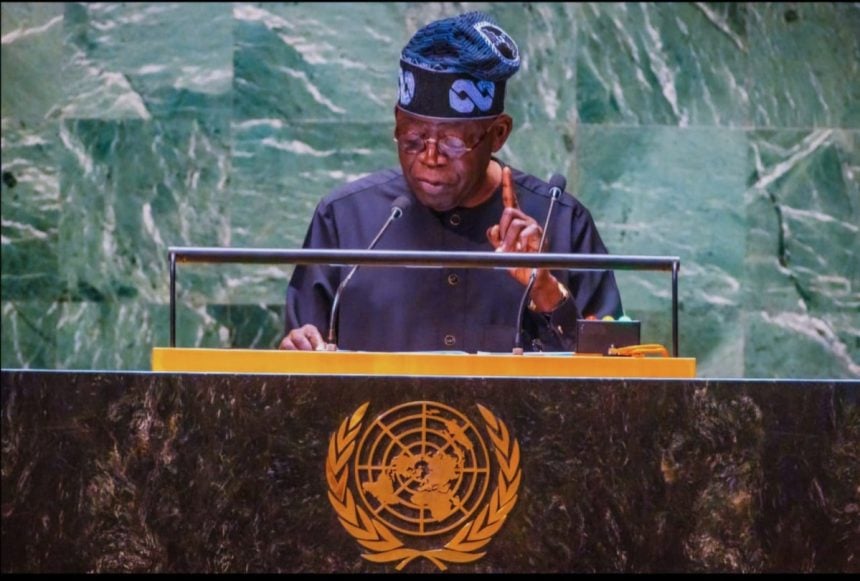
To understand this, we must first remember what needed to be fixed. Before Tinunbu came to power, Nigerian economy was under serious pressure. Government revenue was weak, the cost of the petrol subsidy was a burden, the exchange-rate system had major problems, foreign exchange was difficult to obtain, and debt pressures were rising. At the same time, the country’s ability to produce enough goods and services was weak. These problems could not be ignored. Major reforms were needed to stop the situation from becoming worse. That was the rescue phase which Tinunbu tackled in his first tenure.
The reforms included the removal of the petrol subsidy, changes to the foreign-exchange system, tighter monetary policy, fiscal reforms, better revenue collection and efforts to improve oil production. The government also worked to reduce deficit financing, strengthen its external position and restore confidence in the economy. These reforms were not designed to make every Nigerian richer overnight. Their first purpose was to stop the dangerous economic decline and create the foundation for recovery.
The economy had to be stabilised before it could be transformed. But stabilisation does not mean that high prices immediately disappear. There is an important difference between falling inflation and falling prices. For example, imagine that a food item increased from ₦10,000 to ₦20,000. If inflation later slows down, the item does not automatically return to ₦10,000. It simply means that the increase in the price of commodities will now slow down. This is why a person can see inflation coming down and still face very high prices and weak purchasing power.
This helps explain why improvements in the wider economy can exist alongside hardship in many homes. Families do not live on GDP figures, foreign reserves or government revenue figures. They live on salaries, business income and what those incomes can buy. They have to pay for food, transport, rent, electricity, school fees and healthcare. After a major increase in prices, household incomes need time to catch up. What matters to a family is not simply how many naira it receives, but how much those naira can buy. That is the difference between nominal income and real purchasing power.
This is why the next phase of the economic programme is so important. The first phase was about saving and stabilising the economy. The second phase must be about making the economy work better for households. It must focus on increasing production, raising productivity, creating productive jobs, improving real wages, increasing food supply and providing infrastructure that reduces the cost of doing business. It must also support small businesses, agriculture and manufacturing, improve transport and logistics, provide reliable electricity for production and strengthen social protection for vulnerable households.
The Federal Government cannot do all of this by itself. It controls the national economic environment, but it cannot personally reach every farm, market, rural road, factory and small business in the country. As economic reforms increase government revenue and more money becomes available through the Federation Account, state governments become an important part of the next stage. The Federal Government can create greater economic space, but states have a major role in turning that opportunity into productive economic activity within their territories.
This is why increased allocations from the Federation Account should be seen as an opportunity, not as the end of the process. More money entering a government account does not automatically mean more money in the pockets of citizens. The desired chain is simple: higher government revenue should lead to higher allocations; higher allocations should provide room for productive spending; productive spending should reduce the cost of production; lower production costs should increase productivity; higher productivity should help businesses expand and create jobs; and more jobs and higher incomes should improve household living standards.
The problem is that this chain can break at any point. This is where the idea of productive fiscal transmission becomes important. Productive fiscal transmission simply means turning additional government revenue into investments that increase production, productivity, employment and household income. It gives us a better way to judge the economic value of public spending. The question should no longer be only how much money a state received. We should also ask what that money made possible.
For every additional ₦1 billion received by a state, we should ask what measurable improvement followed. Did productive investment increase? Did businesses expand? Were more jobs created? Did household incomes rise? Did food become more affordable? Did transport costs fall? Did the state become more productive?
We should also ask a more basic question: what economic problem did the spending solve? Did the spending reduce the cost of moving farm produce from rural communities to major markets? Did it provide irrigation that allowed farmers to produce throughout the year? Did it reduce post-harvest losses by providing storage? Did it provide electricity that allowed local businesses to produce more cheaply? Did it create an industrial cluster that attracted businesses and jobs? Did it improve access to markets?
These questions change the way we look at government spending. Instead of simply counting projects, we begin to measure their economic impact. A project does not automatically transform an economy because it is large, expensive or impressive to look at. Its real value depends on the economic problem it solves and the productive activity it creates.
This is particularly important because Nigeria’s deeper problem is productivity. The country does not only need more jobs. It needs more productive jobs that can provide people with sustainable incomes. A person can be employed and still remain poor if the work produces very little income. This is why attention must be given to farm productivity, small businesses, informal enterprises, manufacturing, agro-processing and logistics.
Agriculture provides one of the clearest examples of this missing link. Monetary policy alone cannot solve Nigeria’s food problem. The Central Bank can influence money supply, interest rates and credit conditions, but it cannot build a farm road. It cannot irrigate a farm. It cannot provide storage for harvested crops. It cannot move tomatoes from one part of the country to another. It cannot provide every farmer with machinery or improve every local market.
This is why monetary stabilisation must be followed by supply-side development. The country must produce more of the food and goods that people need, and it must become cheaper and easier to move those goods from where they are produced to where they are needed. A large part of this work requires action at the state and local levels.
State governments therefore have an important economic responsibility in this second phase. They need to look beyond the question of how much they have spent and ask what productive capacity their spending has created. Their priorities should include irrigation, farm-to-market roads, storage facilities, agro-processing, industrial clusters, support for small businesses, reliable electricity for productive activities, practical skills development, better local transport and improved security around productive areas.
This does not mean that every airport, flyover or large infrastructure project is automatically unproductive. Such projects can have economic value when they solve important problems, reduce transport costs, improve connectivity or support business activity. The right question is not simply whether a project is big or small. The right question is: what economic constraint does it remove, and what measurable economic activity follows from it?
That is the standard that should increasingly guide public investment. When the whole process is put together, the picture becomes clearer. Nigeria has made progress at the top of the economic chain through major macroeconomic reforms. The more difficult task is now in the middle and lower parts of the chain. The country must convert improved government revenue and greater fiscal space into production, productivity, employment and higher real household income.
This explains why hardship can continue even when the wider economy is improving. Families are still waiting for incomes to catch up with prices. Farmers are still waiting for lower production and transportation costs. Businesses are still waiting for more reliable power and affordable productive finance. Young people are still looking for productive employment. Consumers are still waiting for increased supply to bring down the cost of basic goods.
The second phase therefore needs a different scorecard. GDP, inflation and government revenue are important, but they are not enough. We should also measure productivity per worker, productivity per hectare, real household income, productive employment, food affordability, transport costs, business survival and the amount of new economic activity created by public investment. The key question should be whether Nigerians are becoming more productive and whether they are able to keep more of the value they create. That moves the conversation away from political claims and toward measurable results.
Nigeria has moved through an important economic phase, but stabilisation is not the same as prosperity. Saving the economy is one challenge. Making the improved economy work for households is another. The first requires macroeconomic discipline and financial stability. The second requires productivity, production, infrastructure, jobs, investment and effective use of public resources. The central policy question for the country is therefore no longer only how to increase government revenue. It is how to make every additional naira of public revenue produce more economic value.
The real test of the next phase will be whether the improvements seen in the macro-economy can move through the economy and reach the ordinary household — not simply as government statistics, but as more affordable food, lower production costs, more productive businesses, better jobs, higher real incomes and improved living standards.
The economy may have moved away from the immediate danger of collapse. The next task is to make that stability meaningful in the daily lives of Nigerians. Nigeria has passed the rescue stage but has not yet reached the prosperity stage. That’s why continuity matters for such a leader who has applied the wisdom that pulled the nation back from the brink. Disruption could derail progress and bring policy reversals that the fragile economy cannot afford.
Meanwhile, most of the contestants jostling for the presidential seat lack the practical economic know-how the country needs at this stage of the country’s economic progression. Instead of thoughtful blueprints, they kept launching shallow attacks on the occupant and making empty promises to reverse the removal of the petroleum subsidy. This only exposes their lack of policy depth, and discerning citizens should not take them seriously. A serious contestant with a firm grasp of developmental economics would first acknowledge Tinubu’s heavy lifting in saving the macro-economy from collapsing. Only then can they credibly explain how they would spread that new economic buoyancy so it reaches the dining tables of ordinary people. Until challengers offer that level of rigorous, constructive debate instead of cheap populism, they cannot be taken seriously.
Idowu Ephraim Faleye is a freelance political writer based in Ado-Ekiti, Nigeria. +2348132100608

1SUBSCRIBE TO OUR NEWSLETTER NOW
Support MATAZ ARISING’ journalism of integrity and credibility.
Good journalism ensure the possibility of a good society, an accountable democracy, and a transparent government.
We ask you to consider making a modest support to this noble endeavour.
TEXT AD: To advertise here – Email ad@matazarising.com
LATEST POSTS
-
Nigeria’s Economy Under Tinubu: The First Phase Was Stabilisation, Now Comes the Second Phase
By Idowu Ephraim Faleye +2348132100608 MaTaZ ArIsInGDallas, Texas Nigeria has moved from trying to save its economy to the next difficult task of making the economy work for ordinary people. The major economic figures are improving. Government revenue has increased, and state governments are receiving much more money than they received before. Yet many Nigerians…
-
El-Rufai Has Spent Seven Months In Detention Without Conviction – Emir Sanusi
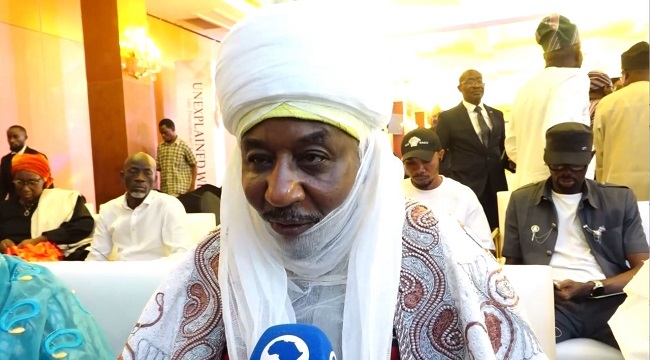
MaTaZ ArIsInGDallas, Texas Sanusi said Nigeria already has institutions and courts responsible for investigating and prosecuting corruption cases, but alleged that political considerations sometimes influence how such cases are handled. The Emir of Kano, Muhammadu Sanusi II, has raised concerns over the continued detention of former Kaduna State Governor, Nasir El-Rufai, saying he has spent…
-
New world record for longest dance marathon set by Nigerian dancer

MaTaZ ArIsInGDallas, Texas Benjamin Daniel, known as Ben Dancer, danced continuously for 168 hours. LAGOS, Nigeria — A Nigerian dancer has broken the world record for the longest individual dance marathon. Benjamin Daniel, known as Ben Dancer, danced continuously for 168 hours. The 33-year-old began the attempt last Tuesday. The previous record of 127 hours…