

This is a treatise that is worth ruminating about and disseminating to appropriate quarters . Please take some time to read and digest , in our free time .
TINUBU’S “FAILURE” IN LESS THAN FOUR YEARS? OR THE PRICE OF FIXING PROBLEMS EVERYBODY ELSE DODGED?
There is something intellectually dishonest about the increasingly fashionable argument that President Bola Ahmed Tinubu has “failed” because Nigerians are experiencing severe economic hardship.
Let us be serious for a moment.
A DIFFICULT REFORM PROGRAMME IS NOT THE SAME THING AS A FAILED GOVERNMENT.
And a government that has disappointed in some areas is not automatically a government that has failed.
The more important question is:
WHAT WAS THE CONDITION OF THE NIGERIAN ECONOMY WHEN TINUBU TOOK OVER, WHAT DID HE PROMISE TO FIX, WHAT HAS HE ACTUALLY CHANGED, AND WHAT REMAINS UNFINISHED?
That is the proper basis for judgement.
Not social-media frustration.
Not political propaganda.
Not the convenient habit of blaming every economic hardship on the person who finally decided to confront problems that previous governments repeatedly postponed.
TINUBU DID NOT CREATE THE ECONOMIC DISTORTIONS HE INHERITED
The fuel-subsidy regime did not begin with Tinubu.
Nigeria’s foreign-exchange distortions did not begin with Tinubu.
Our revenue crisis did not begin with Tinubu.
Our infrastructure deficit did not begin with Tinubu.
Our electricity problems did not begin with Tinubu.
Our weak manufacturing base did not begin with Tinubu.
Our debt burden did not begin with Tinubu.
Our insecurity did not begin with Tinubu.
Our dependence on imported goods did not begin with Tinubu.
Our low productive capacity did not begin with Tinubu.
Our institutional weaknesses did not begin with Tinubu.
These are accumulated structural problems.
And structural problems cannot be repaired without structural adjustments.
THAT IS THE PART MANY CRITICS CONVENIENTLY IGNORE.
For years, successive administrations knew that some of these distortions were unsustainable.
But difficult reforms are politically expensive.
So governments postponed them.
Borrow.
Subsidize.
Intervene.
Control.
Print.
Patch.
Borrow again.
And hope that tomorrow’s government would deal with the consequences.
Then Tinubu came and effectively said:
“ENOUGH. LET US FIX THE STRUCTURE.”
Was the medicine painful?
YES.
Were Nigerians prepared for the shock?
NOT ADEQUATELY.
Could the implementation and social-protection response have been better?
ABSOLUTELY.
Have there been disappointments?
YES.
Should the government be held accountable for those disappointments?
OF COURSE.
But none of those answers automatically translates into:
“TINUBU HAS FAILED.”
DISAPPOINTMENT IS NOT FAILURE.
This distinction matters.
A government can fail in particular policies.
A government can make mistakes.
A government can implement too slowly.
A government can communicate badly.
A government can disappoint citizens.
And yet still be pursuing reforms that are fundamentally necessary.
The mature question is not whether Tinubu has been perfect.
HE HAS NOT.
The question is whether the direction of the major economic reforms is capable of putting Nigeria on a more sustainable footing.
That is what Nigerians should debate.
THE REAL TEST IS WHAT HAPPENS AFTER THE PAIN
Removing subsidy was never supposed to be the destination.
Reforming the foreign-exchange market was never supposed to be the destination.
Improving government revenue was never supposed to be the destination.
Fiscal consolidation was never supposed to be the destination.
They are instruments.
The destination is:
MORE PRODUCTION.
MORE INVESTMENT.
MORE JOBS.
MORE STABLE PRICES.
MORE GOVERNMENT CAPACITY.
BETTER INFRASTRUCTURE.
BETTER PUBLIC SERVICES.
HIGHER HOUSEHOLD INCOMES.
AND A STRONGER NIGERIAN ECONOMY.
That is where Tinubu must ultimately be judged.
And if those benefits do not materialize sufficiently, Nigerians have every right to say:
“YOU PROMISED REFORM. NOW SHOW US THE DIVIDEND.”
But we should not confuse the transition period with the final destination.
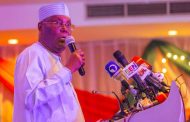
AND THEN WE HAVE ATIKU ABUBAKAR
This is where the comparison becomes interesting.
Atiku has every constitutional right to seek the presidency.
Nobody should dispute that.
But after decades of pursuing the office and after eight years as Vice President, he cannot reasonably ask Nigerians to evaluate his presidential ambition merely by asking:
“ARE YOU ANGRY WITH TINUBU?”
The question must be:
“WHAT WILL ATIKU ACTUALLY DO DIFFERENTLY?”
That is where the opposition’s argument becomes surprisingly thin.
Criticism is easy.
Campaign speeches are easy.
Pointing at food prices is easy.
Pointing at petrol prices is easy.
Pointing at hardship is easy.
Promising to reopen borders is easy.
Promising relief is easy.
Promising to restore subsidies is easy.
But governing Nigeria is not easy.
THE BILL ALWAYS COMES DUE.
If Atiku wants to restore subsidy, Nigerians deserve to know:
How much will it cost?
How will it be financed?
What safeguards will prevent leakage?
What happens when oil prices fall?
What happens when crude production declines?
What happens to infrastructure spending?
What happens to education?
What happens to healthcare?
What happens to debt?
What happens to the exchange rate?
What happens to investment?
THAT IS POLICY.
Everything else is campaign theatre.
YOU CANNOT RUN A COUNTRY ON “TINUBU FAILED.”
You must explain:
“HERE IS MY ALTERNATIVE.”
And the alternative must be financially credible.
THIS IS WHERE THE DIFFERENCE BETWEEN POLITICAL OPPORTUNITY AND GOVERNING CAPACITY BECOMES IMPORTANT
Presidential power is not a trophy.
It is not compensation for having contested many times.
It is not an award for political persistence.
It is not a reward for criticizing the incumbent.
It is an enormous responsibility.
The President inherits every problem the previous administration inherited.
Then inherits new ones.
Then creates some.
Then solves some.
Then gets blamed for all of them.
That is governance.
So when someone presents himself as the alternative to Tinubu, Nigerians must ask:
WHAT IS YOUR ECONOMIC MODEL?
Not merely:
WHAT IS WRONG WITH TINUBU?
WHAT IS YOUR SECURITY MODEL?
Not merely:
WHY IS THERE INSECURITY?
WHAT IS YOUR ENERGY MODEL?
Not merely:
WHY IS ELECTRICITY EXPENSIVE?
WHAT IS YOUR INDUSTRIAL POLICY?
Not merely:
WHY ARE IMPORTS EXPENSIVE?
WHAT IS YOUR SOCIAL-PROTECTION MODEL?
Not merely:
WHY ARE PEOPLE SUFFERING?
That is the difference between opposition politics and presidential preparedness.
TINUBU SHOULD NOT BE JUDGED BY WHETHER THE REFORMS WERE PAINFUL
They were.
He should be judged by whether the pain ultimately produces a more functional economy.
And that judgement should happen on evidence.
Not emotion.
Not propaganda.
Not nostalgia for a subsidy regime whose full economic cost Nigerians rarely saw at the petrol station.
AND ATIKU SHOULD NOT BE JUDGED BY HOW LOUDLY HE CRITICIZES TINUBU
He should be judged by the quality of his alternative.
If his alternative is superior, let him demonstrate it.
If restoring subsidy is better, show us the numbers.
If reopening borders will transform the North, show us the trade model.
If his economic policies will reduce inflation, show us the mechanism.
If his policies will strengthen the naira, explain how.
If he will create millions of jobs, show us where the investment comes from.
If he will increase wages, explain how businesses will absorb the cost.
If he will reduce taxes, explain how government services will be financed.
PRESIDENTIAL POLITICS REQUIRES MORE THAN DIAGNOSING THE PATIENT.
You must prescribe.
You must finance the prescription.
You must administer it.
You must monitor the patient.
And you must accept responsibility for the outcome.
TINUBU HAS MADE MISTAKES.
Let nobody pretend otherwise.
There have been policy disappointments.
There have been implementation gaps.
There have been communication failures.
There have been painful consequences that government should have anticipated and cushioned better.
These are legitimate criticisms.
But saying:
“TINUBU HAS DISAPPOINTED ME”
is fundamentally different from saying:
“TINUBU HAS FAILED.”
The first is an evaluation.
The second requires evidence.
AND HERE IS THE IRONY
Many Nigerians now complain about the pain of reforms that previous governments knew were necessary but repeatedly avoided.
Everybody loves reform until reform reaches their pocket.
Everybody wants a stronger economy until strengthening the economy requires removing an artificial price.
Everybody wants fiscal discipline until fiscal discipline means cutting something they enjoy.
Everybody wants a stable currency until correcting exchange-rate distortions creates short-term pain.
Everybody wants government revenue until increasing revenue exposes how little the government previously had to spend.
LEADERSHIP IS NOT THE ART OF MAKING EVERYBODY HAPPY.
Sometimes leadership means making a difficult decision that is deeply unpopular because postponing it would make the eventual crisis worse.
But—and this is equally important—
LEADERSHIP ALSO MEANS PROTECTING PEOPLE FROM THE COLLATERAL DAMAGE OF THAT DECISION.
That is where the Tinubu administration must continue to improve.
Reform must have a human face.
The poor must be protected.
Workers must be supported.
Businesses must be enabled.
Food production must rise.
Transportation costs must fall.
Energy costs must become more predictable.
Jobs must grow.
And government must demonstrate where the gains from reform are going.
THAT IS THE STANDARD.
Not perfection.
PERFORMANCE.
Not propaganda.
RESULTS.
Not nostalgia.
SUSTAINABILITY.
Not merely criticism.
ALTERNATIVES.
And certainly not political desperation masquerading as economic wisdom.
SO, HAS TINUBU FAILED IN LESS THAN FOUR YEARS?
My answer is:
NO.
He has had disappointments.
He has had implementation failures.
He has had policy gaps.
He has had serious communication problems.
And he still has enormous work to do.
But that is not the same as saying the government has failed.
The more honest assessment is that Tinubu embarked on some of the most politically difficult economic corrections Nigeria had spent years avoiding, and Nigerians are still waiting for the full dividend of those corrections.
That dividend must come.
And the government must deliver it.
BUT BEFORE ANYONE TELLS US THAT ATIKU WILL “SAVE” NIGERIA, LET US ASK HIM THE SIMPLE QUESTION:
WHAT EXACTLY WILL YOU DO THAT IS BETTER?
Not:
“TINUBU IS BAD.”
Not:
“NIGERIANS ARE SUFFERING.”
Not:
“REOPEN THE BORDERS.”
Not:
“RESTORE SUBSIDY.”
Not:
“THE NORTH HAS BEEN ABANDONED.”
Give us the numbers.
Give us the policies.
Give us the implementation plan.
Give us the financing model.
Give us the timeline.
Give us the measurable targets.
THEN LET NIGERIANS COMPARE.
Because the Nigerian presidency should not be handed to anyone simply because citizens are angry with the incumbent.
THE PRESIDENCY MUST BE EARNED BY THE SUPERIOR VISION, SUPERIOR CAPACITY AND SUPERIOR PLAN FOR NIGERIA.
And if the choice in 2027 is between:
A GOVERNMENT TRYING TO FIX DIFFICULT STRUCTURAL PROBLEMS
and
A POLITICIAN SIMPLY HARVESTING PUBLIC ANGER WITHOUT A CLEARER, FULLY COSTED ALTERNATIVE,
then Nigerians should be extremely careful about what they call “failure.”
Because sometimes the man doing the difficult repair work looks worse than the people who simply kept postponing the repair.
NIGERIA CANNOT AFFORD TO REWARD THE POLITICS OF “ANYTHING BUT TINUBU.”
We need:
REFORM WITH RESULTS.
DISCIPLINE WITH COMPASSION.
GROWTH WITH JOBS.
REVENUE WITH ACCOUNTABILITY.
AND LEADERSHIP WITH COURAGE.
That is what Nigeria needs.
Not merely another man who has spent decades wanting the presidency.
#Tinubu #RenewedHopeAgenda #Nigeria

1SUBSCRIBE TO OUR NEWSLETTER NOW
Support MATAZ ARISING’ journalism of integrity and credibility.
Good journalism ensure the possibility of a good society, an accountable democracy, and a transparent government.
We ask you to consider making a modest support to this noble endeavour.
TEXT AD: To advertise here – Email ad@matazarising.com
LATEST POSTS
-
We need more Oloyedes in govt agencies
MaTaZ ArIsInGDallas, Texas I didn’t get a chance to write a retrospective evaluation of Professor Is-haq Oloyede’s tenure as JAMB registrar when most people did after his departure in July because the time of his exit competed with more pressing national discourses that invited my intervention. But I have always been haunted by a gnawing…
-
Fani-Kayode demands justice as two more Nigerians killed in South Africa

MaTaZ ArIsInGDallas, Texas Nigerian High Commissioner-designate to South Africa, Chief Femi Fani-Kayode, has demanded urgent action by the South African Government to protect Nigerians and bring perpetrators of killings involving Nigerian nationals to justice. Fani-Kayode, reacting to the recent killings of Bishop Michael Taiwo Fakunle and James Uchechukwu Nwankwo in Johannesburg in a statement made…
-
INEC unveils final list of presidential candidates for 2027 election
MaTaZ ArIsInGDallas, Texas The Independent National Electoral Commission INEC has released the final list of candidates for the Presidential and National Assembly Elections scheduled for January 2027, featuring 18 political parties and their presidential and vice-presidential candidates. The list, signed by Rose Oriaran-Anthony, Secretary of the Commission, shows that the ruling All Progressives Congress APC…