
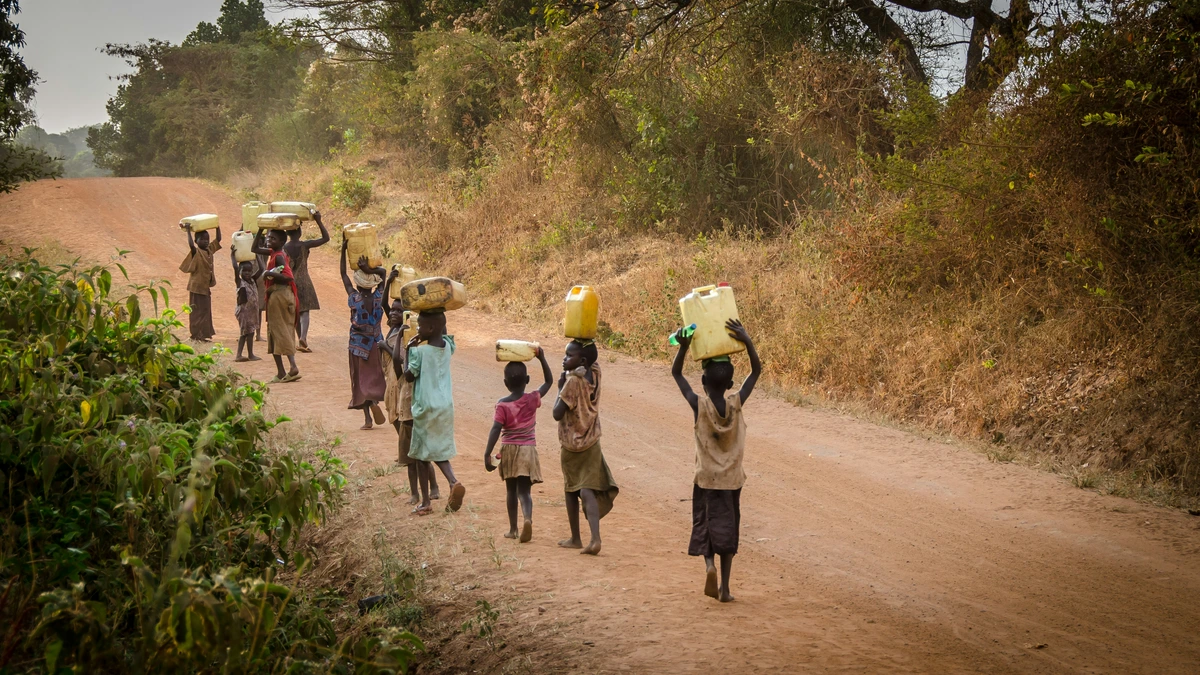
No fewer than 5.2 million children from nomadic communities are currently out of school across Nigeria, with occupational mobility, climate change, and limited access to conventional schools identified as the primary drivers of the exclusion.
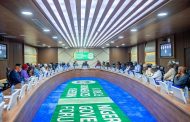
Dr. Umar Ardo, Director of Extension Education and Skills Development at the National Commission for Nomadic Education, disclosed this on Monday during a stakeholders engagement organised by the National Commission for Almajiri and Out of School Children Education in Kaduna.
The affected children include those of nomadic pastoralists, migrant fishermen, and migrant farmers whose lifestyles make regular school attendance difficult or impossible.
What the commission is saying
Ardo said recent research conducted by the commission across six states and the Federal Capital Territory identified more than 61,000 nomadic out-of-school children in Jigawa, Gombe, Niger, Enugu, Cross River, Oyo, and the FCT alone.
He said urgent measures were needed, particularly through alternative learning pathways suited to nomadic communities.
- He identified the Accelerated Basic Education Programme as one approach capable of helping children complete basic education within three years instead of the conventional six, with equivalent learning outcomes that allow learners to progress to secondary school or acquire vocational skills.
Ardo said the commission was working with state governments and development partners to reduce the number of nomadic out-of-school children, including developing strategies with states like Kaduna to establish learning centres closer to nomadic communities.
- “Children who could not proceed to secondary education should receive vocational training relevant to their communities and interests,” he said, listing livestock rearing, fishing, and farming as skills that could be developed into sustainable livelihoods.
Ardo stressed that reliable data was central to any effective intervention, saying governments and stakeholders needed accurate information on the location and educational needs of nomadic children before they could engage parents, communities, and local authorities effectively.
He described education as a collective responsibility shared across federal, state, and local governments, alongside non-governmental organisations, and urged all stakeholders to design interventions that reflected the specific circumstances of nomadic communities rather than applying conventional approaches.
Get up to speed
Nigeria’s out-of-school children crisis has remained a major education challenge, with recent estimates varying depending on the age group and population covered.
- In March, the Federal Government put the number of out-of-school children at about 15 million and said Nigeria would require roughly $345 million annually to reintegrate them into education and equip them with essential skills.
- The government has since pursued several interventions targeting vulnerable and hard-to-reach children.
- Earlier, in April 2025, it launched the Lumina Programme to provide foundational literacy and numeracy education for children in underserved communities, particularly girls.
- A year later, in May 2026, a restructuring of the Federal Government and World Bank-backed education programme retained a target of bringing 2.86 million out-of-school children into formal and non-formal literacy programmes by 2029.
The Federal Government has also moved to strengthen education data systems.
In June, the Ministry of Education announced plans for a digital platform that would use individual learner records to track school enrolment and identify out-of-school children nationwide, addressing years of fragmented education data that has limited effective planning and intervention.
What you should know
The out-of-school children crisis extends well beyond Nigeria.
Earlier this year, Nairametrics reported that UNESCO revealed that the number of out-of-school children and young people worldwide has risen to 273 million, marking the seventh consecutive year of increase.
The agency disclosed this in its 2026 Global Education Monitoring (GEM) Report, highlighting growing challenges in access to education across regions.

1SUBSCRIBE TO OUR NEWSLETTER NOW
Support MATAZ ARISING’ journalism of integrity and credibility.
Good journalism ensure the possibility of a good society, an accountable democracy, and a transparent government.
We ask you to consider making a modest support to this noble endeavour.
TEXT AD: To advertise here – Email ad@matazarising.com
LATEST POSTS
-
2027: Kwankwaso ‘jittery’ as Yari emerges campaign DG, group alleges
MaTaZ ArIsInGDallas, Texas A grassroots mobilisation group within the All Progressives Congress (APC), Daga Titi Zuwa Titi, has described former Kano State Governor, Senator Rabiu Kwankwaso’s recent comments on the appointment of Senator Abdul’aziz Yari as Director-General of the APC Presidential Campaign Council as evidence that the opposition is unsettled by Yari’s emergence. In a…
-
Traders allege political undertone in the closure of Ladipo and Computer Village markets
MaTaZ ArIsInGDallas, Texas By Temi Salako On February 8, 2026, Lagos State sealed Ladipo Auto Spare Parts Market for the second time in three years, citing refuse on the highway median and illegal street trading. Commissioner Tokunbo Wahab announced it on X with the hashtag Zero Tolerance Lagos. Four months later, one of Lagos’s most…
-
El-Rufai Faces Fresh Allegation, Accused of Persecuting Christians
MaTaZ ArIsInGDallas, Texas Former Minister of Aviation, Femi Fani-Kayode, has renewed his criticism of former Kaduna State Governor Nasir El-Rufai, accusing him of persecuting Christians and marginalising Christian communities during his eight years in office. Fani-Kayode made the fresh allegations while speaking about the growing political disagreement between El-Rufai and his successor, Governor Uba Sani. He claimed…