
By Temi Salako
On February 8, 2026, Lagos State sealed Ladipo Auto Spare Parts Market for the second time in three years, citing refuse on the highway median and illegal street trading. Commissioner Tokunbo Wahab announced it on X with the hashtag Zero Tolerance Lagos. Four months later, one of Lagos’s most prominent political figures walked back into that same market to buy a spare part for his car, and what happened next said more about Ladipo’s real predicament than any sanitation notice could.
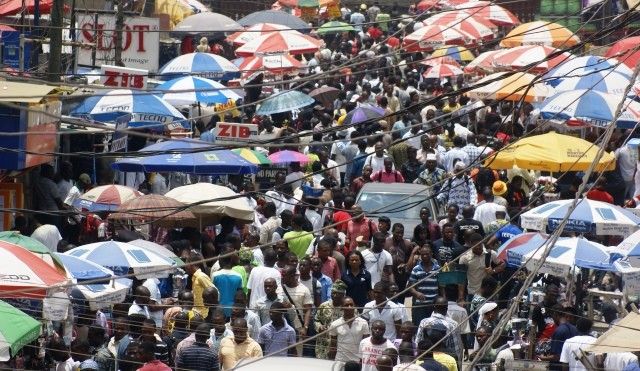
Start with what the government says, because it deserves a fair hearing. Ladipo, sprawled across Mushin along the Apapa-Oshodi Expressway, has genuinely struggled with waste for years, and the 2026 closure followed the same script as September 2023: seal the market, demand remediation, reopen once conditions improve. Computer Village in Ikeja tells a parallel official story. Permanent Secretary Gbolahan Oki has said repeatedly that Ikeja was designated residential, its plan distorted by unplanned commercial sprawl, and that the fifteen-hectare Katangowa ICT and Business Park, complete with banks, a fire station, and a police post, will finally give the market room to breathe. Both explanations are coherent. Neither is the whole story.
Follow the money first. The land Computer Village sits on, in the heart of Ikeja, is among the most valuable commercial real estate in Lagos State. The relocation plan dates to 2006 under then-Governor Bola Tinubu, was revived in 2017, concessioned to Bridgeways Global Projects Limited, and thrown into chaos in 2024 when the state announced it had quietly terminated Bridgeways’ contract two years earlier, without telling either the company or the traders who had already paid into shop allocations. Bridgeways’ managing director, Jimmy Onyemenam, disputed the termination, and in June 2026 a Lagos State High Court ruling went his company’s way, reviving the project and reportedly affirming claims that Bridgeways had sunk 8.6 billion naira into design and site works. In one account of the dispute, Bridgeways’ camp has framed its treatment as bordering on ethnic profiling. Whatever the merits of that specific claim, the underlying fact stands: a nineteen-year-old relocation scheme, over a fifteen-hectare parcel now sold in monthly instalments of roughly 116,000 naira, has spent two decades as a prize fought over by government offices and private concessionaires while the traders it supposedly serves have been informed, disengaged, and re-engaged along the way.
Ladipo’s land tells a similar story, less legally documented but no less telling. Commercial plots along the Oshodi-Apapa corridor that hems in Ladipo have recently listed for as much as 7.6 billion naira for two and a half hectares. A market occupying that frontage, however chaotic its waste management, sits on some of the most expensive commercial real estate the Lagos mainland has to offer. Every closure, whatever its stated justification, reminds everyone watching that the state, not the traders who built the market’s value over half a century, holds the final word on who trades there and under what terms.
Then there is the layer no official statement will name directly, but that anyone who has spent time in these markets recognises instantly. Ladipo, Computer Village, Alaba International, and Jankara have for decades been dominated by traders of southeastern extraction, a pattern documented as far back as Daily Trust’s 2021 investigation into Igbo commercial influence across Nigeria’s states. Ladipo’s own history, traced in academic accounts of the market’s evolution from the 1950s onward, describes it explicitly as a vote bank, its Central Executive Committee mobilising traders behind Governor Babatunde Fashola and President Goodluck Jonathan in successive elections. That political weight has periodically curdled into friction. In 2013, Igbo traders rejected a babaloja imposed on the market by local government, insisting Yoruba traders formed only a visible minority there. In 2020, a viral dispute saw Yoruba traders accuse Igbo counterparts of using purchasing power to buy up land across Lagos and push out original occupants. This past July, a group calling itself NATA staged a protest in Mushin alleging that Igbo traders and residents had taken over land once allocated to Yoruba artisans by the late Governor Lateef Jakande.
The most telling episode came in June 2026, weeks after that year’s closure had been lifted. Joe Igbokwe, a senior APC chieftain and long-time critic of the secessionist Indigenous People of Biafra, visited Ladipo to buy vehicle parts and was recognised by traders and youths who gathered around him, shouting and jeering, in a confrontation market leaders had to defuse. Igbokwe insisted he had not been touched, but the line he used was unusually candid for a politician: had anyone laid a hand on him, he said, Ladipo Market could have faced closure for a year. That is not a sanitation threat. It is an admission, from inside the ruling party, that market closure functions in Lagos as leverage over a community, and that Ladipo’s traders understand this as well as the government does.
None of this means the environmental complaints are fabricated, or that every relocation plan is a land grab in disguise. Traders themselves are divided on Katangowa. The Nigeria Computer Society’s Lagos chairman has called the site an opportunity to build an entirely new business district, and one trader quoted by Techparley, Blessing Okoro, said she would welcome the move if it meant reliable power and lower rent than Ikeja demands. Others point to the site’s history of missed deadlines, and have publicly demanded direct land allocation rather than dependence on a contractor whose fortunes, as the 2024 termination and 2026 court reversal both proved, can turn on politics rather than performance. Reliable, independently verified rent figures for Katangowa are not yet publicly available, a gap that itself tells traders how prepared the receiving site really is.
So is Lagos still a place to plant a business for a lifetime, or has it become a market of entries and exits priced for whoever holds the right paper at the right political moment. The land under Ladipo and Computer Village have never stopped appreciating in value. What has changed is the confidence that occupying it, building it, and voting in its interest for decades still counts for as much as a concession agreement or a commissioner’s morning post on X. Somebody is sitting on Lagos. Increasingly, it is not the people who built these markets with their hands.

1SUBSCRIBE TO OUR NEWSLETTER NOW
Support MATAZ ARISING’ journalism of integrity and credibility.
Good journalism ensure the possibility of a good society, an accountable democracy, and a transparent government.
We ask you to consider making a modest support to this noble endeavour.
TEXT AD: To advertise here – Email ad@matazarising.com
LATEST POSTS
-
Why President Tinubu must continue till 2031
MaTaZ ArIsInGDallas, Texas The 2014 National Conference, inaugurated by President Goodluck Jonathan, was tasked with addressing deeply entrenched issues that had historically hindered Nigeria’s development and unity. The conference identified several key structural, political, and socio-economic problems that required urgent reform. The primary problems identified included: Key Recommendations to Address Problems: Remember, past presidents had…
-
Peter Obi’s Inhumanity To Peter Obi
By Olabode Opeseitan MaTaZ ArIsInGDallas, Texas Nigeria has a long tradition of politicians destroyed by their enemies. Mr. Peter Obi may be the first to be undone, repeatedly and almost cheerfully, by himself. Ahead of 2027, the man who built a movement on the promise of competence has become its own best argument against it.…
-
Nigeria needs 554,353 personnel for state police – Abiodun
MaTaZ ArIsInGDallas, Texas The Chairman of the Southern Governors’ Forum and Ogun State Governor, Dapo Abiodun, on Thursday, said Nigeria needed an additional 554,353 personnel to adequately staff the proposed state police system. He disclosed this while delivering the keynote address at the posthumous 70th birthday colloquium of the late former Ondo State Governor, Oluwarotimi…