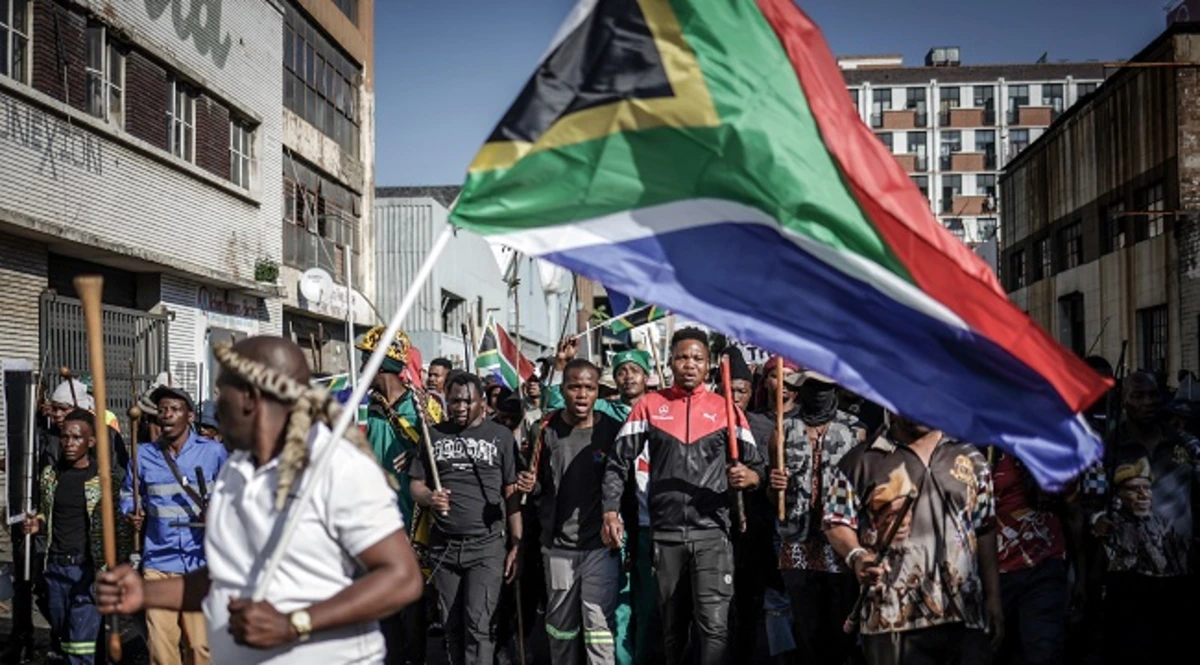
Nigeria has issued a sharp diplomatic rebuke to South Africa over recurring attacks against its citizens, telling Pretoria directly that the violence has followed a documented pattern spanning three decades.
Nigeria’s Minister of State for Foreign Affairs, Ambassador Sola Enikanolaiye, delivered the message on Monday during a meeting in Abuja with South Africa’s Minister of International Relations and Cooperation, Ronald Lamola.
The meeting, directed by President Bola Tinubu, came as the total number of Nigerians evacuated from South Africa since the latest wave of attacks reached approximately 1,500.
What they are saying
Enikanolaiye laid out a detailed historical record of anti-immigrant violence in South Africa, framing the current attacks not as isolated incidents but as part of a recurring pattern.
- “We’ve seen a pattern emerge as early as 1995, in 1998, in 2006, in 2015, in 2016, 2019, 2021, 2024, and 2026,” he said.
- “It is on record that from 2022 alone, 98 Nigerians have died in mob actions, in hate-related actions that we have called Afrophobia, because we found that the primary victims of this ugly situation are Africans, and Nigerians in particular,” he added.
He pushed back directly against South Africa’s framing of the violence as a response to immigrant criminality.
- “If there are criminals, as you alluded to them, we reiterate that the solution is not to kill them. If someone is, quote-unquote, a criminal for drug trafficking, there are rules and regulations: get them arrested, prosecuted, and jailed,” he said.
Enikanolaiye raised the issue of state complicity directly, saying that police have been observed watching without intervening.
- “We could see some mob actions where we saw the police watching as if they were helpless to address this situation, which to us raises issues of state responsibility. They raise issues of complicity if the state authorities are not able or are unwilling to tackle these challenges in a manner that offers some confidence to citizens and foreigners that, indeed, they are safe to remain in the country,” he said.
The minister’s response follows Lamola’s defence of Pretoria’s handling of the crisis at the meeting.
- “President Ramaphosa and the government he leads have been outspoken against any intolerance,” Lamola said.
- He added that South Africa has the right to “deal decisively with irregular migration and undocumented immigrants, including acts of criminality.”
South Africa’s delegation cited “criminality” from immigrants, including drug peddling and wire fraud, as context for the anti-immigrant sentiment driving the protests.
Get up to speed
President Tinubu, earlier this month, joined the call against xenophobic attacks on Nigerians and other foreigners in South Africa, urging African leaders to lead a united response.
- “Nigeria condemns, in the strongest terms, the recent attacks on its citizens and other Africans in the Republic of South Africa,” Tinubu said, speaking through Vice President Kashim Shettima.
- “As already stated by His Excellency, the President of Ghana, ECOWAS should present a united voice in this condemnation and table the matter before the next session of the Authority of Heads of State and Government of the African Union,” he added.
It would be recalled that in the wake of widespread outrage against xenophobic attacks against foreigners in South Africa, the country itself admitted feeling the heat from all the outbursts.
Minister of Justice and Constitutional Development, Mmamoloko Kubayi, acknowledged that South Africa’s ongoing anti-migrant crisis is beginning to have economic repercussions beyond its borders.
Kubayi even disclosed that some South African artists have lost performance bookings in other African countries as a direct consequence of the international backlash over the crisis.
- “Majority of South African artists perform on the continent and many of them are seeing their gigs being cancelled,” she revealed.
What you should know
The xenophobic crisis in South Africa has irked many prominent including Air Peace CEO, Allen Onyema.
The Air Peace boss called on Nigerians to halt investments in South Africa and boycott the country as a response.
Onyema advocated economic measures against South Africa, while stressing that retaliation should not involve violence or actions that could harm South African businesses operating in Nigeria.

1SUBSCRIBE TO OUR NEWSLETTER NOW
Support MATAZ ARISING’ journalism of integrity and credibility.
Good journalism ensure the possibility of a good society, an accountable democracy, and a transparent government.
We ask you to consider making a modest support to this noble endeavour.
TEXT AD: To advertise here – Email ad@matazarising.com
LATEST POSTS
-
Oil wells: Churches deny claim against Kumuyi, Adeboye, Oyedepo
MaTaZ ArIsInGDallas, Texas By Olufemi Adediran The Redeemed Christian Church of God, Living Faith Church Worldwide and the Deeper Christian Life Ministry have reacted to an allegation that former President Olusegun Obasanjo allocated oil wells to their leaders during his administration. The allegation was made by the founder and President of the Ministers’ Prayer Network, Rev.…
-
How Buhari’s Advice Cost Me APC Presidential Ticket, Handed Victory To Tinubu — Amaechi Reveals
MaTaZ ArIsInGDallas, Texas Former Minister of Transportation, Rotimi Amaechi, has blamed his defeat to President Bola Tinubu in the 2022 All Progressives Congress (APC) presidential primary on his decision to follow the advice of former President Muhammadu Buhari. Amaechi said Buhari had promised to endorse him as the APC presidential candidate but advised him against…
-
2027: Obi is coming to stop the erosion of Nigeria’s commonwealth, NDC tells Tinubu
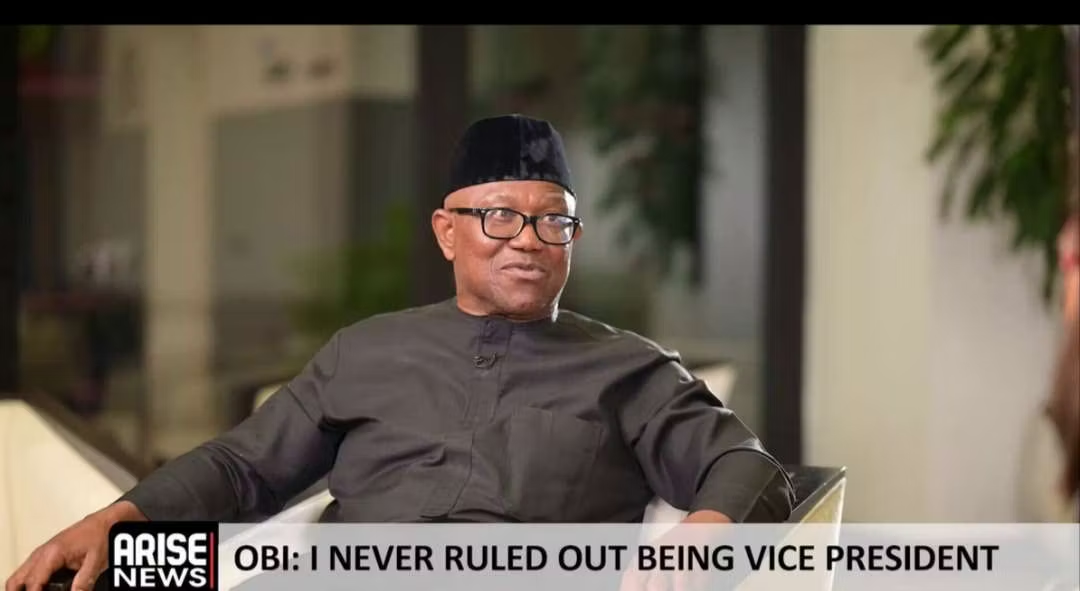
MaTaZ ArIsInGDallas, Texas Ahead of the January 16, 2027 presidential election, the Nigeria Democratic Congress (NDC) has said its presidential candidate, Peter Obi, is coming to stop what it described as the erosion of Nigeria’s commonwealth if elected president. The party said Obi and his running mate, Senator Rabiu Kwankwaso, were determined to address the…