

President Bola Ahmed Tinubu’s governance philosophy aligns more closely with democratic socialism than pure capitalism, Convener of the Bola Ahmed Tinubu Ideological Group (BAT-IG), Bamidele Atoyebi, has said.

Atoyebi made the assertion in a policy analysis in which he challenged the widespread perception that the Tinubu administration is driven solely by capitalist principles because of reforms such as the removal of fuel subsidy and the unification of the foreign exchange market.
According to him, while the administration has embraced market-oriented reforms to address economic distortions, it has also expanded state-backed social welfare interventions aimed at protecting vulnerable citizens and improving living conditions.
He explained that capitalism traditionally advocates minimal government intervention in economic affairs, allowing market forces to determine outcomes, whereas democratic socialism combines market efficiency with active state participation in social welfare and economic protection.
Atoyebi argued that Tinubu’s policies fit the latter description, citing government initiatives in housing, education, healthcare, labour welfare and social intervention programmes.
Among the programmes highlighted was the administration’s housing initiative, which seeks to deliver more than 100,000 housing units nationwide.
He said progress had already been recorded on over 20,000 units aimed at expanding access to affordable housing.
In the education sector, Atoyebi pointed to the Nigerian Education Loan Fund (NELFUND), which provides interest-free loans to students in tertiary institutions. He described the scheme as a major intervention designed to expand access to higher education regardless of financial background.
He also cited loan facilities for lecturers and other academic staff as part of broader efforts to strengthen the education sector.
Also Read: Oshiomole defends N210trn NNPC Ltd probe
The analyst further referenced government investments in healthcare and support for free basic education for vulnerable groups as evidence of the administration’s commitment to social welfare.
On workers’ welfare, Atoyebi noted recent salary adjustments for civil servants and improvements in welfare packages for security personnel.
He said monthly allowances for frontline security operatives had increased from about N20,000 to N50,000, while military barracks were being renovated and new housing units constructed for service personnel.
He also highlighted reforms in military welfare, including transportation support for personnel posted to new duty stations and other measures aimed at improving the living conditions of members of the armed forces and their families.
Addressing concerns over the administration’s tax policies, Atoyebi said the government’s tax reform agenda is designed to eliminate multiple taxation, reduce the burden on small businesses and exempt many low-income Nigerians from paying taxes.
He argued that the reforms would boost revenue generation through improved collection mechanisms and broader compliance among higher-income earners, thereby providing additional resources for welfare programmes, infrastructure and public services.
Atoyebi also cited conditional cash transfers, healthcare subsidies and investments in roads, schools and hospitals as examples of interventions that, in his view, depart from a strictly capitalist model.
He maintained that the administration’s economic reforms were intended to eliminate unsustainable expenditures and address systemic inefficiencies while redirecting savings towards social protection programmes and development projects.
According to him, the removal of fuel subsidy and other market reforms reflect economic pragmatism rather than an abandonment of social welfare objectives.
He added that the government has continued to provide support in key sectors, including electricity, while pursuing broader economic stabilisation measures.
Atoyebi concluded that the administration’s approach combines market competition with extensive state-backed welfare programmes, describing it as a modern democratic socialist framework aimed at promoting economic growth while protecting vulnerable citizens.

1SUBSCRIBE TO OUR NEWSLETTER NOW
Support MATAZ ARISING’ journalism of integrity and credibility.
Good journalism ensure the possibility of a good society, an accountable democracy, and a transparent government.
We ask you to consider making a modest support to this noble endeavour.
TEXT AD: To advertise here – Email ad@matazarising.com
LATEST POSTS
-
Nigeria rejoins JP Morgan bond index after 11 years

JP MORGAN
-
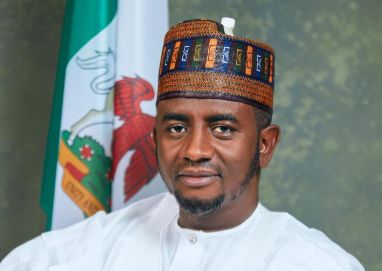
Bauchi senator denies banditry allegations, presents himself for DSS probe
Senator Shehu Buba Umar
-
PETER OBI AND THE DANGEROUS POLITICS OF FANTASY

By DAN Osa-Ogbegie, Esq. MaTaZ ArIsInGDallas, Texas There is something fundamentally troubling about the Peter Obi presidential proposition. After several years of relentless presidential campaigning, Nigerians are still being invited to believe far more about Peter Obi than Peter Obi has demonstrated about himself. His candidacy has become an extraordinary exercise in political fantasy. A…