
The Governor of the Central Bank of Nigeria, Olayemi Cardoso, has cautioned against renewed pressure on the apex bank to return to intervention programmes previously deployed by the institution, warning that such measures distorted the bank’s financial position and weakened the effectiveness of monetary policy.
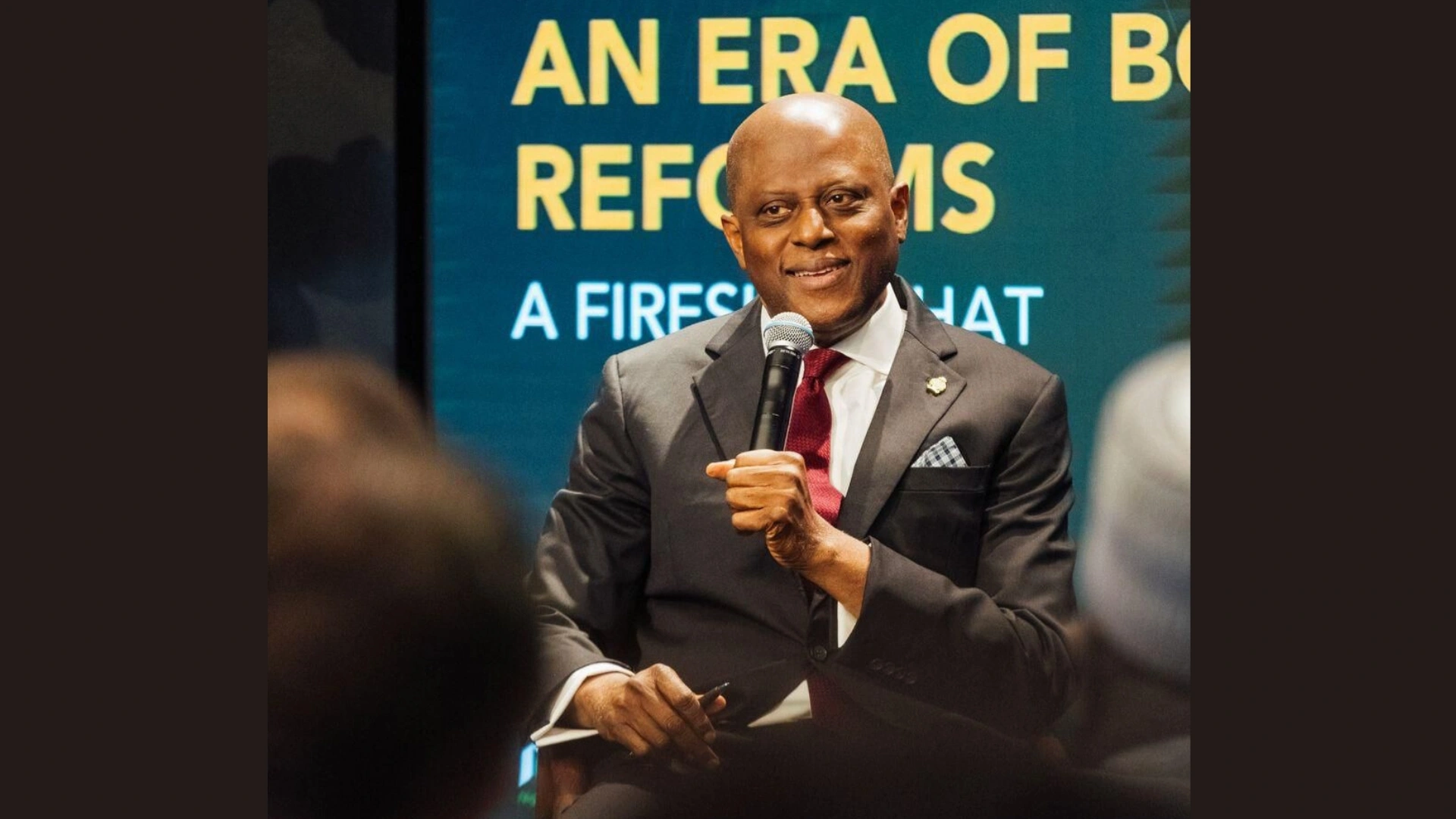
Cardoso spoke on Thursday at the opening session of the Monetary Policy Committee workshop held in Abuja, where participants discussed strategies for strengthening monetary policy effectiveness towards achieving sustainable macroeconomic stability.
According to a statement issued on Sunday, the CBN governor said the credibility being gradually restored to the apex bank over the past two and a half years was largely due to its return to orthodox monetary policy tools anchored on transparency, discipline and market confidence.
“The credibility we are now rebuilding and the progress achieved over the last two and a half years stem largely from returning to orthodox monetary policy anchored on transparency, policy discipline and market confidence,” Cardoso said.
He warned that intervention programmes implemented in the past weakened policy transmission mechanisms and blurred the line between fiscal and monetary responsibilities.
Cardoso stressed that the apex bank would continue to prioritise transparency, evidence-based policy decisions and institutional reforms aimed at sustaining macroeconomic stability.
The governor said the CBN had recorded significant progress in strengthening internal processes and improving policy coordination, noting that decision-making within the bank was now increasingly guided by data analysis, technical evaluations and structured deliberations.
He added that the apex bank had also improved communication with investors, businesses, financial markets and the public in a bid to make monetary policy direction more predictable and easier to understand.
According to him, the reforms form part of the bank’s medium-term transition towards a clearer inflation-targeting framework that places price stability at the centre of monetary policy.
“These efforts are part of our medium-term transition towards a clearer inflation-targeting framework that places price stability at the centre of monetary policy,” he said.
Cardoso explained that the transition would require deeper institutional reforms, stronger collaboration among economic institutions and sustained technical work to ensure long-term success.
Reflecting on the challenges inherited by the current management, the CBN governor said the bank faced serious institutional and policy difficulties at the beginning of the administration.
He noted that the apex bank’s autonomy had weakened, confidence in monetary policy had declined and there was excessive dependence on non-conventional monetary tools.
Cardoso also described the foreign exchange market at the time as opaque and inefficient, adding that weak coordination between fiscal and monetary authorities reduced the overall effectiveness of economic policies.
“These structural issues contributed to rising inflation, exchange-rate instability and declining investor confidence,” he said.
Despite the challenges, the economist said reforms introduced by the current management had started yielding positive results.
According to him, the CBN has restored a more orthodox monetary policy framework under the current MPC structure, with stronger reliance on traditional policy tools and the Monetary Policy Rate as the primary instrument for controlling inflation and managing economic expectations.
He also said improvements in liquidity management, policy communication and forward guidance had increased transparency and strengthened investor confidence in the economy.
While acknowledging that inflation remains elevated and requires close monitoring, Cardoso said there were early signs of moderation.
He added that transparency in the foreign exchange market had improved price discovery and reduced volatility.
The governor further stated that ongoing reforms and improved policy coordination had strengthened Nigeria’s resilience against external shocks, including recent geopolitical tensions in the Middle East.
Earlier, the CBN Deputy Governor in charge of Economic Policy, Muhammad Sani Abdullahi, said the workshop was organised to promote technical exchange, structured dialogue and collaborative engagement on monetary policy issues.
“The workshop reflects the CBN’s commitment to continuously improving policy formulation and implementation,” Abdullahi said.
He noted that the discussions were taking place at a time when monetary policy decisions were increasingly influenced by domestic economic realities, global spillovers and heightened uncertainty.

1SUBSCRIBE TO OUR NEWSLETTER NOW
Support MATAZ ARISING’ journalism of integrity and credibility.
Good journalism ensure the possibility of a good society, an accountable democracy, and a transparent government.
We ask you to consider making a modest support to this noble endeavour.
TEXT AD: To advertise here – Email ad@matazarising.com
LATEST POSTS
-
Foodstuffs now cheaper, Presidency declares

MaTaZ ArIsInGDallas, Texas …accuses TV presenters of promoting opposition narratives The Presidency on Friday accused the media of promoting false narratives pushed by opposition parties regarding the state of the economy. Bayo Onanuga, Special Adviser on Information and Strategy to the President, made the claim in a post on his official X handle, @oonanuga1956. The…
-
Atiku campaign accusses Kwankwaso of working for Tinubu, plotting opposition-split

MaTaZ ArIsInGDallas, Texas By : Andrew Oota THE African Democratic Congress Presidential Campaign Council (ADC-PCC) has berated Senator Rabiu Musa Kwankwaso over his call for former Vice President Atiku Abubakar to step down for Mr Peter Obi, describing the statement as reckless, self-serving and a desperate attempt to advance President Bola Ahmed Tinubu’s political interests…
-
FULL LIST: 65 Nigerian projects seeking $78.5bn in investment
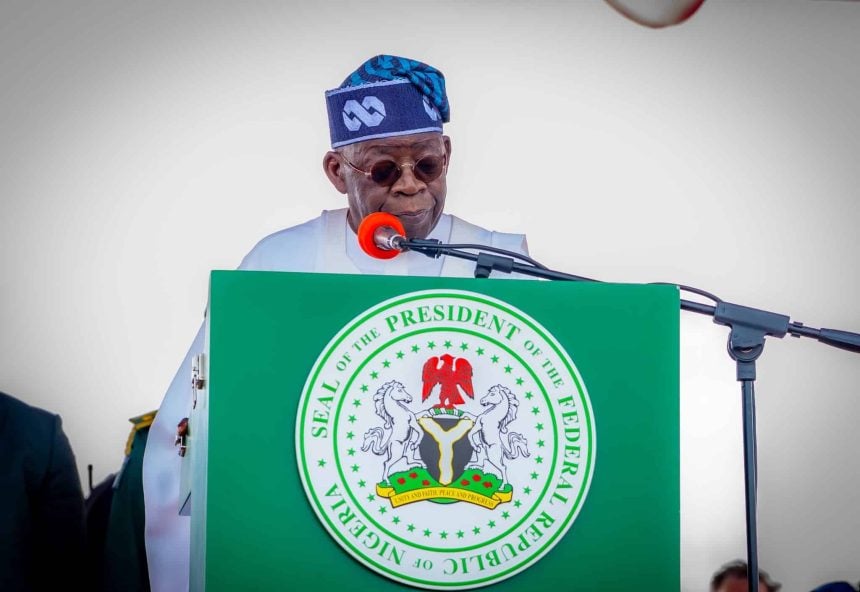
MaTaZ ArIsInGDallas, Texas President Bola Tinubu has unveiled 65 investment projects requiring $78.5bn in funding across five sectors of Nigeria’s economy, with the proposed investments projected to generate 366,763 jobs. The breakdown of the projects listed on the Federal Government’s Projects Nigeria investment portal shows that the oil, gas and power sector accounts for 25…