
A proposed law that would shift control of natural resources like oil fields, minerals, and natural gas from the federal government to state governments in Nigeria has passed its second reading in the House of Representatives.

This bill seeks to amend the 1999 Constitution to change how Nigeria manages its resources, giving states more independence in deciding how to explore, manage, and earn money from the natural assets within their borders.
The bill, titled “A Bill for an Act to Alter the Provisions of the Constitution of the Federal Republic of Nigeria, 1999 to Decentralise the Governance of Natural Resources in the Federal Republic of Nigeria to transfer Mines and Minerals, Including Oil Fields, Oil Mining, Geological Surveys and Natural Gas from the Exclusive Legislative List to the Concurrent Legislative List and for Related Matters (HB. 200, 1310, 1446 & 1546)” was sponsored by Abbas Tajudeen, the House speaker and three others.
The ICIR reports that currently, certain natural resources, such as mines, minerals, oil fields, oil mining, geological surveys, and natural gas, are solely managed by the federal government.
They are on what’s called the “Exclusive Legislative List,” meaning only the federal government makes laws and decisions about them. Part 1 of the Second Schedule (Exclusive Legislative List) of the 1999 Constitution, Item 39 currently states: “Mines and minerals, including oil fields, oil mining, geological surveys, and natural gas.” This provision gives the federal government exclusive control over these resources, meaning that states have no direct authority to regulate, tax, or manage them.
Therefore, this new bill wants to remove Item 39 from the Exclusive List and put it on the “Concurrent Legislative List.” If it’s on this list, both the federal and state governments would have the power to make laws and regulate how resources are extracted and managed.
If the bill becomes law, it could mean states can issue licences for mining and oil exploration, control how resources are taken out of the ground, and collect money from these activities without needing to go through the federal government.
Click HERE to comment on this story ⬇
It’s worth noting that a similar bill was suggested in 2016 but didn’t progress beyond the second reading. Some people argue that giving states more control could create inequalities, with richer oil-producing states benefiting much more than others.
Having passed this stage, the bill will now go to the Committee Stage, specifically the committee responsible for constitutional amendments. If approved there, it will return to the House for a third reading before being sent to the Senate for their agreement.
For the bill to become law, it also needs to be approved by two-thirds of the 36 State Houses of Assembly, as required for changes to the constitution under Section 9 of the 1999 Constitution.
The ICIR reports that if the bill eventually becomes law, it’s expected to increase the amount of money states can generate. Many states could grow their income without being restricted by the federal government.
A similar approach was taken when the President approved the Electricity Act 2023. This law gives states more power to improve electricity supply within their own borders and rely less on the national grid
The ICIR reported that the Electricity Act consolidates all legislation dealing with the electricity supply industry to provide an ideal institutional framework to guide the post-privatisation phase and encourage private sector investments in the sector.

SUBSCRIBE TO OUR NEWSLETTER NOW
Support MATAZ ARISING’ journalism of integrity and credibility.
Good journalism ensure the possibility of a good society, an accountable democracy, and a transparent government.
We ask you to consider making a modest support to this noble endeavour.
TEXT AD: To advertise here – Email ad@matazarising.com
LATEST POSTS
-
Nigeria’s Economy Under Tinubu: The First Phase Was Stabilisation, Now Comes the Second Phase
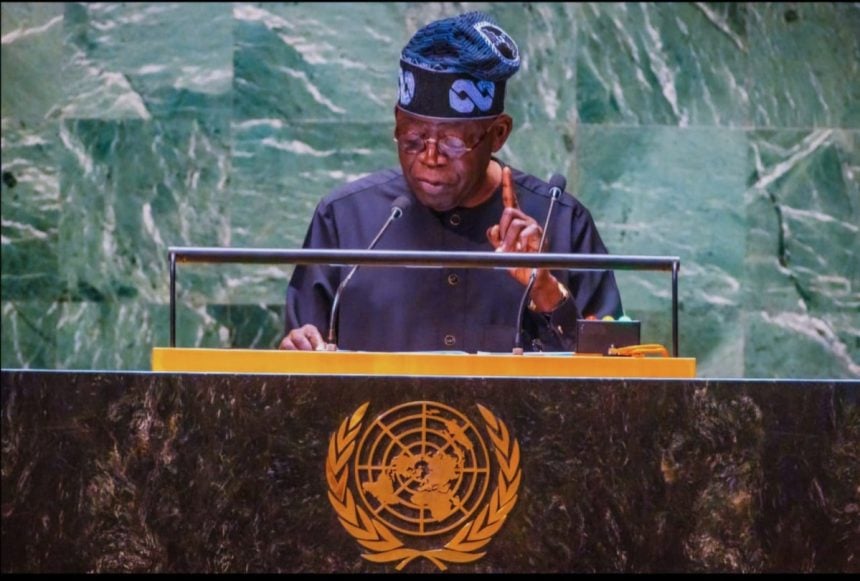
By Idowu Ephraim Faleye +2348132100608 MaTaZ ArIsInGDallas, Texas Nigeria has moved from trying to save its economy to the next difficult task of making the economy work for ordinary people. The major economic figures are improving. Government revenue has increased, and state governments are receiving much more money than they received before. Yet many Nigerians…
-
El-Rufai Has Spent Seven Months In Detention Without Conviction – Emir Sanusi
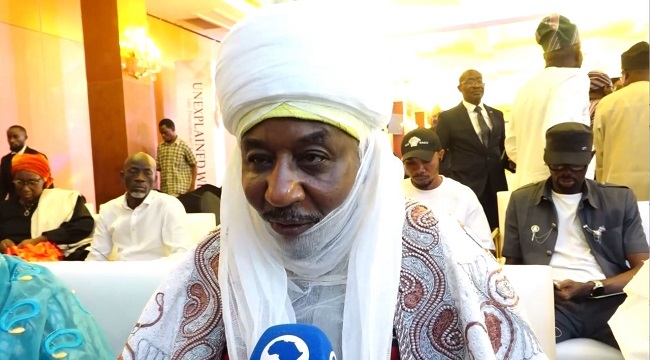
MaTaZ ArIsInGDallas, Texas Sanusi said Nigeria already has institutions and courts responsible for investigating and prosecuting corruption cases, but alleged that political considerations sometimes influence how such cases are handled. The Emir of Kano, Muhammadu Sanusi II, has raised concerns over the continued detention of former Kaduna State Governor, Nasir El-Rufai, saying he has spent…
-
New world record for longest dance marathon set by Nigerian dancer

MaTaZ ArIsInGDallas, Texas Benjamin Daniel, known as Ben Dancer, danced continuously for 168 hours. LAGOS, Nigeria — A Nigerian dancer has broken the world record for the longest individual dance marathon. Benjamin Daniel, known as Ben Dancer, danced continuously for 168 hours. The 33-year-old began the attempt last Tuesday. The previous record of 127 hours…