
The President of Dangote Industries Limited, Aliko Dangote, stated that the refinery project, like other projects in the past, is not for Nigeria alone.
The Dangote Petroleum Refinery has enough Premium Motor Spirit, otherwise known as petrol, in storage to sufficiently meet the local needs of Nigeria, according to the President of Dangote Industries Limited, Aliko Dangote.
Speaking at the weekend, Dangote disclosed that the oil refinery has “more than half a billion litres of petroleum and over 600 billion Naira worth of products in its tanks.
Dangote said, “…as we speak right now we have more than half a billion litres. The Refinery is producing enough refined products, like gasoline, diesel, and kerosene, to meet 100 per cent of Nigeria’s requirements.
Speaking after a tour of the Refinery complex by a Zambia Government delegation, led by the country’s Minister of Energy, Mr. Makozo Chikote, Dangote stated that the refinery project, like other projects in the past, is not for Nigeria alone.
“This refinery is not only for Nigeria; it is for Africa. We must sustain the African Continental Free Trade Area (AfCFTA) deal. We are trying to see how we trade with other African countries.
The Zambian Minister of Energy said his takeaway from the Dangote Refinery working visit was that the President, Aliko Dangote, is truly focused on the bigger picture for Africa.
Chikote, who led a delegation of energy experts to the Dangote Petroleum Refinery to partner Zambia on energy solutions, expressed satisfaction and readiness to work with the African manufacturing giant.
After a tour of the Dangote complex at the Free Trade Zone, Ibeju Lekki, starting from the Single Point Mooring to the Dangote Jetty, the biggest fertiliser plant in Africa and the 650,000bpd largest single-train refinery in the world, the Minister enthused that the presentation by the Vice President, Oil and Gas of Dangote Industries Limited, Mr. Edwin Devakumar, made their hearts “jump”. He stated that the presentation speaks to the challenges of his country, Zambia.
The energy minister added, “In Zambia, we created an environment for the private sector to participate in the growth and development of our country. Currently, 100 per cent of our petroleum is done by the private sector.
“We are targeting increased productivity in mining, agriculture, and other sectors. Your presentation is an immediate solution to our energy needs. We are trying to promote competition among our private players
“We are looking at Dangote coming on board, which would lead to efficient, reliable, quality, and competitive products, and we want these done like yesterday.”
“Coming to the Dangote Petroleum Refinery, we have learned so many advantages of bringing many players for competition, which has improved the lives of the citizens.”
According to him: “From what we have seen, we need to promote trade within Africa to promote each other. We need these countries together to make Africa efficient, and a reliable trade hub.
“We have seen here that we can learn from what Dangote has done, and this would lead Africa and Africans to stand on their feet and not depend on overseas support in terms of trade. I believe going forward that people have learned a few lessons. The one lesson I have learned from this visit is that Dangote looks at the bigger picture for Africa.”
Another member of the Zambia delegation, Samuel Maimbo, the Vice President of Budget, Performance Review, and Strategic Planning at the World Bank Group, presently campaigning for the presidency of the African Development Bank (AfDB), explained that there is not enough development aid to develop Africa.
“There is also not enough government funding to develop Africa. The only way we can finance Africa’s growth at a pace and scale that solves our problem is by working through the private sector, which is why we are here today, to learn and to see what an ambitious programme looks like,” he stated.
He added that it is only the private sector that can help develop the continent of Africa.
The Vice President of Dangote Industries Limited, Edwin Devakumar stated that the Refinery produces the best quality products as its core business strategy.
“The project concept was to process the crude from Nigeria and add value. But we also wanted to provide some flexibility to process most of the African crudes and some of the Middle Eastern crudes,” Edwin said.
He added “In another concept, what we did was maximum value extraction. That is a process where every barrel of crude which goes in, the value addition should be the best.”
According to Edwin, “the Refinery can meet all our requirements. 44 per cent can meet the entire requirements of Nigeria, and 56 per cent of the production would be exported. Every day, we produce lighter products of 104 million litres; 57 million litres of petrol every day; 20 million litres of jet fuel; and 27 million litres of diesel production.
“The local consumption is just around 46 million litres, and the remaining 58 million litres will be exported daily,” he added.

SUBSCRIBE TO OUR NEWSLETTER NOW
Support MATAZ ARISING’ journalism of integrity and credibility.
Good journalism ensure the possibility of a good society, an accountable democracy, and a transparent government.
We ask you to consider making a modest support to this noble endeavour.
TEXT AD: To advertise here – Email ad@matazarising.com
LATEST POSTS
-
Peter Obi Faces Petition for Allegedly Travelling with Passenger Using Fake Identities
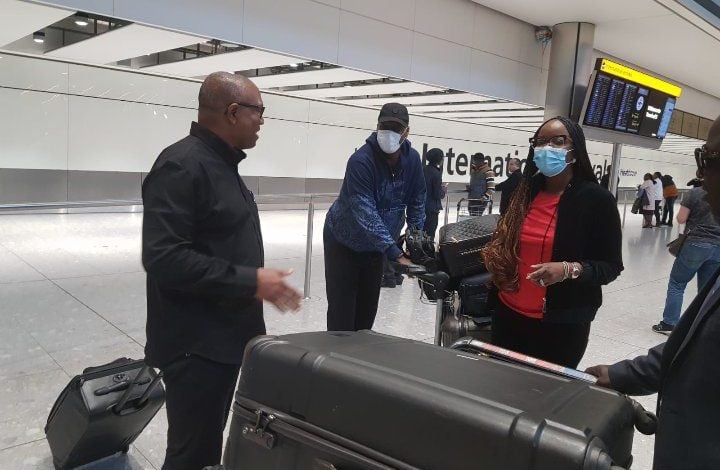
MaTaZ ArIsInGDallas, Texas A fresh petition has been submitted to the Minister of Aviation and Aerospace Development, Festus Keyamo, calling for an investigation into Nigeria Democratic Congress (NDC) presidential candidate Peter Obi over allegations that he repeatedly travelled with a passenger who allegedly used fake identities to board flights. The petition, dated July 12, 2026,…
-
Afrophobia: Should Nigeria ask South African companies to leave?

MaTaZ ArIsInGDallas, Texas Monday Lines 2 Afrophobia: Should Nigeria ask South African companies to leave? By Lasisi Olagunju (Published in the Nigerian Tribune on Monday, 6 July, 2026). Jacob Zuma was President of South Africa when he declared on October 21, 2013 that South Africa should not “think like Africans in Africa, generally.” The remark,…
-
Why I did not take Brazil’s penalty against Norway – Vinicius
MaTaZ ArIsInGDallas, Texas Brazil’s hopes of ending their long wait for World Cup glory came to a painful end after a 2-1 defeat to Norway in the Round of 16, with Erling Haaland scoring twice to eliminate the five-time champions. The aftermath of the defeat was dominated by questions over why Vinicius Júnior did not…