
In what could become the most significant redrawing of Nigeria’s political map since independence, the House of Representatives has received proposals for the creation of 31 new states across the country.
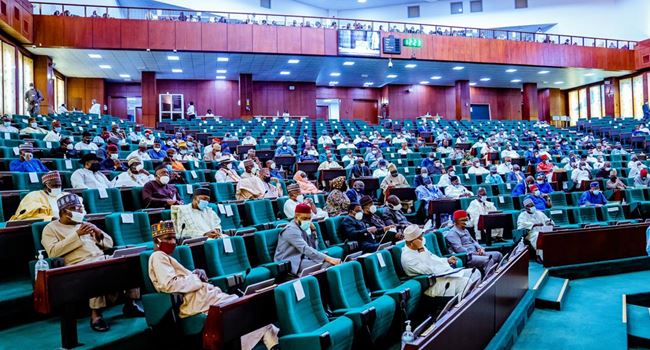
If passed, this move could alter Nigeria’s governance structure, redefine resource allocation, and reshape regional power dynamics.
Deputy Speaker Benjamin Kalu, who also chairs the Constitution Review Committee, announced the development during plenary on Thursday, revealing that the proposals are under review in line with Section 8(1) of the 1999 Constitution.
For many Nigerians, the creation of new states has long been a contentious issue—one that speaks to aspirations for better representation, equitable resource distribution, and, for some, a long-overdue correction of historical injustices.
Since Nigeria’s return to democracy in 1999, no new state has been created despite repeated calls from various regions. However, this latest push is notable for its scale, with nearly every geopolitical zone putting forward multiple requests. From the proposed Aba State in the South-East to New Kaduna State in the North-West, the list represents decades of agitation from ethnic groups, political stakeholders, and local communities seeking greater autonomy.
The Proposed New States at a Glance
The North-Central zone leads with seven proposed states, including Benue Ala, Okun, Okura, Confluence, Apa-Agba, Apa, and a separate proposal for the Federal Capital Territory (FCT) Abuja to gain full state status.
In the North-East, proposals for Amana (Adamawa), Katagum (Bauchi), Savannah (Borno), and Muri (Taraba) have surfaced.
The North-West has suggested five states, including New Kaduna, Gurara, Tiga (Kano), Kainji (Kebbi), and Ghari (Kano).
The South-East, a region that has long demanded additional states to match its counterparts, has five proposals: Etiti, Adada (Enugu), Urashi, Orlu (Imo), and Aba (Abia).
The South-South isn’t left out, with calls for Ogoja (Cross River), Warri (Delta), Bori (Rivers), and Obolo (Rivers & Akwa Ibom).
Meanwhile, the South-West has the most ambitious requests yet, with six proposed states: Toru-Ebe (Delta, Edo & Ondo), Ibadan (Oyo), Lagoon (Lagos & Ogun), Ibeju (Ogun), Ife-Ijesha (Ogun, Oyo & Osun), and Oke-Ogun (Ogun, Oyo & Osun).
While the demand for new states is nothing new, the constitutional process for achieving it is incredibly complex. Section 8(1) of the 1999 Constitution requires:
- A two-thirds majority approval from members of the Senate and the House of Representatives, along with
- The House of Assembly and Local Government Councils of the affected area.
- A successful referendum in the region demanding statehood, with a two-thirds majority voting in favor.
- A final approval by a simple majority of all states in Nigeria, with backing from their respective Houses of Assembly.
Given these stringent requirements, state creation remains one of the most difficult constitutional amendments to achieve.
Deputy Speaker Kalu has emphasized that any fresh proposals must be submitted in full compliance with these constitutional stipulations no later than Wednesday, March 5, 2025.
As Nigeria grapples with economic challenges, insecurity, and governance concerns, the question remains: Is this the right time for state creation?
For proponents, new states mean more localized governance, economic development, and improved representation. For skeptics, it raises concerns about the financial sustainability of more states, considering the fiscal struggles of many existing one

SUBSCRIBE TO OUR NEWSLETTER NOW
Support MATAZ ARISING’ journalism of integrity and credibility.
Good journalism ensure the possibility of a good society, an accountable democracy, and a transparent government.
We ask you to consider making a modest support to this noble endeavour.
TEXT AD: To advertise here – Email ad@matazarising.com
LATEST POSTS
-
INEC to Nigerians: 2027 election outcome will reflect your will

MaTaZ ArIsInGDallas, Texas By Omeiza Ajayi ABUJA: The Independent National Electoral Commission (INEC) has reaffirmed its commitment to conducting a transparent, credible, inclusive and peaceful 2027 general election, assuring Nigerians that the outcome of the polls will reflect the sovereign will of the electorate. The assurance was given by the Acting Chairman of INEC, Prof.…
-
Atiku to FG: Explain real impact of rising FAAC allocations

MaTaZ ArIsInGDallas, Texas Former Vice President Atiku Abubakar has called on the Federal Government to provide clarity on the real impact of rising FAAC allocations, saying higher naira figures must be measured against currency value, inflation, and state obligations. Reacting on Wednesday through his Senior Special Assistant on Public Communication, Phrank Shaibu, Atiku said the…
-
Why we removed 12-year restriction on vessels coming from Nigeria — US govt
MaTaZ ArIsInGDallas, Texas The United States Government has shed more light on why it lifted a 12-year Condition of Entry (CoE) restriction imposed on vessels visiting the United States from Nigeria, saying the development will deliver tangible benefits to shipping operators, reduce shipping costs and strengthen trade between the two countries. In a letter dated…