

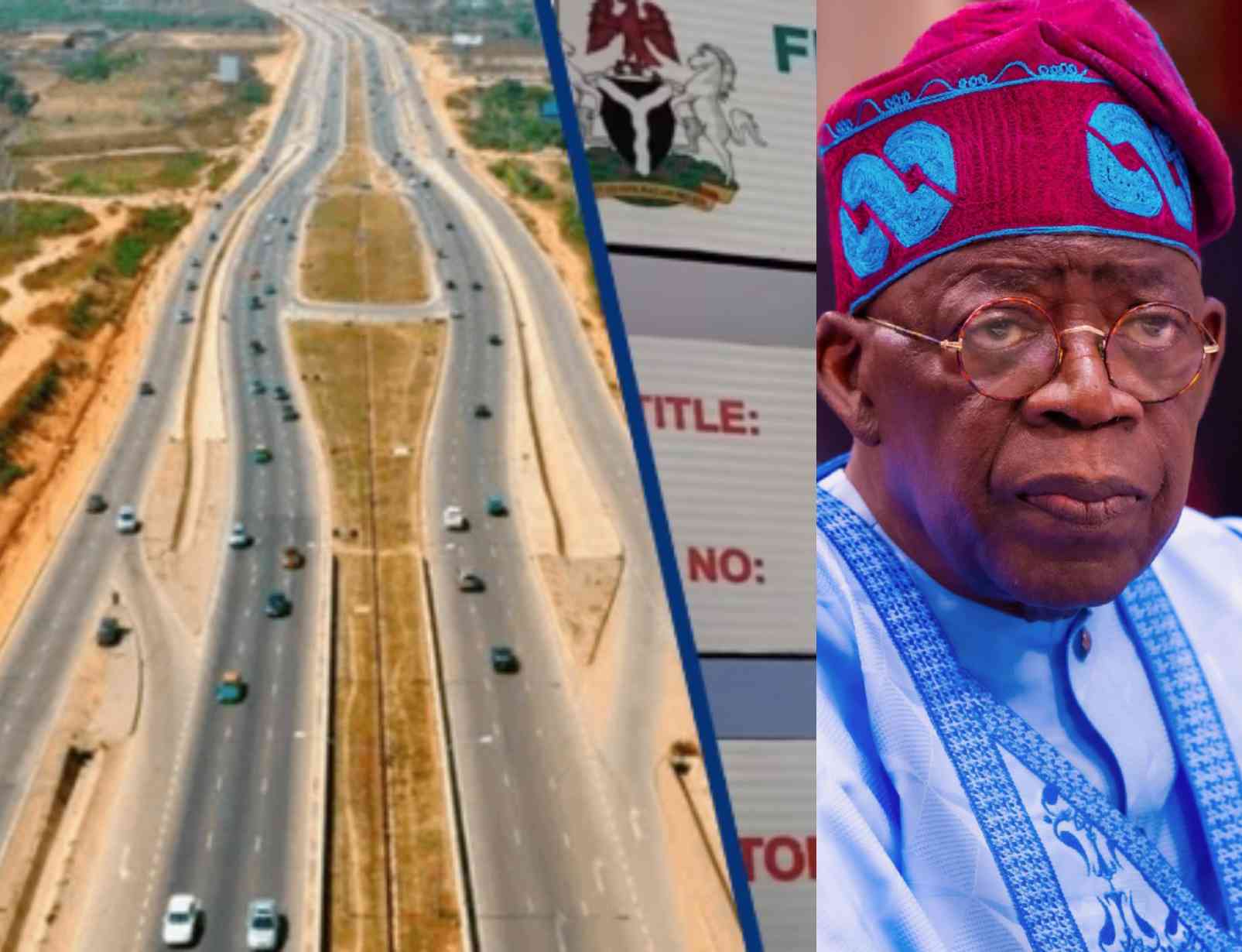
It’s no longer news that the administration of President Bola Ahmed Tinubu has embarked on the construction of the Lagos to Calabar Coastal Highway. The pilot phase of the construction has started at the Eko Atlantic City and will terminate at Lekki Deep Seaport, for which N1.06 trillion has already been released. It is a highway of 10 lanes, which will cost N4 billion per kilometre, and would be the first of its kind in Africa, the Minister of Works, David Umahi said.
While the criticism of the award of the contract to Hitech Construction Ltd. lack of due process is well founded, we must not allow this to stop the progress of this monumental project till completion. However, the government must ensure that further awards of contracts of such significant and massive projects must follow due process.
On the flip side everywhere in the world, under certain circumstances, like overriding public interest, governments are allowed to do a direct award.
In Abia state, Alex Otti’s first action was to award road contracts to Julius Berger. It is on record that citizens of his state set up a bandstand to celebrate the Julius Berger logo. So, there’s nothing illegal in what’s been done, so long as the nation is not shortchanged.
Instead of some Nigerians making this issue a controversial one, every well meaning Nigerian is advised to support the project and ask for more, and here is why;
I hope President Tinubu realises that he needs to back up the construction of the Calabar to Lagos Expressway with a comprehensive Nigerian Atlantic Seaboard policy.
[1] We appear to have finally woken up to the economic potential of Nigeria’s Atlantic seaboard. We have 853km of coastline, which is a cashcow and goldmine. We should consider the construction of the Lagos-Calabar Expressway as the first step of a major action plan.
[2] For starters, I believe the whole project should be under the supervision of the Federal Ministry of Marine and Blue Economy. Make the minister the man responsible for ensuring that revenue generated matches crude oil receipts at the very least.
[3] For me, the first thing to do tomorrow is to begin the construction of a concurrent high speed rail link that runs at about 250km an hour. Building a highway is only doing half of the job. To cut the cost of freight movement, you need to be able to move containers by rail, anywhere along the seaboard within about three hours.
[4] This action plan should also involve developing, dredging and expanding the ports of Aiyetoro in Ondo State, Warri, Escarvos and Burutu in Delta State, Brass in Bayelsa State, Port Harcourt in Rivers State, Ikot-Abasi in Akwa Ibom State and Calabar in Cross River State.
[5] Whether we like it or not, we also have to build an 800km wind farm stretching from Badagry to Calabar and manage the power stations that distribute the generated electricity. Maybe it should have a power subsidiary called Coastal Electric.
[6] Our minister should then be charged with attracting shipbuilders and ship breakers into Nigeria. It is highly embarrassing that Nigeria does not have one shipyard. How can a nation have 800km of coastline and not even one boatyard?
[7] Gboyega Oyetola, the minister, should also establish and have oversight for a Nigerian Coastguard Service. It should be their job to patrol our waterways and combat criminal acts like piracy, oil theft, arms smuggling, etc.
[8] Minister Oyetola should also be handed the responsibility for eliminating gas-flaring in the Niger Delta. He should attract companies to build gas-fired power stations in the region. I want to see one or two companies also given contracts to build a massive Nigerian gas pipe network to distribute produce to every home in the country.
[9] Minister Oyetola should then expand the Calabar air and sea ports and have daily flights and shipping services to places like Yaoundé, Douala, Libreville, Gaborone, Malabo, Brazzaville, Kinshasa, Luanda, etc. Ultimately, I want to see the establishment of a West African Maritime Transportation Company. It should have a cargo shipping arm and a passenger service. The ultimate aim is to build it up into an global shipping company that can compete with the big boys
[10] In addition, the ministry should also build a six lane motorway linking Ikot Nakanda in Cross River State with Cameroon. At the moment, if you want to drive into Cameroon you have to go all the way up to Ikom in central Cross River State. Along the coastline, if you want to cross the border, embarrassingly, you need to go by boat.
COMMENT: This is what we should be discussing, how to add value, and latch on to the project not all these unnecessary controversies.

WhatsApp Community
SUBSCRIBE TO OUR NEWSLETTER NOW
Support MATAZ ARISING’ journalism of integrity and credibility.
Good journalism ensure the possibility of a good society, an accountable democracy, and a transparent government.
We ask you to consider making a modest support to this noble endeavour.
TEXT AD: To advertise here – Email ad@matazarising.com
-
2027: I’ll restore fuel subsidy if elected — Atiku
MaTaZ ArIsInGDallas, Texas Atiku Abubakar, the presidential candidate of the African Democratic Congress (ADC), has promised to restore the petrol subsidy if he wins the 2027 presidential election. Atiku made the pledge during an interview on Wednesday while questioning the use of funds he said were saved following the removal of the subsidy. He said…
-
2027: Why I chose to run with Obi — Kwankwaso

MaTaZ ArIsInGDallas, Texas Former Kano State governor, Rabiu Kwankwaso, has explained his decision to run on the same presidential ticket with Peter Obi ahead of the 2027 general elections, saying their partnership is driven by the need for a different approach to governance. Kwankwaso, who is seeking the vice-presidential ticket alongside Obi on the platform…
-
Nigeria’s federal government moves to decriminalise attempted suicide
MaTaZ ArIsInGDallas, Texas In Nigeria, where mental health issues remain largely stigmatised, the federal government has plans to decriminalise attempted suicides. Trying to take one’s life is currently punishable by up to one year in prison under the colonial-era Criminal Code, while the Penal Code provides for up to a year in jail, a fine,…


