
by Reno OMOKRI
Reno replies….
Dear @samsmbah,

Thank you for your feedback. You may or may not be right that our Igbo brethren control 60% of Lagos’ wealth. However, according to renowned economist, Adam Smith in his book, The Wealth of Nations, the capital and wealth of a state is usually controlled by manufacturers.
Our Igbo brothers and sisters are not heavily into manufacturing in Lagos. They have a cluster in Nnewi, but are not known manufacturers in Lagos or its neighbouring states. They are more into trading. Thus, it would be strange if they control 60% of Lagos’ wealth.
Before your ‘revelation’, I had seen data showing that when you take into account the volume of taxes paid to the Lagos State Government, Oando, Globacom, Forte Oil, Guinness Nigeria, Nigerian Breweries Limited, Nigerian Bottling Company, West African Portland Cement Company, Nestle Nigeria, Flower Mills of Nigeria, Unilever PLC, and Seven-Up Bottling, which are either wholly or partially owned by persons of Southwest origin, control the largest percentage of Lagos’ wealth.
With regard to non-Yoruba capitalists, from the same data pool, I was under the impression that the Dangote Group, BUA Group, and Intels, owned either wholly or partially by Northern Nigerian Fulani, were the largest non-Yoruba investors in Lagos.
But perhaps you have access to data not available to the World Bank, so I will give you the benefit of the doubt and say maybe you are right.
With regards to the 20 pounds issue, historical records prove that the Federal Military Government of General Yakubu Gowon, through radio broadcasts, urged people in the breakaway region of Biafra not to accept the Biafran Pounds as Nigeria would not recognise it.
Upon this announcement by the Federal Military Government, many prudent ‘Biafrans’ withdrew all their Nigerian Naira and kept it at home. One such Biafran was Evelyn Okororie, who is still alive and told her story to CNN, which published it on January 16, 2020, in a piece titled ‘Biafra war: Survivors relive account 50 years after Nigerian civil war ends.’
After the war ended, the Biafran Pound was useless. Even Colonel Emeka Ojukwu did not take them with him when he fled Nigeria to Ivory Coast.
The £20 was a gift from Chief Obafemi Awolowo to Biafrans. He did not have to do it. Both Gowon and his military colleagues were against it.
After the Union defeated the Confederate states during the American Civil War, the Confederate States’ dollars became worthless from May 26, 1865. The Union did not give any $20 to holders of the Confederate States dollars, as it should be. After the war, holders of the Confederate States dollars just lost their money. Period. That is the sad reality of war.
As for an Igbo man “bowing” to no one, I counsel you to listen to the ‘Yes Daddy’ audio between Peter Obi and Bishop Oyedepo.
Thanks again, and may God bless you.
RENO OMOKRI
Dear @ebuluxak47,
Thank you for your feedback. Lagos and Ogun are the manufacturing hub of Nigeria, and please Google it: Ikeja Local Government Area alone consumes more electricity than Anambra and Imo states combined.
Yes, we do appreciate our Igbo brothers and sisters. However, I am not sure it is factual to call the Lagos manufacturing sector “useless”.
While it is true that we need Igbo traders, available facts show that most Igbo traders prefer to sell imported items. Alaba, Ladipo, Onitsha, and Aba markets are heavily import dependent.
However, the manufacturers in the Southwest often gave a direct-to-consumer model. For example, Oando, Globacom, Forte Oil, Guinness Nigeria, Nigerian Breweries Limited, Nigerian Bottling Company, West African Portland Cement Company, Nestle Nigeria, Flower Mills of Nigeria, Unilever PLC, and Seven-Up Bottling Company, which are either wholly or partially owned by persons of Southwest origin, are not dependent on traders, be they Igbo or otherwise.
To a large extent, their consumers go to them. And by manufacturing necessities rather than luxuries, there is always a ready market for their goods and services.
This may explain why though Ondo state has the same population as Enugu state, but Ondo’s internal GDP is more than double that of Enugu. Ondo has the same GDP as Anambra, although Anambra has a larger population. How do you explain that? Ondo did not have a seaport for years. They just got approval for one in 2023, which is not yet operational. So, their economy is not import dependent. It is built on agriculture and manufacturing.
You may want to also research the fact that Nigeria had her highest GDP growth during the Nigerian Civil War, when our Igbo brethren temporarily left Nigeria. Do not take my word for it. Google it. Who was responsible for that growth? Ghosts?
The reason may not be unconnected to the fact that trading does not generate the quantum of economic activity that manufacturing does.
We love our Igbo brothers and sisters. We also value their prowess as traders. However, you may find that you have better relations with other Nigerians if you do not use language such as ‘useless’ and other such demeaning words on your fellow countrymen and women.
TableShaker

SUBSCRIBE TO OUR NEWSLETTER NOW
Support MATAZ ARISING’ journalism of integrity and credibility.
Good journalism ensure the possibility of a good society, an accountable democracy, and a transparent government.
We ask you to consider making a modest support to this noble endeavour.
TEXT AD: To advertise here – Email ad@matazarising.com
LATEST POSTS
-
ATIKU, YOU MET BUHARI TWICE BUT FORGOT TO ASK HIM “WHO GAVE THE ORDER?”
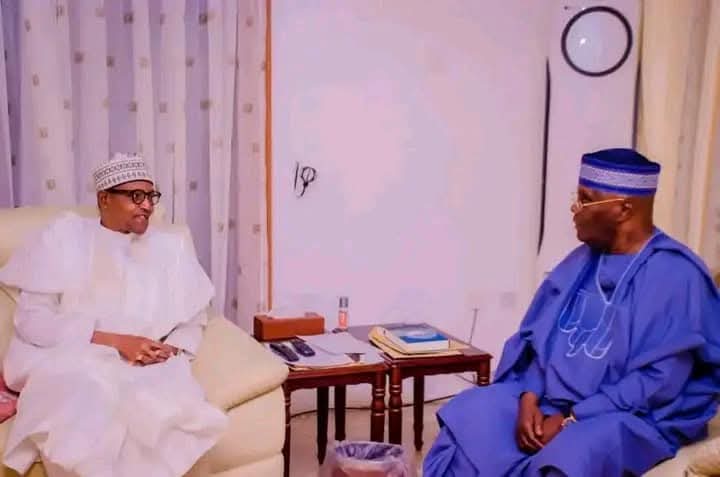
By Fattykolly Ibn Alimi MaTaZ ArIsInGDallas, Texas Dear Atiku Abubakar, In case you have forgotten, Nigerians have not. On the 22nd of June 2024, you visited the late former President Muhammadu Buhari in his hometown Daura. You sat with him. You smiled with him. You drank tea with him. Less than a year later, on…
-
Taking the Bullet for the Nation: Tinubu and the Cost of Courage

By Idowu Ephraim Faleye MaTaZ ArIsInGDallas, Texas When President Bola Ahmed Tinubu stood before the nation on his first day in office and announced the removal of the fuel subsidy, many people were shocked. Some clapped. Others shouted in anger. But very few stopped to ask the real question. What kind of courage does it…
-
President TINUBU: The Audacity to Dare And the Will to Confront the Impossible

By Idowu Ephraim Faleye MaTaZ ArIsInGDallas, Texas In ancient Israel, a young shepherd named David stood before Goliath, a terrifying Philistine giant. Before that public confrontation, David had faced deadly encounters in the wilderness, where a lion and a bear attacked his father’s flock. He did not flee. He confronted the beasts and rescued the…